- Article
- Treatment Planning
Conquer Advanced Dental Treatment Planning With AEFSB
Vishal Sharma
•
April 28, 2026
Diagnose more accurately, reduce risk, and confidently plan complex cases using the AEFSB framework.
Most treatment planning failures start before you pick up a handpiece. They start with what you miss.
The joint you didn’t evaluate.
The airway you didn’t consider.
The occlusal instability developed after delivery.
As cases become more complex, those missed factors get expensive, clinically and financially.
Advanced dental treatment planning helps you catch these issues earlier.
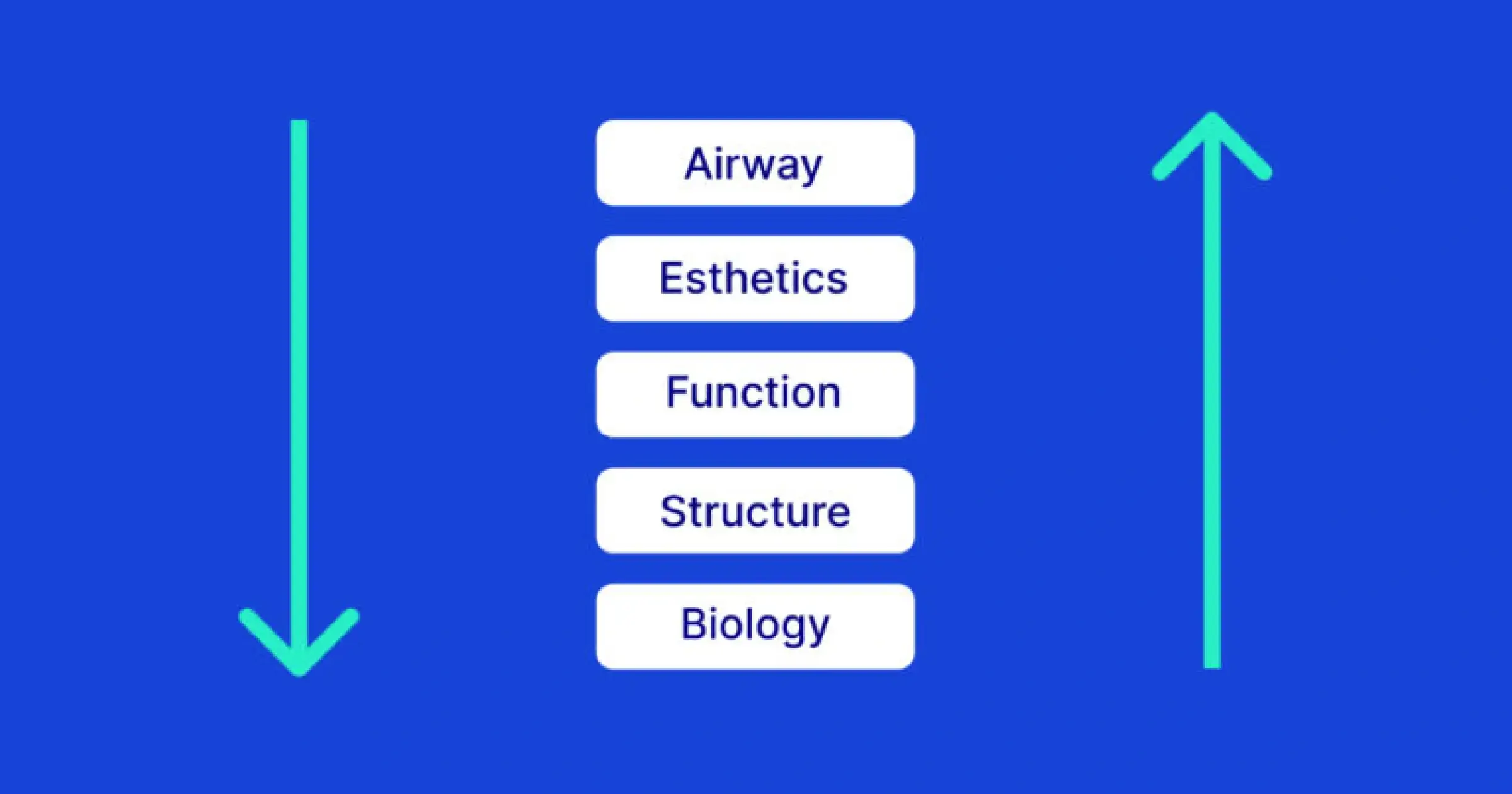
Instead of focusing on individual teeth, it uses a structured approach that evaluates airway, esthetics, function, structure, biology (AEFSB). The result is a more complete diagnosis, clearer decisions, and more predictable outcomes.
Using Spear’s Facially Generated Treatment Planning AEFSB framework, you can evaluate every case in a consistent sequence, reduce uncertainty, and make better decisions earlier.
This is not about adding steps. It’s about eliminating blind spots so you can:
- Diagnose with confidence
- Take on more complex cases
- Reduce remakes and complications
- Increase case acceptance with clearer conversations
Predictable outcomes start with how you plan.
Quick answer: Advanced dental treatment planning uses a system-based framework (AEFSB) to evaluate airway, esthetics, function, structure, biology, helping clinicians reduce risk and improve long-term outcomes.

What is advanced dental treatment planning?
Advanced dental treatment planning is a structured, system-based approach that evaluates airway, esthetics, function, structure, biology (AEFSB) to improve diagnosis and long-term outcomes.
Advanced dental treatment planning vs traditional methods
Traditional treatment planning treats what you see. Advanced dental treatment planning solves what you don’t.
Traditional dental treatment planning often focuses on solving the problem that is directly in front of you. Advanced dental treatment planning takes a broader, system-based approach that evaluates the patient’s entire face before determining treatment.
Dr. Frank Spear explains, “Traditional treatment planning, what we learn in dental school, focuses on structure and biology. But in complex patients, you don’t know what to do with structure and biology unless you first know where the teeth should be, and that’s done through esthetics and function.”
Here’s how they differ:
| Traditional treatment planning | Advanced dental treatment planning |
| Symptom-based approach | System-based diagnosis (AEFSB) |
| Single-tooth focus | Full-system evaluation |
| Short-term fixes | Long-term outcome planning |
| Reactive decision-making | Proactive, structured process |
| Treatment-first thinking | Diagnosis-driven planning |
This is the difference between patching dentistry and planning it.
In advanced dental treatment planning, the goal is not just to fix what’s broken. It’s to understand why it broke and design a plan that prevents it from happening again.
The AEFSB framework for advanced dental treatment planning
Advanced dental treatment planning follows a structured evaluation sequence. Each step builds on the previous one, helping you catch what others miss and plan with greater confidence.
It goes beyond treating isolated problems. Instead, it answers a more important question: What is the best long-term outcome for this patient?
That’s the difference between treating teeth and delivering comprehensive care.
Spear’s advanced treatment planning framework follows this sequence:
- Airway screening and breathing evaluation
- Esthetics or facial analysis for ideal tooth position
- Function assessment of joints and muscles
- Structure evaluation of teeth and restorations
- Biology assessment of periodontal and bone health
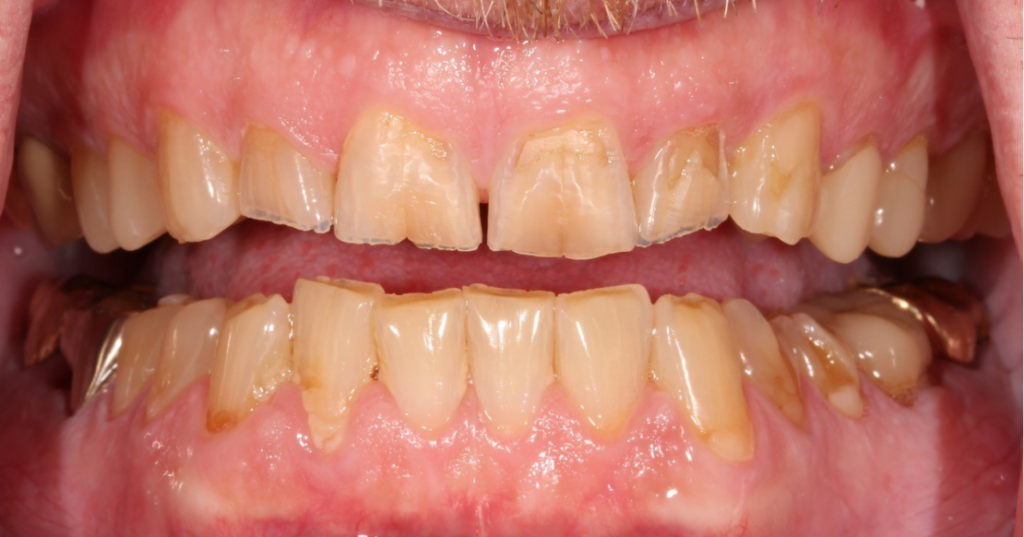
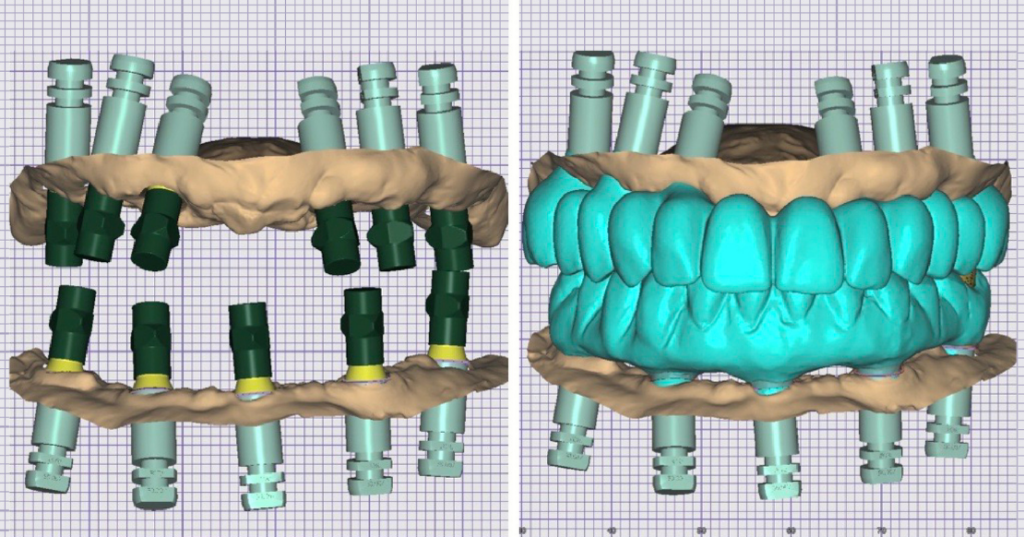
This is where advanced dental treatment planning becomes critical in complex cases, like All-on-X dental implants, where decisions about saving or removing teeth have lasting consequences; however, this framework applies not only to complex cases but also to everyday restorative decisions where predictability matters.
To better understand how this approach fits into everyday dentistry, explore the steps in a comprehensive dental exam for advanced treatment planning.
AEFSB provides dentists with a practical framework for evaluating patients in the following order: airway, esthetics, function, structure, biology. The result is more comprehensive, more predictable treatment planning.
This model helps clinicians avoid missed diagnoses and align treatment with long-term stability rather than short-term fixes.
Dr. Spear emphasizes that AEFSB “is not the sequence we treat the patient. It’s the sequence we diagnose and treatment plan the patient.”
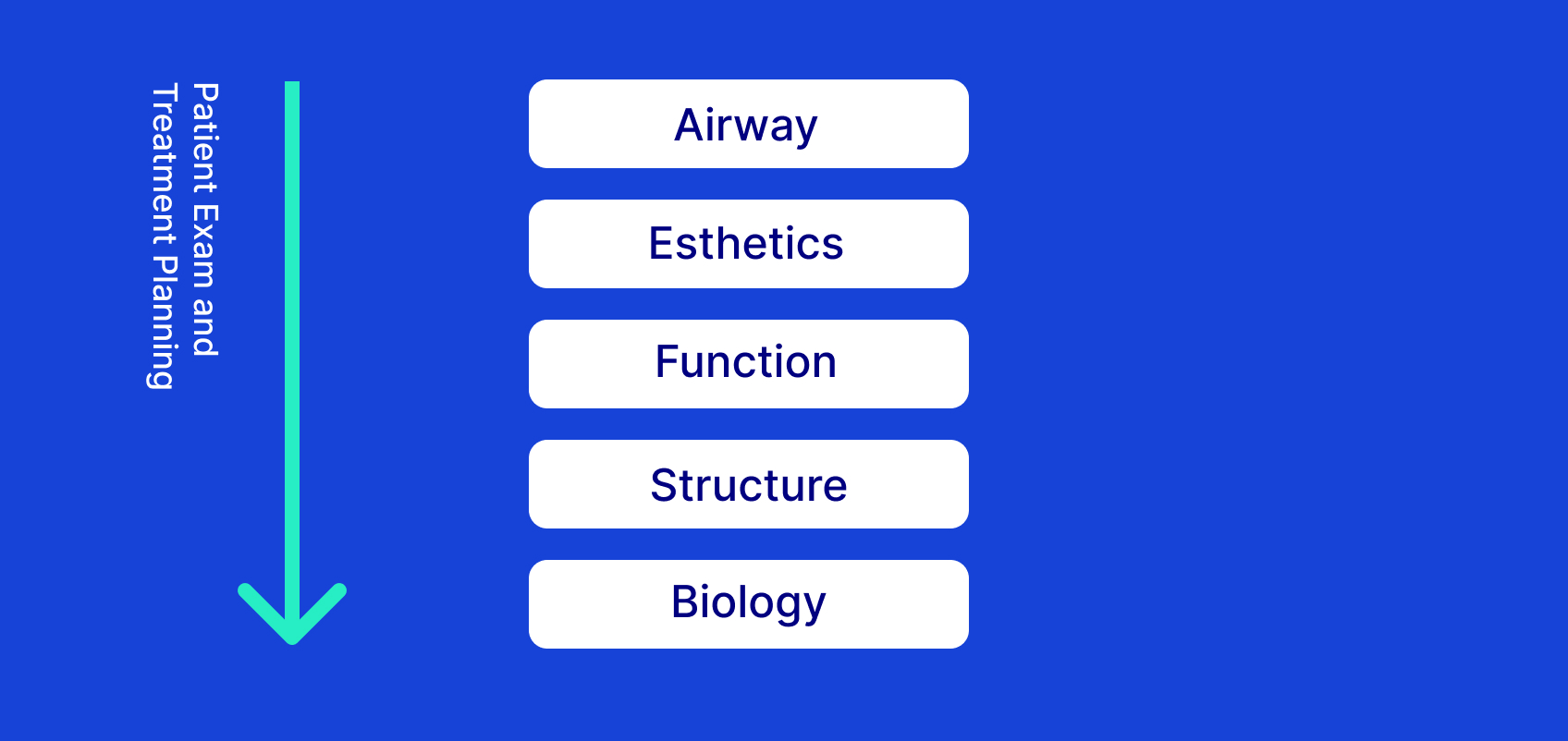
Airway and risk screening
Start with airway. Not teeth.
If a patient has compromised airway function, it can significantly affect occlusion, wear patterns, and long-term stability, making airway screening an essential part of treatment planning.
Begin with an airway evaluation. In dental treatment planning, clinicians must identify breathing limitations that can affect occlusion, wear, and long-term stability.
Screen every patient for:
- Mouth breathing or nasal obstruction
- Sleep-disordered breathing
- Tongue posture and airway restriction
These problems rarely announce themselves. They show up as breakdown through wear, bruxism, or restorative failure.
Build airway screening into hygiene. Make it routine and make it consistent. Put this into practice by running comprehensive airway exams in hygiene, as outlined in Dr. Jeffrey Rouse’s Spear Digest article.
Esthetics and full arch decision-making
Set tooth position from the face. Not the other way around.
Esthetic planning determines ideal tooth position based on facial reference points and guides all restorative decisions.
If the tooth position is wrong, the case will fail. Function breaks down. Restorations don’t last. Results look off.
What to evaluate:
- Tooth position relative to the face
- Gingival display and smile arc
- How restorations support facial harmony
Once ideal positioning is defined, you can evaluate whether teeth should be restored or replaced.
In many cases, achieving ideal esthetics requires interdisciplinary care, as shown by how orthodontic and restorative treatment planning work together in complex cases.
Function and occlusal stability
Function determines whether your dentistry lasts. If the system is unstable, the case will fail. It doesn’t matter how good it looks on delivery.
Function in treatment planning evaluates how teeth, joints, and muscles work together under load to maintain long-term stability.
What to assess:
- Joint stability
- Occlusal relationships
- Muscle activity
- Parafunction
Unstable function leads to breakdown, even when restorations appear ideal.
Before you treat, confirm stability. If you skip this step, you increase the risk of failure, even with technically sound restorations.
Determining whether a patient’s occlusal stability is sufficient to support advanced dental treatment is a critical step in treatment planning. Treating without confirming stability increases the risk of failure, even when the restorative work is technically sound.
Know when the system is safe to treat.
Structure and joint-informed diagnosis
Structural evaluation determines whether teeth and restorations can support the planned outcome without failure.
What to assess:
- Remaining tooth structure
- Fracture risk
- Existing restorations
If the foundation is weak, the outcome is limited. No material or technique can fix that. But structure alone is not enough. The joint sets the conditions for everything.
An effective advanced dental treatment plan also considers temporomandibular joint (TMJ) health, as joint instability can compromise long-term outcomes.
This is where advanced planning separates from basic dentistry. You are not just restoring teeth. You are working within a system.
Understand the joint before you commit to the plan. That decision protects long-term outcomes.
Biology and long-term health
Biology in treatment planning focuses on periodontal health, bone support, and systemic factors that influence long-term success.
What to evaluate:
- Periodontal condition
- Bone levels
- Gingival stability
- Caries risk
Periodontal diagnosis is foundational to biologic stability. Without a clear understanding of disease severity and progression, treatment planning becomes reactive instead of predictive.
To strengthen diagnostic accuracy, review today’s classification system for diagnosing periodontitis.
How AEFSB guides clinical decision-making in treatment planning
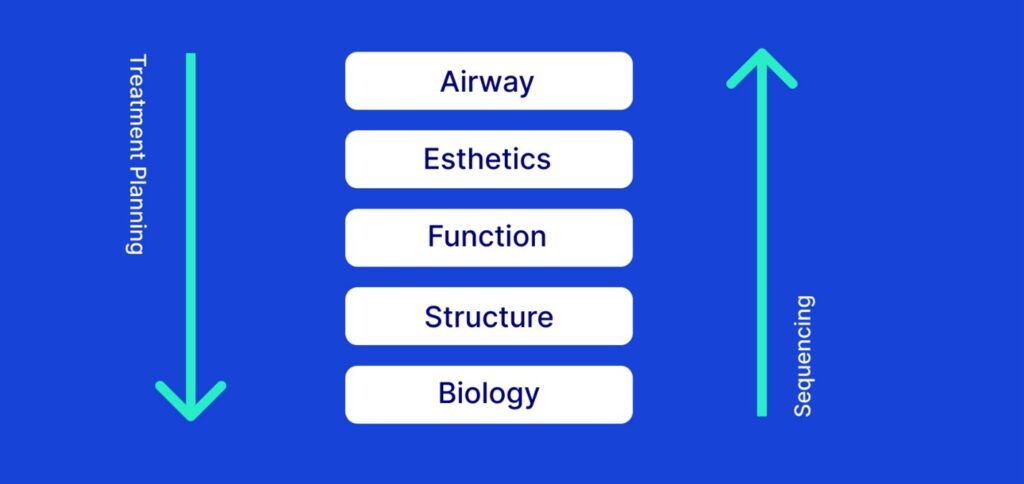
Advanced dental treatment planning follows a clear progression from evaluation to execution. The AEFSB framework does more than organize diagnoses; it guides clinicians in moving from understanding the patient to making confident treatment decisions.
Clinical workflow:
- Examine and diagnose using AEFSB
- Define the ideal outcome
- Determine treatment options
- Sequence treatment for predictability
This progression ensures that every decision is based on a complete understanding of the patient, not just isolated findings.

As Dr. Spear teaches, treatment planning begins with maxillary tooth position, then gingival levels, and finally occlusal considerations. Once those elements are defined, decisions about restoring or replacing teeth and whether procedures such as crown lengthening or grafting are needed become far more predictable.
At this stage, the goal is not to decide the order of care, but to clarify the outcome and the available paths to achieve it.
This is treatment planning, not treatment sequencing.
Advanced dental treatment planning steps for predictable outcomes
A structured diagnosis only creates value if it leads to a clear, actionable plan. This is where advanced dental treatment planning becomes a repeatable clinical process rather than a one-time decision.
Step 1: Examine and diagnose using AEFSB
Start with a comprehensive, systems-based patient examination to make a diagnosis. Do not jump ahead to treatment decisions. A comprehensive exam depends on complete diagnostic data, and AI in dental diagnostics is increasingly how practices capture that picture, using scans, photographs, and radiographs to give the dentist a complete starting point before the AEFSB evaluation even begins.
Evaluate and diagnose in this order:
- Airway
- Esthetics
- Function
- Structure
- Biology
Clinical focus:
Identify root causes, not just symptoms. A complete diagnosis makes the correct treatment path clearer. Every treatment decision should be based on a complete understanding of the system.
Step 2: Define the ideal outcome
Before planning procedures, determine the end goal.
Dr. Spear explains, “We must identify the outcome we want, that is, where the teeth and tissues should be, before we decide what to do. We have to restore and replace the teeth, so they’re in the right place.”
Ask:
- What does long-term stability look like for this patient?
- Where should the teeth be positioned ideally?
- What functional and esthetic outcomes are required?
Clinical focus:
Do not plan or sequence treatment until the outcome is clearly defined. Planning without a defined endpoint leads to compromise.
Step 3: Treatment plan ‘from the outside in’
Once the outcome is defined, use AEFSB to build the treatment plan.
Evaluate:
- Airway first: breathing patterns, airway restrictions, sleep risk
- Then esthetics (tooth position relative to the face): facial reference points, tooth position, smile design
- Then function (joint and occlusion): joint stability, occlusion, muscle activity
- Then structure (what can be saved or restored): tooth integrity, restorability, fracture risk
- Then biology (what must be stabilized): periodontal health, bone support, caries risk
Clinical focus:
Treatment planning determines what needs to happen — not when it happens. Occlusion is one of the core systems within AEFSB. See Spear’s guide to occlusion fundamentals for a complete breakdown of the Function pillar.
Step 4: Sequence treatment for predictability
Once a plan is established and accepted by the patient, determine the order of care based on biology, healing, and risk management.
Treatment planning follows AEFSB top-down. Treatment sequencing often moves bottom-up. This distinction is critical in complex cases.
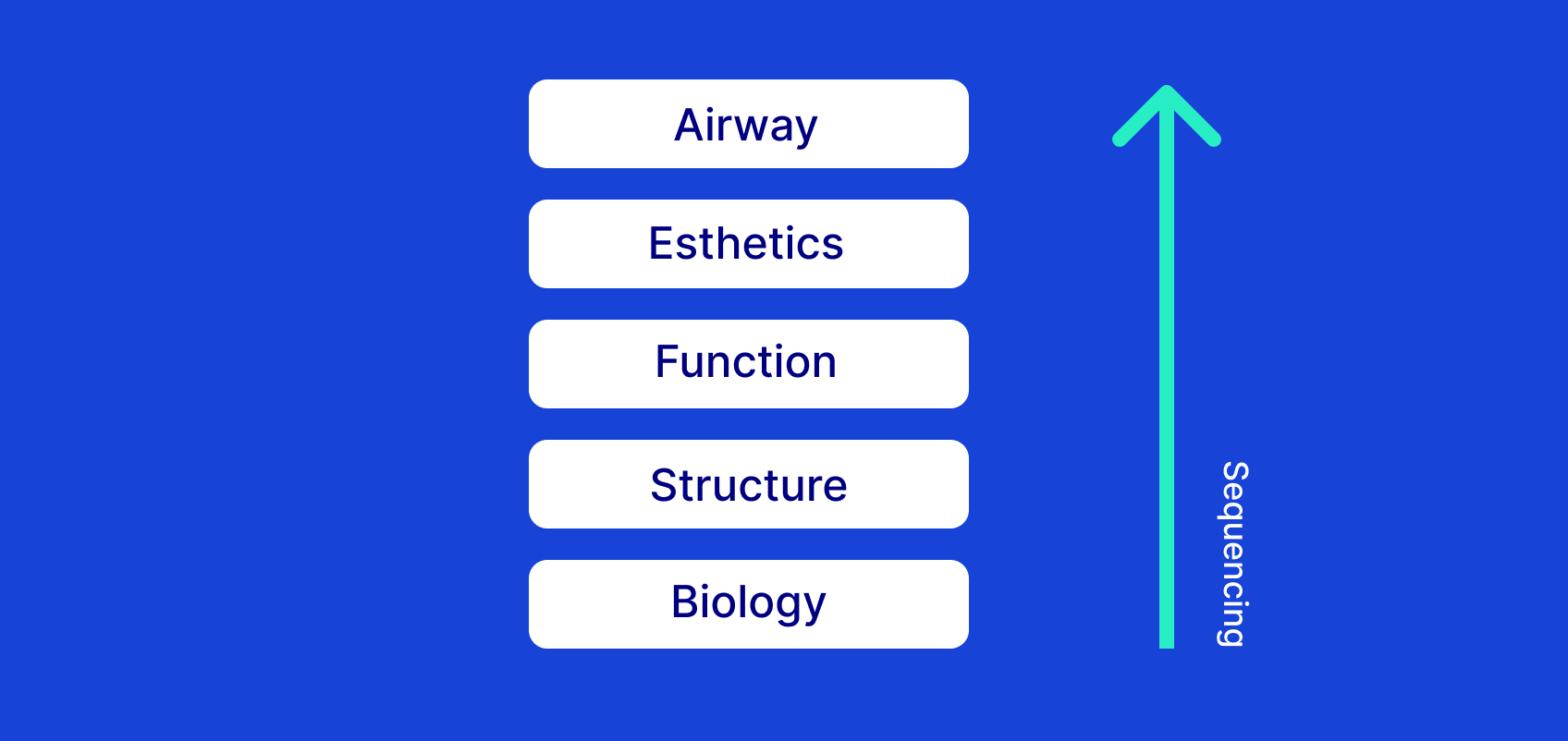
Follow this general sequence:
- Disease control (caries, infection, inflammation)
- Periodontal stabilization
- Provisionalization to test function and esthetics
- Final restorations
A strong example of interdisciplinary sequencing can be seen in how orthodontic and restorative treatment planning work together in complex cases, where timing, tooth position, and restorative goals must align for predictable outcomes.
Clinical focus:
Sequence based on what the patient can biologically support, not just what seems logical on paper.
Want to apply advanced dental treatment planning more confidently in real cases?
The Treatment Planning With Confidence workshop on Spear Campus helps you build a repeatable, system-based approach using the AEFSB framework so you can diagnose more accurately, reduce risk, and plan complex cases with clarity. Or explore all Spear Campus workshops.
When should you use phased restorative dentistry in treatment planning?
Phased restorative dentistry should be used when clinicians need to test occlusion, evaluate patient adaptation, or reduce risk before completing definitive treatment.
It’s especially valuable when:
- Diagnosis is complex
- Vertical dimension changes are required
- Patient response is uncertain
Why phased restorative dentistry improves treatment outcomes
Phased restorative dentistry improves predictability by allowing clinicians to validate functional, esthetic, and biologic outcomes before finalizing treatment.
Instead of committing immediately, clinicians can:
- Test vertical dimension changes
- Evaluate comfort and function
- Confirm esthetic outcomes
This reduces the likelihood of failure and rework. You can see this approach applied clinically in how phased restorative dentistry improves outcomes in complex wear cases.
Common mistakes in diagnosing and treatment planning
Common mistakes include treating symptoms instead of causes, ignoring airway or TMJ health, and committing to definitive treatment too early.
Other frequent issues:
- Overestimating patient compliance
- Underestimating case complexity
- Skipping diagnostic steps
How to build a predictable advanced dental treatment planning system
Clinicians build predictable systems by using structured diagnostics, clear sequencing protocols, and interdisciplinary collaboration.
Key components include:
- Standardized workflows
- Digital planning tools
- Team-based care
- Ongoing evaluation
Consistency drives predictability.
How continuing education improves treatment planning decisions
Complex dentistry requires more than technical skill. It requires strategic, comprehensive decision-making.
Continuing education helps clinicians:
- See patterns across cases
- Learn from failures and successes
- Build confidence in decision-making
- Develop repeatable systems
Because ultimately, confidence doesn’t come from knowing what to do. It comes from knowing why you’re doing it.
Build confidence with advanced dental treatment planning
Advanced dental treatment planning is not about doing more dentistry. It’s about making better decisions before treatment begins.
By using a structured framework like AEFSB, clinicians move from reacting to problems to anticipating them. Instead of second-guessing your plan halfway through a case, you start with clarity. Instead of managing complications, you reduce the likelihood of them occurring in the first place.
That shift changes more than outcomes. It reduces the stress of complex cases. It minimizes remakes and unexpected failures. And it builds confidence not just in what you do, but in how you decide.
As dentistry becomes more complex, the clinicians who stand out are not the ones who know the most procedures. They are the ones who follow a consistent, repeatable process for diagnosis and decision-making.
Advanced dental treatment planning gives you that process.
If you’re ready to apply AEFSB more confidently in your own cases, continuing education from Spear Education can help you turn this framework into a system you use every day with greater predictability and far less uncertainty.
Frequently Asked Questions
SPEAR campus Workshops
Learn Hands-on From Faculty Who Still Practice
A few days at Spear Campus can change how you diagnose, plan, and present cases, not through more lectures, but through hands-on training led by faculty who treat patients every week. Work through real cases in small groups and leave with techniques you can use on your next patient.
Featured Digest articles
Insights and advice from Spear Faculty and industry experts