- Article
- Treatment Planning
7 Powerful Steps in a Comprehensive Dental Exam
Carl Steinberg
•
June 15, 2019

A comprehensive dental exam is more than a routine check. It is a structured evaluation of the entire oral system, designed to identify risk early, guide treatment decisions, and support long-term health. When dentists clearly explain each step, patients become more engaged, ask better questions, and develop greater trust in their care.
This structured exam creates the foundation for a more comprehensive treatment planning approach in complex cases.
Why does a comprehensive dental exam build patient trust?
A comprehensive dental exam does more than diagnose disease. It shows patients that you are looking at their health as a whole.
When patients understand what you are evaluating and why, they become more engaged. They ask better questions. They feel more confident in their care. And most importantly, they begin to trust your recommendations.
One of the most effective ways to build that trust is to clearly explain the process.
What are the 7 steps in a comprehensive dental exam?
When I begin an exam, I tell patients there are seven key areas I evaluate. I even hold up seven fingers. It sounds simple, but it immediately creates structure and clarity.
If a patient has already shared concerns, I connect those concerns to the steps as we go.
1. Oral cancer screening
First, I perform an oral cancer screening. I explain exactly what I am doing so nothing feels uncertain. We evaluate the face, lips, cheeks, palate, tongue, and throat. I also check the top, bottom, and sides of the tongue and extend it to view the back of the throat.
I remind patients we do this at every hygiene visit. It is unlikely we will find anything, but we always look. According to the American Dental Association, regular screenings play a critical role in early detection and improved outcomes.
2. Evaluating gum disease
Next, we assess the health of the gums. I explain that healthy gums are the foundation for keeping teeth long-term. Without periodontal health, nothing else we do will be stable.
This step reinforces prevention and helps patients understand why hygiene and maintenance matter.
3. Assessing tooth structure and restorations
Then we evaluate the teeth and existing dentistry.
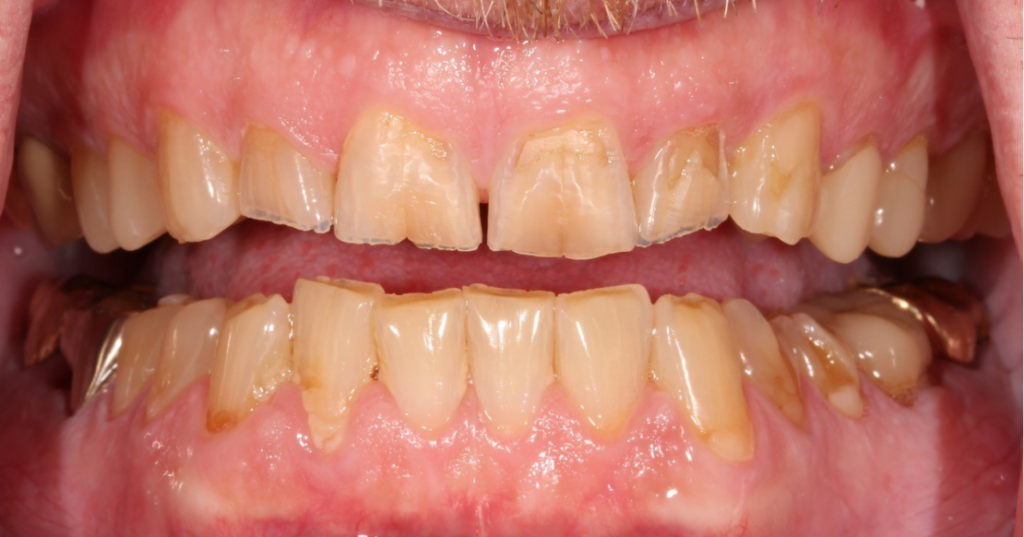
Using both visual inspection and photography, we look for decay, fractures, and failing restorations. I also ask a key question: is the tooth or restoration doing the job it was designed to do? That question often sparks curiosity, which is exactly what you want.
4. Understanding functional disease
At this point, I demonstrate how teeth function together. I often use my hands to simulate how forces move through the system. We discuss how teeth, muscles, joints, bone, and gums must work in harmony. When they do not, something breaks down.
The goal of a comprehensive dental exam is to identify that breakdown early, so treatment can remain conservative.
5. Discussing esthetics
Once patients understand health and function, we can talk about esthetics.
I explain that if everything is healthy and functioning properly, teeth can last a long time regardless of shade. That said, most patients want a brighter smile.
This naturally leads to questions and opens the door for future conversations without pressure.
6. Screening airway and sleep concerns
Next, we address airway and sleep. I explain that tooth position, arch form, and jaw structure can influence how well a patient breathes, both awake and asleep. If we see signs of airway obstruction, we discuss possible next steps.
This step often surprises patients and adds depth to the exam.
7. Reinforcing trust and patient confidence
Finally, I emphasize something simple but powerful. We want patients to feel they made the right choice.
We remind them that we are available, that we care about their outcome, and that we are here to help if anything comes up. This step is not clinical, but it may be the most important.
How should dentists explain a comprehensive dental exam to patients?
The key is simplicity and structure.
When you clearly outline each step of a comprehensive dental exam, patients know what to expect. They feel included in the process instead of being talked at.
Use plain language. Be specific. Invite questions.
When patients understand their care, they are far more likely to accept treatment and stay engaged long term.
Why comprehensive dental exams support long-term oral health
A comprehensive dental exam shifts dentistry from reactive to proactive. Instead of waiting for problems to become obvious, you identify risk early. You preserve tooth structure. You reduce the need for complex treatment.
Over time, this approach leads to more stable outcomes and healthier patients.
What does comprehensive care mean in modern dentistry?
Comprehensive care means evaluating every system that affects oral health. That includes airway, esthetics, function, structure, and biology.
When all systems are healthy, patients often need nothing more than maintenance. That is the ideal outcome.
A comprehensive dental exam is often the first step in advanced dental treatment planning, where every system is evaluated before decisions are made.
The goal is not to do more dentistry. The goal is to help patients stay healthy for life. Sometimes the best comprehensive dental exam ends with no treatment at all.
Final takeaway
A comprehensive dental exam is not just a checklist. It is a philosophy of care.
By evaluating the full system and clearly communicating each step, dentists can build trust, improve diagnosis, and help patients maintain long-term oral health.
In many cases, less treatment leads to better outcomes. Keeping the original dentition stable is often the greatest success of all.
All the best on your journey.
Frequently Asked Questions
Spear Team Training
Train Your Entire Team, Not Just Yourself
Clinical confidence doesn’t stop with the doctor. Spear gives every role in your practice, hygiene, assistants, and front office, structured training built for their part of patient care, including the Hygiene Excellence Program. When the whole team learns from the same curriculum, your practice runs with more consistency, not just your chair.
Featured Digest articles
Insights and advice from Spear Faculty and industry experts