- Article
- Practice Management
5 Sure-Fire Ways to Improve the Dental Patient Experience
Spear Team
•
May 12, 2026

How to create a better dental patient experience at scale.
Does your practice intentionally design the patient experience, or allow it to vary from visit to visit?
Improving the dental patient experience starts with a leadership decision: whether your practice will intentionally design experiences or leave them undefined.
For practice leaders, the real question isn’t whether patients are having an experience. It’s whether that experience is aligned with the value your practice intends to deliver.
What defines the dental patient experience?
In established practices, the dental patient experience is driven by systems, not just service. Well-designed systems create clarity and consistency for patients at every step of the dental patient experience. They ensure:
- Your practice communicates clearly
- Your team delivers care in a unified way
- Patients are guided confidently through decisions
- Clinical excellence is understood and valued
When these systems are in place, the experience is intentionally delivered, not left to interpretation. At this level, small inconsistencies become visible. And over time, they compound.
If expectations are unclear, even excellent clinical care can feel misaligned.
Why team alignment is critical to the patient experience
Even the best-designed systems break down without team alignment.
The patient experience is not delivered by one person. It’s shaped across every interaction, from the front desk to the operatory to the final handoff. If those moments aren’t aligned, the experience becomes fragmented. That inconsistency is what patients notice. When teams are not on the same page:
- Messaging varies from person to person
- Expectations are set differently at each touchpoint
- The experience feels disjointed, even if the clinical care is strong
As Dr. Frank Spear emphasizes, “Everybody on the team has to be clear about what that is… and what behaviors are necessary to get the correct outcome.”
For practice leaders, this means patient experience systems must extend beyond process; they must include people. That requires:
- Clear definitions of the intended patient experience
- Shared language for how care is communicated
- Training that reinforces both behaviors and intent
When the entire team is aligned, the experience becomes dependable. And when it’s dependable, it becomes trustworthy. That’s what patients respond to, and what drives long-term growth through a strong dental patient experience.
How expectations shape the dental patient perceived value
Patients don’t walk into your practice without context. They arrive with expectations shaped by everyday experiences. Dr. Spear uses a simple example to illustrate this:
“Think about something as routine as going to McDonald’s. You already have expectations. You expect it to be fast, consistent, convenient, and relatively inexpensive. You’re not expecting a gourmet meal.”
Those expectations aren’t especially high. And yet, most people have had the experience of being frustrated at a place like that. Why?
“You’re unhappy when your expectations aren’t met: slow service, cold food, or a dirty environment,” Dr. Spear says.
The same dynamic plays out in dentistry every day. Patients arrive with a mental picture of what their visit will be like, but in most cases, the practice has no idea what that picture is. And in a competitive market, that matters more than ever.
“Your patients have a lot of choices… just like you might have multiple McDonald’s locations to choose from.”
So, what makes someone recommend one location over another? It’s not the menu. It’s the experience, cleanliness, efficiency, friendly interactions, comfort, or attention to detail.
“The things that make you talk about that experience are how it felt, not what was served,” he says.
The takeaway for practice leaders is clear: Patients don’t evaluate your practice based on dentistry alone. They evaluate the dental patient experience. That’s why alignment matters.
As a team, there are only two ways to influence that outcome:
- Clearly define and communicate what patients should expect, then exceed it
- Or ask patients what they’re expecting and adapt your approach accordingly
Both approaches require intention because if you don’t shape expectations, patients will rely on what they already know, their past dental experiences, and those may not align with the experience you’re trying to create.
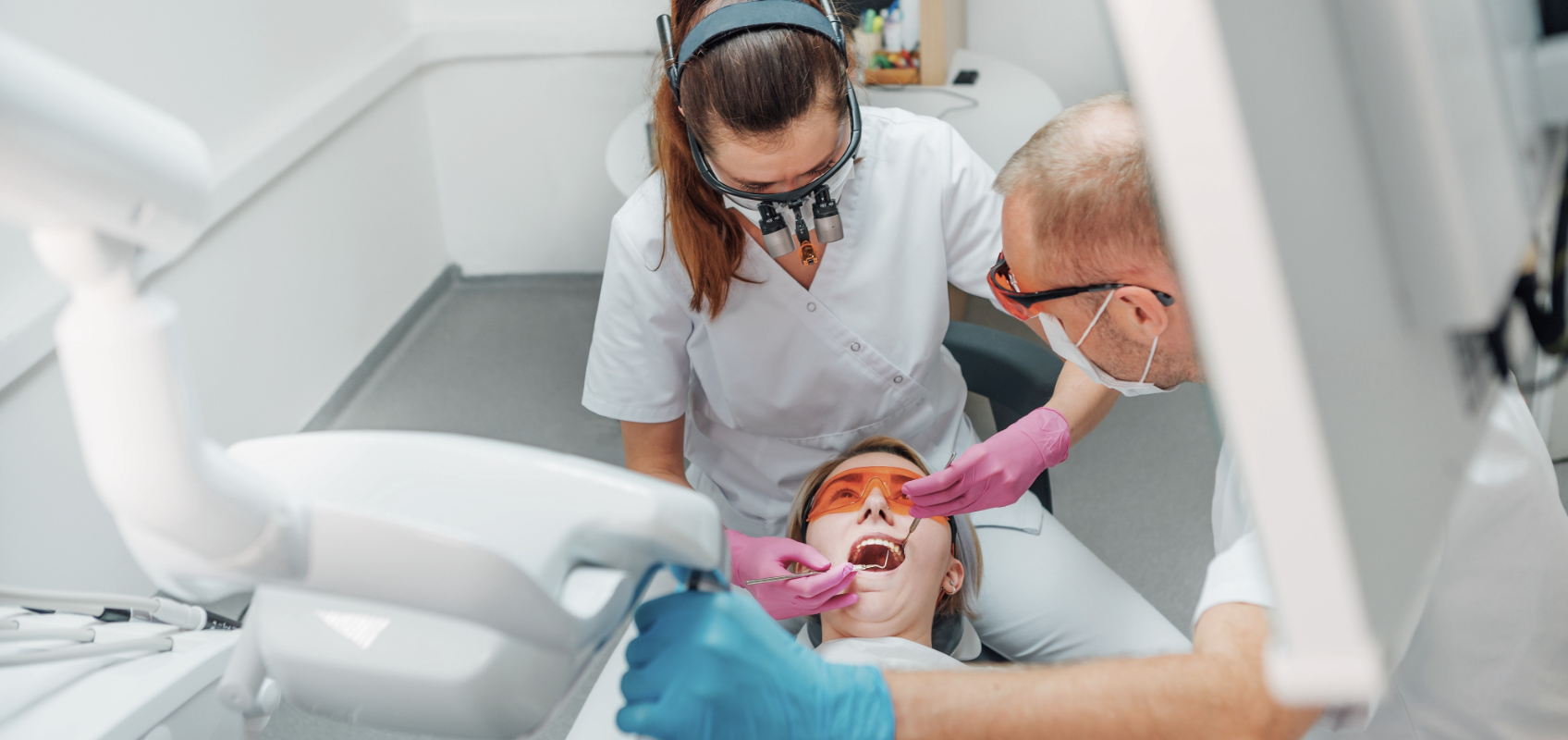
Where experienced practices often lose alignment
At the leadership level, breakdowns in patient experience are rarely about effort; they’re about inconsistency. Common friction points include:
- Team members delivering slightly different messages
- Undefined or evolving “new patient experience” standards
- Assumptions about what patients value
- Over-reliance on clinical quality to carry the experience
These gaps are subtle, but they directly influence trust, referrals, and long-term growth.
How to improve the dental patient experience at the leadership level
#1. Define the experience before you try to improve it
Most practices try to improve the patient experience without first defining it.
High-performing practices take the opposite approach: They decide what patients should feel, understand, and trust, then build systems to support it. Dr. Spear shares an example of intentional outcomes:
- A calm, comfortable environment
- A sense of being heard and cared for
- A comprehensive exam, unlike previous experiences
This is not accidental. It’s designed.
#2. Align your entire team around a single standard
A dental patient experience is only as strong as its weakest handoff.
As Dr. Spear notes: “Everybody on the team has to be clear about what that is… and what behaviors are necessary to get the correct outcome.”
If you want a consistent dental patient experience, your team cannot improvise it. Everyone has to be clear on what patients should expect and what behaviors create that outcome. In fact, research shows that patients value experience as much as the service itself, making consistency across the team critical to how your care is perceived.
High-performing practices define this in advance. For example, a calm environment, friendly and attentive interactions, a thorough exam that feels different from past visits, and a process where patients feel heard and involved in decisions.
When those outcomes are clearly defined, the dental patient experience becomes something the team delivers intentionally, not something left to chance. For leaders, this means:
- Defining non-negotiable behaviors
- Creating repeatable workflows
- Reinforcing expectations through training
Consistency is what transforms a good experience into a trusted one.
#3. Proactively shape patient expectations
If you don’t define expectations, patients default to past experiences. That creates variability you can’t control. Instead, leading practices:
- Communicate clearly before the first visit
- Explain what makes their exam or process different
- Set expectations around time, cost, and outcomes
You should start setting expectations differently across your marketing, word of mouth, and patient communication. If they were referred by a colleague, the messages you send them before they arrive at your office give you the chance to shape their expectations.
This reduces uncertainty and positions your care as intentional rather than reactive.
#4. Recognize that value is experiential, not clinical alone
One of the most important leadership insights is this: patients don’t evaluate dentistry the way dentists do.
Dr. Spear explains: “Patients buy on perceived value… and what creates perceived value? Experiences.”
Patients don’t make decisions based on fees alone. They make decisions based on perceived value, and the dental patient experience plays a major role in shaping that value. Research on customer experience consistently shows that perceived value is driven more by experience than price alone.
Think about Apple. Patients may question the cost of a crown while holding the latest iPhone, one of the most expensive options on the market. The difference isn’t price. It’s the experience, the clarity, and the confidence in what they’re getting.
The same principle applies in dentistry. When patients know what to expect, how long a visit will take, what will happen, and what it will cost, they feel more confident moving forward. That confidence is a critical driver in how to improve dental case acceptance, because patients are far more likely to move forward with care when they clearly understand both the value and the process behind it.
A strong dental patient experience isn’t just about clinical outcomes. It’s about clearly setting expectations, delivering consistently, and making patients feel informed every step of the way. For established practices, this means:
- Clinical excellence is assumed
- Experience is what defines value
- Communication is what translates care into trust
#5. Decide when to standardize and when to adapt
There are two viable models for delivering a strong patient experience:
- Standardize a defined process and clearly communicate it
- Adapt the experience based on individual patient expectations
Most successful practices blend both: A consistent foundation with flexibility where it matters.
The key is intentionality, not improvisation.
Why this matters for long-term practice growth
For practice leaders, improving the dental patient experience is not a soft skill; it’s a growth strategy. It directly impacts:
- Case acceptance
- Patient retention
- Referral patterns
- Team alignment and efficiency
Patients don’t refer solely because of clinical outcomes. They refer based on the experience surrounding those outcomes.
Where can practice leaders find support in this area?
Spear Education emphasizes that patient experience and clinical care must be integrated, not treated as separate priorities. Through structured education and team-based learning, practices can better align diagnosis, communication, and patient engagement into a cohesive system.
For leaders exploring how to create more consistent, intentional dental patient experiences, Spear offers several educational opportunities:
- The Dynamic Team Strategies for an Ever-Changing World workshop explores how teams can stay aligned and adaptable as patient expectations evolve.
- The Train Your Team to Shine: Best Practice Systems Playbook workshop focuses on building practical systems that support consistency across the entire patient journey.
- Spear Navigator provides ongoing support and resources to help practices implement and refine these concepts over time.
These offerings are designed to help practices move from variability to clarity, so the experience patients have is as intentional as the care they receive.
Why the dental patient experience drives long-term growth
Improving the dental patient experience starts at the leadership level. It requires clarity, consistency, and a willingness to define what “great” looks like, not just clinically, but experientially.
When expectations are intentionally shaped and consistently met, the result is not just better patient satisfaction, but stronger trust, higher value perception, and more predictable practice growth.
Frequently Asked Questions
SPEAR All access
One Membership, $555 More a Day
Practices on Spear All Access see a median daily production gain of $555, with a 9.9% median lift in hygiene production. That’s not from one course or one workshop. It comes from unlimited Spear and CDOCS workshops, the full online course library, role-based team training, practice analytics, and a dedicated Practice Growth Partner working with your team every month, all in one membership.
Featured Digest articles
Insights and advice from Spear Faculty and industry experts