- Article
- Periodontics
Back to Basics #1: Diagnosing Periodontitis with 2018’s Classification
Jonathan Du Toit
•
February 6, 2024
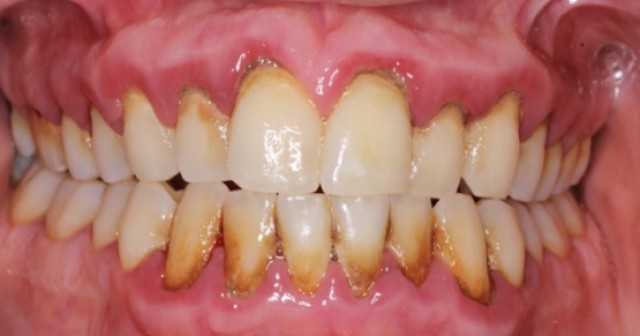
The landscape of diagnosing periodontitis underwent a notable transformation in 2018, stemming from discussions at the 2017 World Workshop on Classification. This effort aimed to create a pragmatic classification system for general dental use, introducing key concepts such as defining periodontal health, classifying peri-implant diseases, and incorporating risk factors. While the resulting system proved more intricate than initially envisioned, it underscored a fundamental distinction — classification sets the stage for diagnosing periodontitis, emphasizing the enduring nature of the condition despite variations in its activity over time.
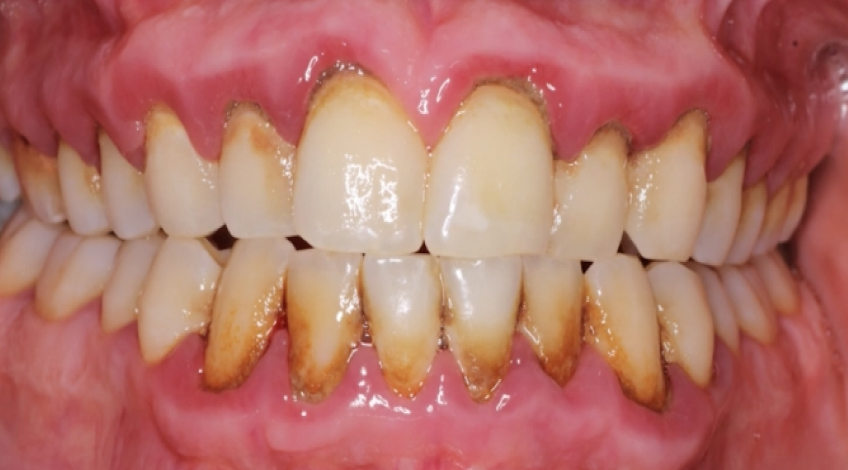
This two-part series, authored by Dr. Jonathan Du Toit, and featuring a foreword from Professor Iain Chapple, a contributor to the 2017 World Workshop, aims to provide a comprehensive guide on implementing the 2018 classification of periodontal and peri-implant diseases in everyday dental practice. This installment critically examines the key concepts developed during the 2017 World Workshop, shedding light on the complexities and challenges faced by clinicians.
2018 periodontal classification:
An introduction from professor Iain Chapple
The 2018 classification of periodontal and peri-implant diseases and conditions emerged from the 2017 World Workshop on Classification in Chicago. The original objectives were to produce a contemporary system that was based upon current evidence and was simple to implement in general dental practice.
Key concepts developed were:
- The first-ever case definition of periodontal health on an intact and reduced periodontium; the first classification system for peri-implant diseases.
- The concept that, as with a patient who has diabetes, once periodontitis develops, that patient is a periodontitis patient for life because the attachment loss was essentially irreversible and they remain at risk. However, they can become and remain periodontally stable.
- The embedding of “risk” based upon historical disease experience by staging (historical disease severity) and grading (historical rate of progression).
- The use of the 30% threshold to define extent as localized gingivitis (30% of sites) and periodontitis (30% of teeth).
- Making the framework “live” to permit updates when new evidence emerges and/or to incorporate biomarkers.
As is often the case when 150 academics meet over several days, the resulting system was far more complex than originally envisaged, but it represented a positive step forward. It is essential, however, to remember that classification informs diagnosis; the two are not the same. Therefore, a periodontitis patient is a periodontitis patient for life, but they may not have active periodontitis at a given time point, because they have no pockets of >4 mm or 4 mm sites that bleed on probing.
The BSP implementation was necessary to ensure the core classification concepts could be implemented in the UK NHS system and succeeded rapidly in achieving this. Several other countries like the Netherlands adopted similar implementation approaches. However, they are not alternative classifications; there is only one system, as published simultaneously in 2018 jointly in the Journal of Clinical Periodontology and the Journal of Periodontology.
Diagnosing periodontitis with the 2018 classification
There are two main diseases dentists worldwide are going to treat throughout their careers: caries and periodontitis.1,2 Way ahead of aesthetic needs is the imperative to address a patient’s oral disease. Both diseases have a microbial etiology, but while dental caries is mostly a rapid and accurate diagnosis, diagnosing and classifying a periodontitis patient seems to elude many.3
This was the very reason (among others) the 1999 classification was revamped in the World Workshop of 2017.4 The world’s most learned and accomplished minds in periodontology gathered to renew the classifications. I will address those key changes and how, with slight modification and interpretation, the “newer” 2018 classification can effectively be implemented in everyday dental practice.
Updates from previous classifications
Classifications exist to provide structure in the clinical setting. Some may argue that classifications are laborious and often exist to immortalize a published clinician’s name. While that may be arguable, disease classifications ought to attribute severity, couple a diagnosis to appropriate treatments, and when possible, also indicate prognostic outcomes.
This structure for diagnosing periodontitis has been published in the literature, endorsed by recognized societies, and taught in dental training programs for decades.5 The updated American Academy of Periodontology classification was published in 1999 and was practiced for nearly two decades.6
Note that “active” is not strictly a descriptor from the 2018 classification; instead, the correct diagnostic term is “unstable periodontitis.” However, for this article, “active” notes that a patient may have suffered historic loss of attachment and currently has inflammation, pockets, bleeding on probing, etc.
This previous classification provided comprehensive lists of diseases affecting the periodontium. On page 3 of the publication, obscured among the many listed conditions, is the main challenge dentists face daily: periodontitis. Previously, the disease subtypes were segregated arbitrarily by the patient’s age. Chronic periodontitis was then updated to adult periodontitis, a slowly progressive constellation of destructive periodontal diseases. Aggressive periodontitis was the updated diagnosis in younger patients, a “designation for a group of dissimilar destructive periodontal diseases that affected young patients” (i.e., prepubertal, juvenile, and rapidly progressive periodontitis).6
In the 1999 AAP classification, diagnosis required counting the number of clinical attachment loss sites (a term that also greatly eludes most dentists) and assigning a severity (slight, moderate, severe). The dentist would then total the teeth according to their severity, and the severity in the majority was the diagnosis. An example of such a diagnosis would be generalized severe aggressive periodontitis. It was an exhaustive exercise. Again, compare this diagnostic process to our daily caries diagnoses. And if the 1999 classification were not challenging enough, further classifications were introduced by authors, offering “compilations of diagnoses” toward increased accuracy.7 An example of the Van der Velden classification is generalized minor, localized moderate, localized severe, postadolescent periodontitis. Published in 2005, this classification multiplied the diagnostic effort required and borrowed terminology from the 1989 World Workshop.
The 2018 classification for periodontal and peri-implant diseases
In the winter of 2017, the world’s brightest minds in periodontology conceptualized the new classification for periodontal and peri-implant diseases.4 The newer classification (referred to as “newer” because it’s not brand-new) identifies three forms of the disease:8
- Periodontitis. An inflammatory, infectious disease. This form is certainly the more common variant we see and treat.
- Necrotizing periodontitis. Not as common and evidenced by clinical necrosis.
- Periodontitis as a manifestation of systemic disease. For example, Papillon-Lefevre, a rare condition most clinicians will not see in their careers.
The publications from the consensus total 291 pages. Summarizing all these would belabor the point that extensive work had gone into revamping the classifications. A major revision to note, though, is that periodontitis patients are now staged and graded.9 Staging speaks to the severity of the disease, the difficulty of the anticipated treatment. Grading speaks to the disease rate of progression, the patient’s risk profile. Below are tabled summaries guiding clinicians through this newer diagnostic process.
While relief was sought from the previous, convoluted, cumbersome diagnostics, these tables are, however, similarly complex. To illustrate this, consider if these tables were available to you chairside while you’re diagnosing a patient. After having completed a comprehensive periodontal chart and the necessary radiographs, one would have to navigate through a series of “if this, then that.” For example, do Stage III and IV differ only by the loss of an additional tooth? And what if the Stage III complexity list contradicts Stage IV?
| Table 1: Periodontitis — Staging Staging intends to classify the severity and extent of a patient’s disease based on the measurable amount of destroyed and/or damaged tissue as a result of periodontitis and to access the specific factors that may attribute to the complexity of long-term case management. Initial stage should be determined using clinical attachment loss (CAL). If CAL is not available, radiographic bone loss (RBL) should be used. Tooth loss due to periodontitis may modify stage definition. One or more complexity factors may shift the stage to a higher level. | |||||
| Periodontitis | Stage I | Stage II | Stage III | Stage IV | |
| Severity | Interdental CAL (at site of greatest loss) | 1–2 mm | 3–4 mm | ≥ 5 mm | ≥ 5 mm |
| RBL | Coronal third (< 15%) | Coronal third (15–33%) | Extending to middle third of root and beyond | Extending to middle third of root and beyond | |
| Tooth loss (due to periodontitis) | No tooth loss | ≤ 4 teeth | ≥ 5 teeth | ||
| Complexity | Local | • Max probing depth ≤ 4 mm • Mostly horizontal bone loss | • Max probing depth ≥ 5 mm • Mostly horizontal bone loss | In addition to Stage II complexity: • Probing depths ≥ 6 mm • Vertical bone loss ≥ 3 mm • Furcation involvement Class II or III • Moderate ridge defects | In addition to Stage III complexity: • Need for complex rehabilitation due to: ° masticatory dysfunction ° Secondary occlusal trauma (mobility degree ≥ 2°) ° Severe ridge defects ° Bite collapse, drifting, flaring <20 remaining teeth (10 opposing pairs) |
| Extent and distribution | Add to stage as descriptor | For each stage, describe extent as: localized (<30% of teeth involved); generalized; molar/incisor pattern | |||
| Adapted from Tonetti, Greenwell, Kornman, J Periodontol 2018;89 (Suppl 1): S159-S172. | |||||
| Table 2: Periodontitis — Grading Grading aims to indicate the rate of periodontitis progression, responsiveness to standard therapy, and potential impact on systemic health. Clinicians should initially assume Grade B disease and seek specific evidence to shift to Grade A or C. | |||||
| Progression | Grade A: Slow Rate | Grade B: Moderate Rate | Grade C | ||
| Primary criteria Whenever available, direct evidence should be used | Direct evidence of progression | Radiographic bone loss or CAL | No loss over 5 years | 2 mm over 5 years | ≥ 2 mm over 5 years |
| Indirect evidence of progression | % bone loss / age | <0.25 | 0.25 to 1.0 | >1.0 | |
| Case phenotype | Heavy biofilm deposits with low levels of destruction | Destruction commensurate with biofilm deposits | Destruction exceeds expectations given biofilm deposits; specific clinical patterns suggestive of periods of rapid progression and/or early onset disease | ||
| Grade modifiers | Risk factors | Smoking | Nonsmoker | < 10 cigarettes/day | ≥ 10 cigarettes/day |
| Diabetes | Normoglycemic/no diagnosis of diabetes | HbA1c < 7.0% in patients with diabetes | HbA1c ≥ 7.0% in patients with diabetes | ||
| Citation: Adapted From Tonetti, Greenwell, Kornman, J Periodontol 2018;89 (Suppl 1): S159-S172. | |||||
Consider grading for a moment. One approach to grade your patient is to calculate the ratio between the patient’s age and their radiographic bone loss. However, the amount of dental plaque in relation to the attachment loss could contradict the grading — for example, heavy biofilm deposit and a high level of destruction. Consider the grade modifiers. In the staging and grading of other diseases, such as cancer, never has a habit such as smoking altered the diagnosis and classification.10
The above commentary on the newer 2018 classification aims to impress some of the potential challenges. Offering this critique may seem arrogant, because a collection of the greatest in periodontology produced the classification. Consider, though, for a moment, if you could recall all the factors from these tabled summaries from memory and apply them rapidly to patients needing diagnoses. Even with these summaries available at the consultation, many would struggle. What, then, is the way forward?
References
- Wen, P. Y. F., Chen, M. X., Zhong, Y. J., Dong, Q. Q., & Wong, H. M. (2022). Global Burden and Inequality of Dental Caries, 1990 to 2019. Journal of Dental Research, 101 (4), 392-9.
- Zhang, X., Wang, X., Wu, J., Wang, M., Hu, B., Qu, H., et al. (2022). The global burden of periodontal diseases in 204 countries and territories from 1990 to 2019. Oral Diseases.
- American Academy of Periodontology. (2015). Task Force Report on the Update to the 1999 Classification of Periodontal Diseases and Conditions. Journal of Periodontology, 86 (7), 835-8.
- Chapple, I. L. C., Mealey, B. L., Van Dyke, T. E., Bartold, P. M., Dommisch, H., Eickholz, P., et al. (2018). Periodontal health and gingival diseases and conditions on an intact and a reduced periodontium: Consensus report of workgroup one of the 2017 World Workshop on the Classification of Periodontal and Peri-Implant Diseases and Conditions. Journal of Periodontology, 89 (Suppl 1), S74-s84.
- The American Academy of Periodontology. Proceedings of the World Workshop in Clinical Periodontics. Chicago: The American Academy of Periodontology; 1989: I/23-I/24.
- Armitage, G. C. (1999). Development of a classification system for periodontal diseases and conditions. Annals of Periodontology, 4 (1), 1-6.
- van der Velden, U. (2005). Purpose and problems of periodontal disease classification. Periodontology 2000, 39, 13-21.
- Caton, J. G., Armitage, G., Berglundh, T., Chapple, I. L. C., Jepsen, S., Kornman, K. S., et al. (2018). A new classification scheme for periodontal and peri-implant diseases and conditions – Introduction and key changes from the 1999 classification. Journal of Clinical Periodontology, 45 Suppl 20, S1-s8.
- Tonetti, M. S., Greenwell, H., & Kornman, K. S. (2018). Staging and grading of periodontitis: Framework and proposal of a new classification and case definition. Journal of Periodontology, 89 Suppl 1, S159-s172.
- El-Naggar, A. K., Chan, J. K. C., Rubin Grandis, J., Takata, T., Slootweg, P. J., International Agency for Research on C. (2017). WHO classification of head and neck tumors. Lyon, France: International Agency for Research on Cancer (IARC) Lyon, France.
SPEAR campus Workshops
Learn Hands-on From Faculty Who Still Practice
A few days at Spear Campus can change how you diagnose, plan, and present cases, not through more lectures, but through hands-on training led by faculty who treat patients every week. Work through real cases in small groups and leave with techniques you can use on your next patient.
Featured Digest articles
Insights and advice from Spear Faculty and industry experts