Evaluating Facial Esthetics: Lip Symmetry
Among the aspects of the face often overlooked during esthetic procedures are the lips of a patient. In reality, the lips create the frame for the teeth just like a picture frame for a piece of art. I’m sure many of you have taken a photograph to a frame shop and have evaluated multiple frames to see what looks best. You can note that as specific parameters of the frame are changed, so is the appearance of the artwork. This is also true for smiles.
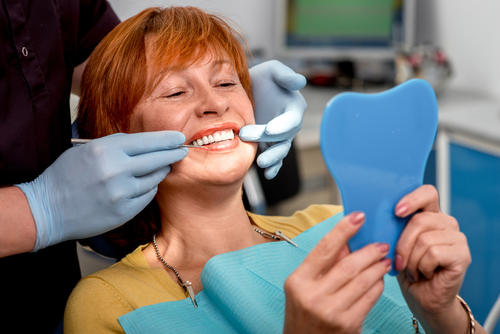
Generally, I evaluate two primary areas concerning the lips: how they move (what I will call symmetry) and their thickness or fullness. Of course, it is necessary to determine if the patient plans to alter their lips for the following evaluation to have value in planning treatment. If they do plan to use fillers or any other procedure that alters the lips, I would prefer that they be done prior to the dental procedures.
Upper Lip Symmetry in a Full Smile
My first evaluation begins with viewing the upper lip moving from rest to a full smile. Is it symmetrical in its movement, or does one side rise further up than the other? Research has shown that around 30% of adults have some form of lip asymmetry, so it is very common. The challenge is that if one side rises further up, the side will show more teeth and potentially more gingival display in a full smile.
It is possible to improve this asymmetry unilaterally with Botox, ensuring the higher side doesn’t move as much, but most patients don’t choose the Botox correction. In reality, what this means is that we need to counsel the patient about how common this finding is and that it simply means they will always have a slight asymmetry to their smile. In other words, I don’t let the upper lip asymmetry alter my tooth position choices or gingival levels.
Smile Symmetry in the Lower Lip
My subsequent evaluation is to watch the lower lip move from rest to a full smile, again looking for symmetry. If the lower lip is asymmetric in its movement, it can be problematic for the tooth position ultimately chosen.
As dentists, we often talk about using the interpupillary line as a reference for leveling the incisal plane-occlusal plane, but the eyes are quite a distance from the edges of the teeth; it is actually quite difficult to look at the eyes and teeth at the same time.
In addition, it is not uncommon for a patient to have significant asymmetry in the levels of one eye relative to the other. The most crucial thing in determining the incisal plane is not the interpupillary line but the relationship of the teeth to the lower lip; it is a pleasing smile line, if you will.
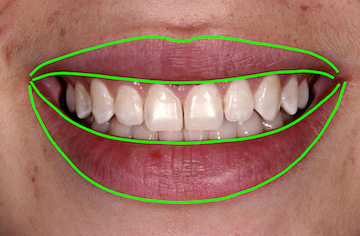
This becomes challenging if the lower lip is asymmetric, as creating what you perceive as a level occlusal plane relative to the eyes can create an unattractive smile line relative to the lower lip. In these instances, the lip does alter how I position the teeth.
The Role of Asymmetry in Treatment Planning
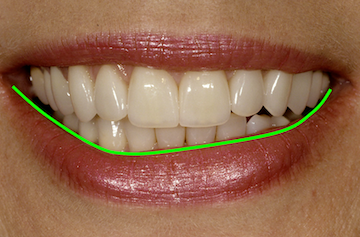
In the figure above, the patient’s lower lip has a significant asymmetry during a full smile, going up much more on the left and down on the right. My original diagnostic wax-up and provisional restorations were done parallel to her interpupillary line, but it became clear almost immediately after the provisional restorations were placed that it wasn’t a pleasing incisal plane in relation to her lower lip.
I modified the provisional, shortening the left lateral, canine, and premolars until the relationship was more pleasant in a full smile. A model of the corrected provisional was then sent to the laboratory to communicate the correct tooth position. Obviously, shortening the teeth visually is still necessary to maintain an acceptable functional relationship. The teeth don’t exactly follow her lip because the amount of lip asymmetry is too great for that, but they do have a pleasant relationship to the lip.
SPEAR campus
Hands-On Learning in Spear Workshops
With enhanced safety and sterilization measures in place, the Spear Campus is now reopened for hands-on clinical CE workshops. As you consider a trip to Scottsdale, please visit our campus page for more details, including information on instructors, CE curricula and dates that will work for your schedule.

By: Frank Spear
Date: May 4, 2017
Featured Digest articles
Insights and advice from Spear Faculty and industry experts