- Article
- Occlusion / Wear
Anterior Bite Guard: The ARA Night Guard You Never Heard Of
Jeffrey Rouse
•
November 4, 2019
Understanding anterior bite guards and anterior repositioning appliances
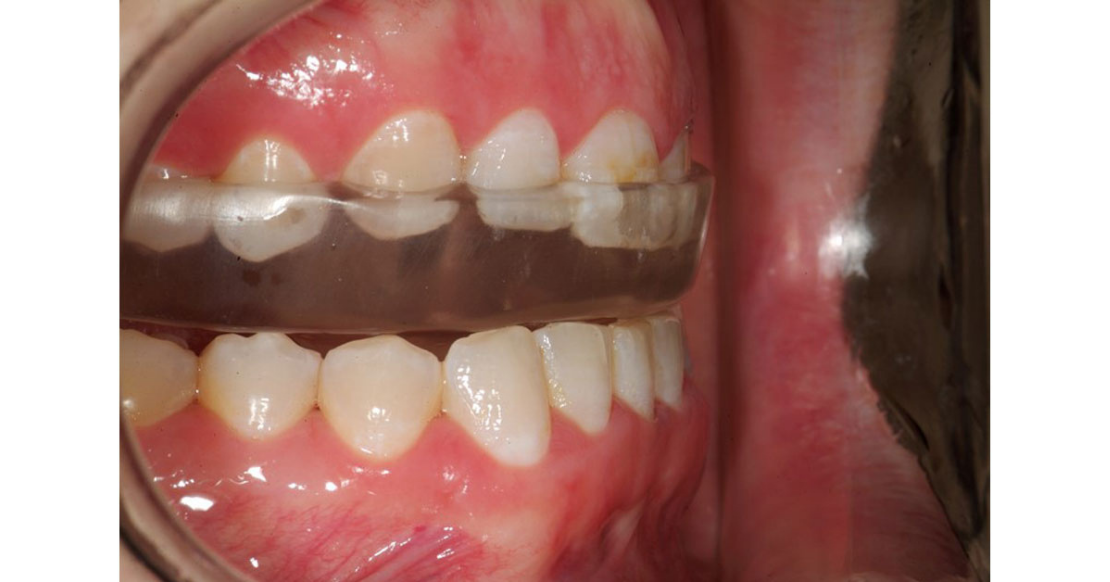
With the introduction of the Seattle Protocol in 2016, dentists can now provisionally determine the biologically optimal anterior bite guard or other occlusal appliance for each patient before fabricating a definitive splint. Rather than relying solely on diagnosis or intuition, the appliance is first tested intraorally to confirm that it provides the desired biologic response. (For more, read Choosing the Correct Nightguard: Let the Patient Decide.)
The ideal appliance identified through the Seattle Protocol may come from one of five major categories: stabilizing splint, anterior repositioning appliance (ARA), dual arch, dual arch ARA, or mandibular advancement splint.
This article focuses on the anterior repositioning appliance, a type of anterior bite guard that many dentists have heard of but fully understand. Although the term anterior bite guard is commonly used, it actually encompasses several different appliance designs intended to treat distinct conditions.
Understanding those differences is essential. Selecting the wrong appliance for the wrong diagnosis can lead to disappointing results, while selecting the correct one can significantly improve patient comfort, joint function, and long-term outcomes.
For a comprehensive overview of how these appliance designs compare and when each is indicated, see our article Occlusal Appliances: The Options.
What is an anterior bite guard?
An anterior bite guard is a broad term for appliances that direct occlusal contact primarily through the anterior teeth. However, that umbrella actually includes two distinct appliance designs with different purposes.
The first is the anterior-only deprogrammer, a family of appliances that includes the Hawley bite plane, Sved appliance, NTI, and Best Bite Discluder. These appliances eliminate posterior occlusal contact during clenching and excursive movements. Their primary purpose is to interrupt parafunctional muscle activity, reduce muscle hyperactivity, and protect the dentition from bruxism-related wear.
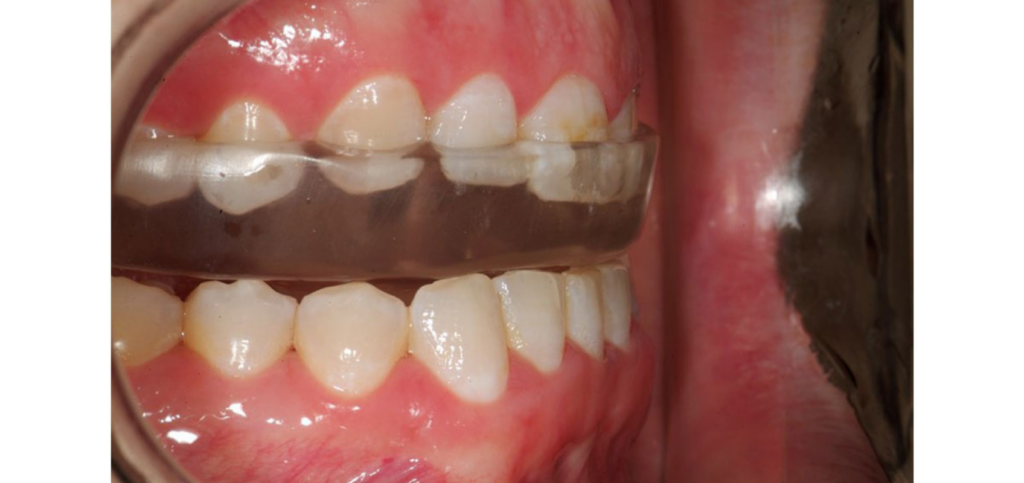
The second design is the anterior repositioning appliance (ARA), the focus of this article. Unlike an anterior-only deprogrammer, the ARA is a full arch appliance that uses anterior indentations to guide the mandible into a specific biologically determined position. Rather than simply removing posterior contact, it’s designed to improve the relationship between the condyle and articular disc in carefully selected patients.
Although both appliances are commonly referred to as anterior bite guards, they address different diagnoses. Confusing one with the other can result in fabricating the wrong appliance for the patient’s condition.
Comparison of common anterior bite guard designs
|
Appliance |
Covers posterior teeth? |
Primary purpose |
|---|---|---|
|
NTI |
No |
Reduce clenching forces and muscle activity |
|
Sved appliance |
No |
Muscle deprogramming |
|
Hawley bite plane |
No |
Deprogramming and bruxism management |
|
ARA |
Yes |
Guide the mandible into a therapeutic position to manage displaced TMJ discs |
What is an anterior repositioning appliance?
The anterior repositioning appliance was first described in the dental literature in 1951.¹ The original design covered the maxillary premolars and molars while using a palatal connector. Small anterior indentations guided the opposing teeth into a protrusive maximum intercuspal position.
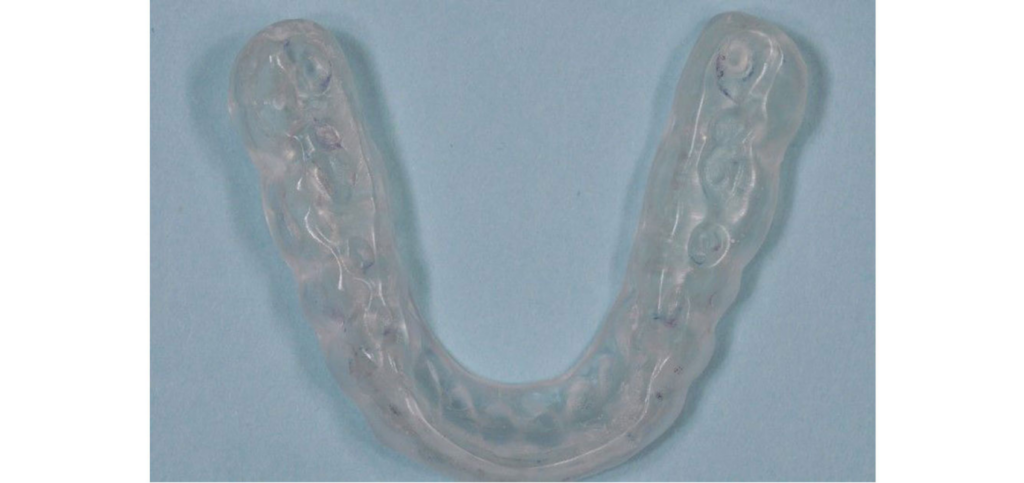
The primary objective was to reposition a displaced temporomandibular joint disc into a normal load-bearing relationship with the condyle. After healing, clinicians hoped the condyle-disc relationship could gradually be returned to the fossa while maintaining normal function through adjustments to the appliance.
Although appliance designs have evolved considerably since then, the underlying biologic goal remains unchanged: restoring a healthy condyle-disc relationship whenever possible.
When successful, an anterior repositioning appliance can eliminate pain, improve function, and significantly reduce symptoms associated with internal derangement. Numerous studies have demonstrated that ARAs offer important advantages over traditional stabilization splints in appropriately diagnosed patients.²
However, maintaining disc recapture after discontinuing therapy remains challenging. One investigation demonstrated a 100% disc recapture rate while patients wore the appliance, but only 40.6% maintained that relationship after splint therapy ended.³
How is the therapeutic bite position determined?
The effectiveness of an anterior repositioning appliance depends on accurately determining the therapeutic mandibular position. Two primary approaches are used: clinical positioning and imaging-guided positioning.
Clinical techniques typically begin with the patient biting on tongue depressors until the joint click disappears. The mandible is then slowly retruded until the click is about to return. At that point, the clinician records the posterior bite registration while the patient maintains that position.
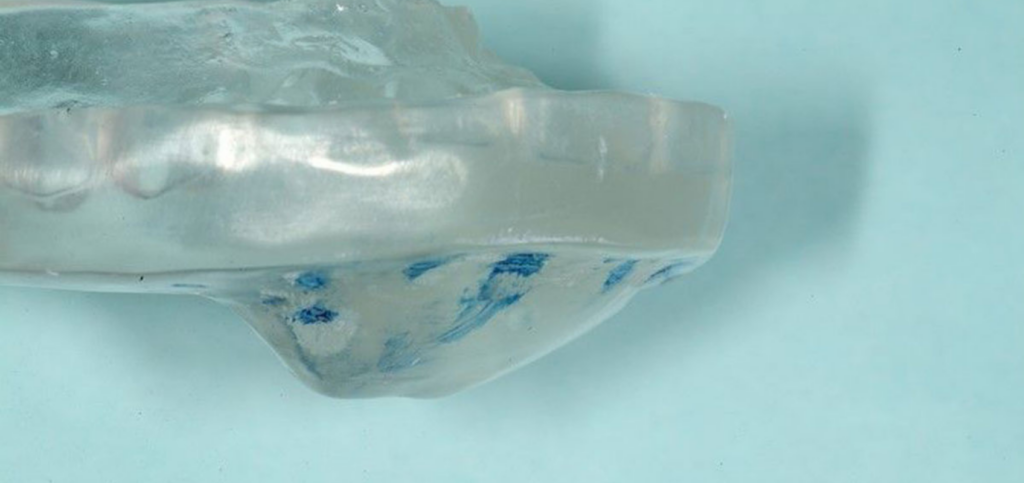
Although this approach is clinically practical, its success rate for recapturing displaced discs without imaging guidance is approximately 70%.⁴
How does imaging improve anterior repositioning appliance therapy?
Advanced imaging can significantly improve the accuracy of anterior repositioning appliance therapy.
Arthrograms, CT scans, and magnetic resonance imaging (MRI) allow clinicians to visualize the relationship between the condyle and articular disc before determining the final mandibular position.⁵
One study evaluated 56 patients whose appliances were fabricated using clinical references alone. Twenty-six patients still exhibited displaced discs after treatment.
When arthrograms were used to guide mandibular positioning for those patients, disc recapture was achieved in 22 of the 26 cases. MRI-guided positioning further improved outcomes, producing an overall disc recapture rate of approximately 96%.
These findings demonstrate that imaging can substantially improve the predictability of anterior repositioning appliance therapy in appropriately selected patients.
What are the airway benefits of an anterior repositioning appliance?
Although disc recapture is the primary mechanical goal of an anterior repositioning appliance, the design can also provide important airway benefits for selected patients.
Research has shown that a modest mandibular advancement of approximately 3 mm can reduce nasal resistance, improve nasal patency, and lower the critical closing pressure associated with obstructive sleep apnea. These biologic improvements may enhance airway function in patients with maxillary hypoplasia and nasal incompetence. Females appear to respond particularly well to these small protrusive changes.
This airway-friendly version of the appliance closely resembles what is sometimes called a mandibular anterior repositioning appliance. Unlike the single-arch appliance discussed throughout this article, that design typically covers both arches and positions the mandible anterior to a fully seated joint position. It’s more commonly prescribed to manage snoring or obstructive sleep apnea than to treat a displaced TMJ disc.
Although the two appliances share similar mechanics, their diagnoses, treatment goals, and long-term management differ significantly.
Why isn’t the anterior repositioning appliance taught more often?
Despite decades of published research supporting the anterior repositioning appliance, many dentists receive little or no formal education on its use.
One reason is concern over potential occlusal changes during prolonged wear. When patients wear an anterior repositioning appliance continuously for three to six months, condylar remodeling may occur. As remodeling progresses, the patient’s maximum intercuspal position may change, necessitating orthodontic or restorative treatment to maintain the new mandibular position permanently.⁶
Historically, that possibility has caused many clinicians to avoid prescribing this type of anterior bite guard altogether.
However, the literature suggests these occlusal changes are primarily associated with continuous 24-hour wear or with dual arch mandibular advancement appliances worn nightly as sleep appliances.
Nighttime wear of a single-arch anterior repositioning appliance has not been shown to predictably alter maximum intercuspation. Even so, the Seattle Protocol recommends daily morning repositioning with an AM Aligner following nighttime use (see the Seattle Protocol Step 5: Dual Arch Anterior Repositioning Splint video lesson for additional details). Morning repositioning helps return the dentition to its habitual intercuspal position after appliance removal.
In addition, studies have demonstrated that partial-time wear of an anterior repositioning appliance can successfully relieve symptoms while minimizing the occlusal changes more commonly associated with full-time therapy.⁷
When should a dentist consider an anterior repositioning appliance?
An anterior repositioning appliance may be appropriate when clinical findings support a diagnosis that benefits from therapeutic mandibular repositioning. Common indications include:
- Anterior disc displacement with reduction
- TMJ pain associated with a displaced articular disc
- Joint clicking that resolves during mandibular protrusion
- Patients who demonstrate a favorable response during provisional Seattle Protocol testing
- Select airway-related conditions requiring mild mandibular advancement
Successful treatment depends on an accurate diagnosis and careful patient selection. The appliance should be viewed as one option within a comprehensive occlusal treatment plan rather than a universal solution for all TMJ disorders.
When is another anterior bite guard a better choice?
Not every patient requiring an anterior bite guard is an appropriate candidate for an anterior repositioning appliance.
In many situations, another appliance design may be more appropriate, including:
- Bruxism management without evidence of disc displacement
- Muscle deprogramming before restorative treatment
- Patients requiring a traditional stabilization splint
- Patients without clinical signs of internal joint derangement
- Cases in which mandibular repositioning offers no biologic advantage
Because several appliance designs are commonly referred to as anterior bite guards, establishing the correct diagnosis before selecting an appliance is essential.
Key takeaways about anterior bite guards
Selecting the correct anterior bite guard begins with understanding that the term describes several different appliance designs rather than a single type of splint.
An anterior repositioning appliance is fundamentally different from anterior-only deprogrammers such as the NTI, Sved appliance, or Hawley bite plane. Rather than simply reducing posterior occlusal contact, it is designed to guide the mandible into a therapeutic position that can improve condyle-disc relationships and, in some patients, airway function.
Although concerns about occlusal changes have historically limited its use, decades of published research support the biologic and mechanical advantages of this appliance when prescribed for the appropriate diagnosis.
The Seattle Protocol provides clinicians with a predictable way to provisionally evaluate whether an anterior bite guard, in the form of an anterior repositioning appliance, is the biologically optimal choice before definitive fabrication, helping dentists make more informed treatment decisions and improve patient outcomes.
Contributing Author
Dr. Frank Spear
References
- Ireland, V. E. (1951). The problem of “the clicking jaw”.
- Lundh, H., Westesson, P. L., Jisander, S., & Eriksson, L. (1988). Disk-repositioning onlays in the treatment of temporomandibular joint disk displacement: comparison with a flat occlusal splint and with no treatment. Oral Surgery, Oral Medicine, Oral Pathology, 66(2), 155-162.
- Chen, H. M., Liu, M. Q., Yap, A. U. J., & Fu, K. Y. (2017). Physiological effects of anterior repositioning splint on temporomandibular joint disc displacement: a quantitative analysis. Journal of Oral Rehabilitation, 44(9), 664-672.
- Kurita, H., Kurashina, K., Baba, H., Ohtsuka, A., Kotani, A., & Kopp, S. (1998). Evaluation of disk capture with a splint repositioning appliance: clinical and critical assessment with MR imaging. Oral Surgery, Oral Medicine, Oral Pathology, Oral Radiology, and Endodontology, 85(4), 377-380.
- Simmons III, H. C., & Gibbs, S. J. (1995). Recapture of temporomandibular joint disks using anterior repositioning appliances: an MRI study. CRANIO®, 13(4), 227-237.
- Liu, M. Q., Chen, H. M., Yap, A. U. J., & Fu, K. Y. (2012). Condylar remodeling accompanying splint therapy: a cone-beam computerized tomography study of patients with temporomandibular joint disk displacement. Oral Surgery, Oral Medicine, Oral Pathology and Oral Radiology, 114(2), 259-265.
- Conti, P. C. R., Miranda, J. E. S., Conti, A. C. C. F., Pegoraro, L. F., & Araújo, C. D. R. P. D. (2005). Partial time use of anterior repositioning splints in the management of TMJ pain and dysfunction: a one-year controlled study. Journal of Applied Oral Science, 13, 345-350.
SPEAR Membership
Try Spear Free For 7 Days
See what a Spear Membership can do for you and your team before you decide. A free 7-day trial gives you full access to Spear Online’s clinical CE courses and practice team training, so you can find the membership level that fits your practice.
Featured Digest articles
Insights and advice from Spear Faculty and industry experts