- Article
- Techniques / Materials
How to Get Rid of Gag Reflex: Dental Techniques That Work
Doug Benting
•
June 8, 2016

“How long does the impression have to stay in my mouth?”
Whatever your answer, 90 seconds or four minutes, the patient’s follow-up is typically a deep breath and the explanation: “I have a very sensitive gag reflex,” which sets the tone for what you are about to see. The anxiety is palpable; the patient feels the tension, as does the dentist or the assistant about to make an impression.
Getting rid of a gag reflex, or at least managing it effectively in a dental setting, is one of the more rewarding clinical challenges a practitioner can work through with a patient.
There is a range of triggers for the protective gag reflex. At one end is a patient who cannot tolerate anything intraoral, even a toothbrush, mirror, or explorer. At the other end are patients who have simply had a bad experience with impression material oozing past a tray, triggering panic as they try to maintain an airway.
Understanding the gag reflex: what it is and why it happens
Patients often ask how to get rid of gag reflex symptoms before impressions, dentures, or other dental procedures.
The gag reflex, also known as the pharyngeal reflex, is a protective mechanism that prevents foreign objects from occluding the throat, pharynx, larynx, and trachea. It’s involuntary, which is precisely what makes it difficult to simply “turn off” and why helping a patient get rid of their gag reflex requires a deliberate, multi-layered approach.
Why do some patients have a more severe gag reflex than others?
There is no single explanation. In most cases, it reflects a combination of anatomical factors such as constricted airways, hypersensitivity of the relevant neural pathways, and anxiety or psychological associations with dental treatment.
The primary anatomical driver in dentistry is the glossopharyngeal nerve (CN IX), with sensory fibers concentrated in the posterior third of the tongue. When impression material, a prosthesis, or any instrument contacts that zone, the reflex fires.
Two common presentations:
- A full arch impression where alginate or silicone oozes past the posterior extension of the tray and, as soon as it contacts the tongue, creates an uncomfortable cycle of controlled breathing alternating with a convulsive gag response.
- A complete denture that the patient can tolerate for only a short period before removing it out of frustration, driven by the posterior third of the tongue brushing against the abrupt transition between the soft palate and the denture base.
Understanding this mechanism is not just clinically useful; it’s also the foundation of every technique used to reduce or eliminate the gag reflex in a dental setting.
How to get rid of gag reflex during dental treatment
Until we know otherwise or have a cure for hypersensitive gag reflexes, we can only manage the issue with a variety of methods that may or may not work; therefore, the more tricks you have in your bag for managing these patients, the better off you and your patient will be.
Technique 1: Distraction and redirecting the reflex
Distraction is one of the most accessible tools for reducing the gag reflex because it requires no additional materials and can be deployed the moment the reflex first appears. The goal is to orient the patient’s neurological focus away from the posterior trigger zone.
Nasal diaphragmatic breathing is a highly effective first step. Slow, even breaths through the nose reduce stimulation of the sympathetic nervous system, the fight-or-flight pathway that heightens gag sensitivity.
Coach the patient to breathe in through the nose, expand the diaphragm, and exhale slowly. For many patients, this is enough to meaningfully extend the working window.
Lifting both feet off the chair is a simple physical redirect that interrupts the reflexive cycle. Telling the patient to do so the moment they feel the urge to gag shifts conscious attention to a different body system.
Topical anesthetics applied to the soft palate or posterior tongue reduce sensory input at the trigger site.
Options include topical gels, sprays, or, in more advanced cases, a glossopharyngeal nerve block.
Garg published a technique using a nerve block for endodontic patients with severe gag reflexes who require rubber dam placement, a context in which conventional distraction approaches are often insufficient.1
Pressure points offer another option that must be demonstrated before the procedure begins:
- Squeezing the thumb by wrapping the four fingers of the same hand around it, forming a fist with the thumb inside.
- Using the right hand to pinch the web of skin between the thumb and index finger of the left hand.
- Pressing the thumb just below the lower lip and above the chin, which creates mild discomfort that redirects attention away from the posterior trigger.
Salt placed on the sides of the tongue is a low-tech option that produces meaningful results for some patients, though the mechanism is not fully understood.
Music or other sensory input during the procedure can also help patients redirect attention away from the gag reflex with no clinical downside.
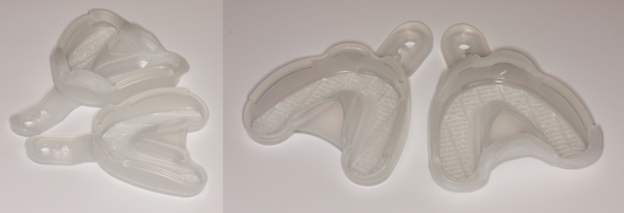
For impression-specific gag responses, adding boxing wax or Scotch tape to create a posterior barrier on the impression tray is a simple mechanical intervention that limits the extent of material flow.
Technique 2: Expansion and desensitizing the gag reflex over time
For patients with a hypersensitive gag reflex rather than a situationally triggered one, the most durable way to eliminate the reflex is progressive desensitization. The goal is to retrain the reflex by gradually and repeatedly stimulating the hypersensitive zone in low-stakes settings until the response diminishes.
One practical approach is to have the patient work at home with a toothbrush or tongue scraper, gently stimulating the posterior tongue and soft palate a little more with each session over days and weeks. This is similar in concept to the successive aligner trays used to move natural teeth, each increment builds tolerance for the next.
For patients working to tolerate a complete upper denture, a record base made with the Ministar can serve as a progressive training tool. A bilaminar thermoplastic base, Copyplast covered by Splint Biocryl, can be fabricated in multiple versions with progressively longer posterior extensions. Each is given to the patient to wear at home until comfortable, after which the next is advanced to.
When evaluating a complete denture patient with a sensitive gag reflex, three prosthetic factors are critical to address:
- The thickness of the existing acrylic base limits tongue space. For a patient who tolerates an ill-fitting denture, using it as a custom tray preserves familiar contours and reduces bulk in the new base.
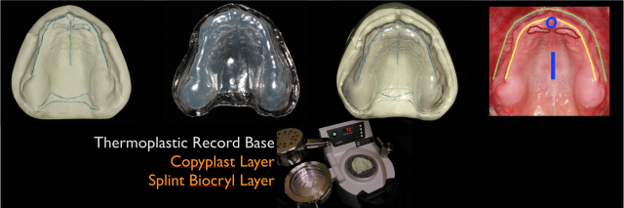
- Thickness at the distal extension and posterior palatal seal. The goal is a beveled or feathered edge at the posterior extension so the patient cannot detect a sharp transition between the soft palate and the denture base. Eliminating that transition removes the glossopharyngeal trigger.
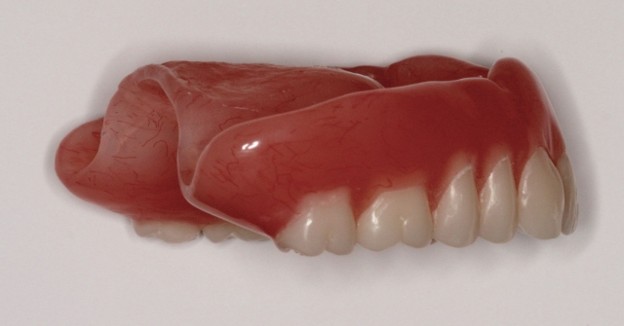
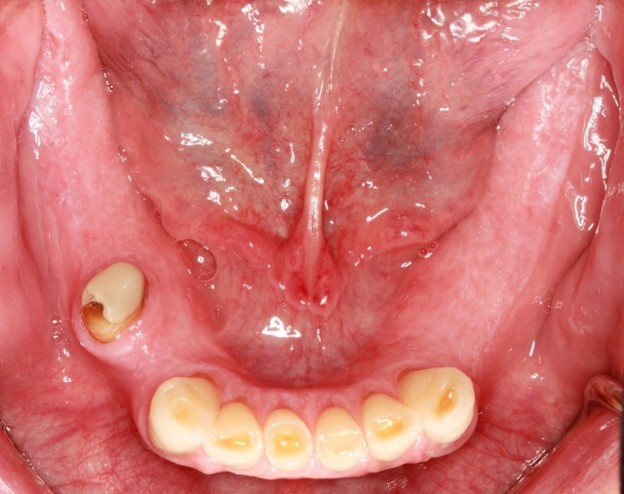
- Opposing occlusal contacts. A patient with full posterior stabilizing contact is far less likely to experience a displaced upper denture than one whose only functional contact is anterior. When the posterior denture drops and contacts the posterior tongue, the gag reflex cycle is initiated. Restoring posterior occlusal support directly reduces this risk.
Technique 3: Multidisciplinary management
When distraction and expansion techniques are insufficient to get rid of a patient’s gag reflex, a broader team-based approach becomes appropriate.
- Nitrous oxide, alone or in combination with oral anti-anxiety medications, is a practical and commonly available first step for managing anxiety-driven gag reflexes. It reduces overall arousal and lowers gag sensitivity without requiring IV access or an anesthesia provider.
- Behavioral counseling is effective when the gag reflex has a psychogenic etiology, like fear, apprehension, visual or olfactory triggers, or anticipatory anxiety stemming from prior negative dental experiences.
- Psychiatric involvement and medications targeting the parasympathetic nervous system may be warranted in more complex cases in which anxiety is a significant driver.
- Sedation with airway maintenance may be the only viable option for patients who cannot tolerate necessary procedures despite other interventions. What appears to be a routine impression can require significant clinical planning for some patients.
- Relevant systemic history, including gastrointestinal disorders, stomach cancer, or trauma, may contribute to a heightened gag reflex and should be documented during intake.
Digital impression capture is also an increasingly viable option for tooth- and implant-supported restorations. The smaller camera footprint is far more tolerable for sensitive patients, and as the technology continues to advance, digital workflows will likely eliminate the need for traditional impression materials in most edentulous cases.
When to manage in office vs. when to refer
Not every patient with a gag reflex can or should be managed entirely within a general practice. The following markers suggest that referral may be more appropriate than continued in-office management:
- The patient cannot tolerate any intraoral contact, regardless of technique.
- Distraction, topical anesthesia, and desensitization approaches have all been tried without meaningful progress.
- The patient’s history suggests a significant psychological or trauma-related etiology that extends beyond routine dental anxiety.
- The required procedures, such as rubber dam isolation or full arch impressions, cannot be safely performed with the available in-office sedation options.
For these patients, referral for behavioral therapy, psychiatric consultation, or IV sedation may be the most appropriate and compassionate next step.
It’s rewarding to work through this challenge with a patient, and equally important to recognize when it exceeds what chairside management alone can address.
References
- Garg, R., Singhal, A., Agrawal, K., & Agrawal, N. (2014). Managing endodontic patients with severe gag reflex by glossopharyngeal nerve block technique. Journal of Endodontics, 40(9), 1498-1500.
Frequently Asked Questions
FOUNDATIONS MEMBERSHIP
Build Clinical Confidence In Your First Five Years
The first five years of practice come with decisions that dental school never fully prepared you for. Spear Foundations Membership gives you a full year of practical training, guidance from trusted faculty, and a community of peers working through the same challenges, for less than you’d charge for one crown.
Featured Digest articles
Insights and advice from Spear Faculty and industry experts