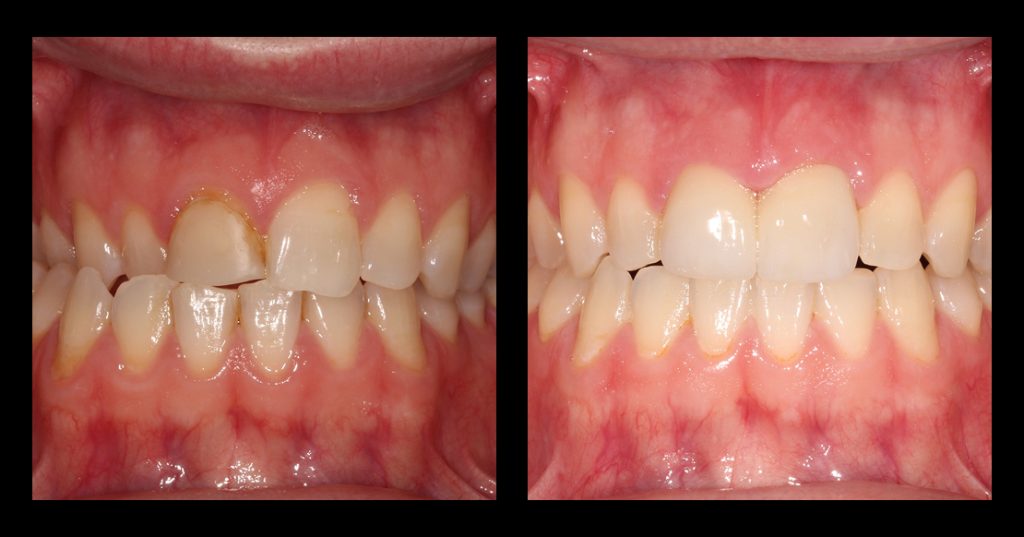
Determinants of Vertical Dimension
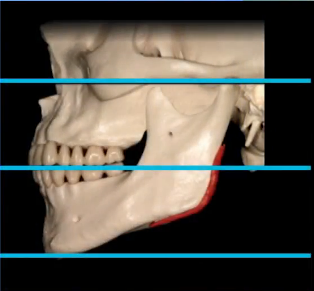
Vertical dimension is the distance between any point on the maxilla and any point on the mandible when the teeth are in maximum intercuspation. The two points most often used for this are nasion and menton measured on a lateral depth.
The questions I often get from clinicians when they’re showing me a wear case is, “How do I know what vertical dimension to use?” and “How do I know it will work?” The difficulty when you look at the literature is that you’ll find philosophies that say the patient has a specific vertical dimension you must build teeth to fit. If you don’t get the vertical dimension of occlusion (VDO) correct, the patient will relapse because the vertical dimension is in equilibrium between the eruption of the teeth and the contraction of the muscles.
In direct contrast, you’ll find other philosophies that suggest you can alter vertical dimension all you want because the patient’s neuromusculature will adapt to the new position. To better understand vertical dimension, it’s good to know how it is naturally established. Following are the three factors that determine vertical dimension in a patient during growth and development.
Growth of the Ramus
Growth occurs at the ramus. If we look at ramus growth, patients can develop a long, normal, or short ramus. The length of the ramus directly influences the lower facial one-third and changes the vertical dimension. In a patient with normal ramus development, the facial thirds generally are similar in length, with the middle facial third measuring 45% and lower facial third measuring 55%.
- A patient with a short ramus and normal posterior tooth eruption will typically end up with a long lower facial one-third, with an increased display of teeth and tissue on the maxillary arch. Treatment for a patient with a short ramus is generally a maxillary impaction.
- A patient with a long ramus has the opposite appearance. Instead of a long narrow face, these patients have a more square face with a decrease in the lower facial third. Their treatment is typically a double jaw surgery to increase the lower facial third while increasing the amount of tooth display on the maxillary arch.
It is clear from the literature that ramus length is heavily influenced by genetics.
Gonial Angle of the Mandible
The gonial angle also influences the vertical dimension. A patient with a more acute gonial angle (flat mandibular plane angle) will mimic the facial appearance of the patient with a long ramus, while a patient a more obtuse gonial angle (steep mandibular plane angle) will mimic the facial appearance of a patient with a short ramus length.
There is literature to support that the gonial angle is heavily influenced by the strength and development of the masseter muscles. The stronger and more developed the masseter muscle is, the more acute the gonial angle will be.
Eruption of the Teeth
We know that during growth and development, the teeth erupt as the ramus grows to be able to maintain occlusal contact. However, just because we stop growing doesn’t mean that tooth eruption stops. In fact, eruption persists throughout our cycle of life to maintain occlusal contact as teeth wear.
If this eruption takes place at the same rate that the tooth structure is being lost, the vertical dimension is maintained. But, if the tooth wear occurs at a rate that is faster than the ability of the teeth to erupt, the VDO can be decreased.
SPEAR Membership
Learn Faster. Treat Better.
Whether you have 10 minutes or time to dive deeper, Spear Membership gives you the learning, tools, and support to keep improving.
Choose the level of support and structure that fits your goals.

By: Greggory Kinzer
Date: May 24, 2013
Featured Digest articles
Insights and advice from Spear Faculty and industry experts