- Article
- Practice Management
My Proven Path to Practice Ownership: What I Learned
Andy Janiga
•
August 18, 2026

One dentist’s honest account of the road from military dentistry to full practice ownership
My path to practice ownership wasn’t a straight line. It moved through military dentistry, an associateship during the height of COVID, and a partnership, before I became a full owner. I’m sharing my version of that path, along with the lessons I wish I’d learned sooner, especially as an early-career dentist wondering when I’d be ready to own a practice.
Why the timeline matters less than the systems you build
It’s easy to romanticize practice ownership until you’re staring at the realities: leading a team, making operational decisions, protecting cash flow, and still delivering excellent dentistry every day. If you’re early in your career and thinking, “I want to own someday, but I’m not sure when I’ll be ready,” you’re not alone.
I’m approaching a decade out of dental school, and my path to practice ownership took a few turns. Looking back, the timeline mattered less than the systems I built along the way.
Putting those systems in place made a real difference in my path to practice ownership.
My team and I started having better conversations with patients about their treatment options, and our case acceptance rate has climbed to around 80%.
Military dentistry: building a foundation across every discipline
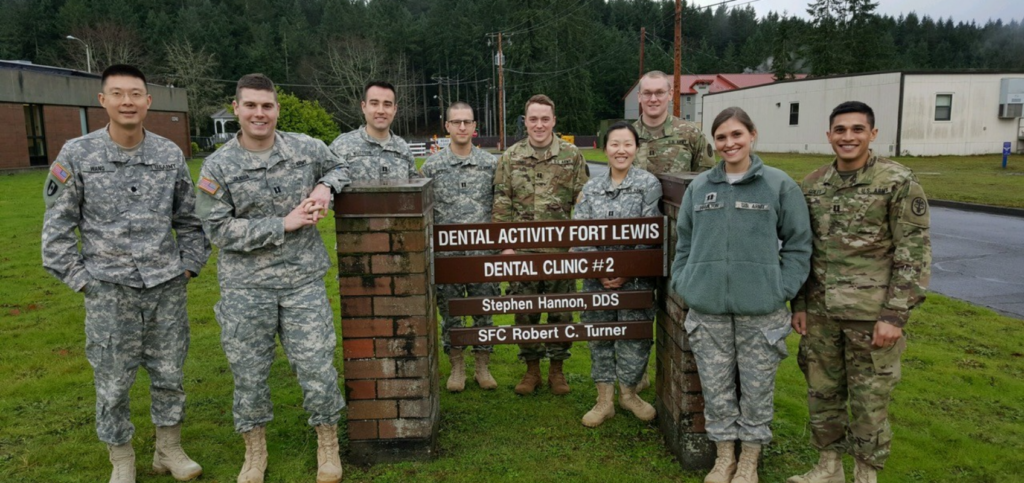
After graduating from dental school, I commissioned into the U.S. Army Dental Corps. My first five years as a dentist were shaped by military dentistry. Working with service members from the Army, Navy, Air Force, Marine Corps, and Coast Guard gave me a unique perspective on the many different philosophies within dentistry.
I learned a wide range of skills across nearly every discipline and had the chance to hone my craft in a way I might not have in a typical first associateship. My time in the military also shaped my interest in lecturing and contributing to continuing education. My commitment ended in June 2020, when I was honorably discharged and started the next chapter of my career. Looking back, those years in military dentistry gave me a stronger foundation for the path to practice ownership than I realized at the time.
The associateship: use it as training for your path to practice ownership
In June 2020, I transitioned from the Army to an associate position in Nashua, New Hampshire, during the peak of COVID-related uncertainty. That alone would’ve been a major adjustment. The bigger shift was learning dentistry in a practice setting where patient relationships, scheduling expectations, and clinical decision-making lived in a completely different ecosystem than the military.
If you’re an associate with ownership on your horizon, here’s the mindset shift I wish I’d made earlier: your associateship isn’t just a job, it’s a training ground for practicing ownership. The best preparation isn’t doing more dentistry. It’s learning to deliver consistent dentistry and understanding the business pressures that shape day-to-day life in a private practice.
Diagnosis and communication consistency
Owners don’t just need clinical skill; they need a repeatable case presentation. Developing that consistency became one of the most valuable steps on my path to practice ownership.
I worked on making my exams, photos, and patient conversations consistent, so patients understood the why, not just the what. The difference shows up quickly in trust, treatment acceptance, and fewer last-minute “let me think about it” stalls.
Schedule awareness, because time is the real overhead
As an associate, it’s easy to think your job is to stay busy. As an owner, you learn that how you stay busy matters. I started paying attention to procedure mix, the timing of high-focus clinical blocks, and where bottlenecks happened: assistant turnover, room setup delays, and hygiene handoffs. That awareness made me a better teammate even before ownership, and later, a better leader.
Learning the numbers without becoming an accountant
You don’t need an MBA, but you do need fluency. I began tracking a few basics so I wouldn’t be blind to the health of the practice: collection trends, A/R aging, hygiene reappointment consistency, and new patient flow. It wasn’t about obsessing over the numbers; it was about understanding what drives stability and what quietly erodes it.
This is exactly where a structured program like Spear Navigator, with a framework for diagnosis, treatment planning, and communication, is preferable to learning it piecemeal on the job, as I did.
Associateship has real perks: fewer nonclinical responsibilities, fewer big-picture decisions. But if ownership is your goal, you can use this stage to build the habits and systems that make the next step feel doable.
Becoming a partner: moving beyond the associate stage
In April 2023, I became a partner in the practice where I’d been an associate. As the junior partner, I wasn’t yet making the major decisions, but I took on more of the nonclinical responsibilities.
Partnership opened up a new dynamic. Alongside the clinical side of dentistry, management responsibilities, cash flow, tracking A/R, and building a strong team became part of my daily work. Moving beyond the technician stage of dentistry and into the management and entrepreneurial aspects of running a practice was both challenging and exciting.
I learned a tremendous amount during my partnership years, and I knew I eventually wanted full ownership of my own practice. That stage became one of the most important milestones on my path to practice ownership.
During my final year of partnership, our practice was selected to beta test Spear Navigator. Working through the program with my coach, Shayna, helped me prepare for full ownership in ways I didn’t expect, especially by deepening my understanding of the nonclinical side of running a practice, such as reading a monthly operating statement. That preparation turned out to be one of the most valuable steps on my path to practice ownership.

Taking on ownership: it takes a village
On Jan. 1, 2025, I became the sole owner of my practice. It was a whirlwind, and I couldn’t have done it alone. Having a trusted team, an accountant, a dental-specific lawyer, and a Spear Practice Growth Partner gave me the resources and encouragement to make the transition happen. It truly takes a village, and I’m grateful mine came through.
That team helped me settle on a bank-financed sale rather than a seller-financed deal or another structure, a decision that shaped the final stretch of my path to practice ownership. Working with a lawyer and an accountant who specialize in dental practice transitions made that decision much clearer than it would have been on my own.
If there’s one piece of advice I’d give any associate or partner eyeing a buy-in or buyout, it’s this: get educated on the deal itself before you’re in the middle of one. Spear’s Know Before You Buy or Sell Seminar covers exactly the kind of groundwork, valuation, deal structure, and the right advisory team that would’ve saved me some anxious nights during my own transition.
Two mentors made a real difference on my path to practice ownership: Dr. Tara Sexton and Dr. David Swiecinski, both longtime private practice owners I first connected with through Spear Study Club. Their insight into what to look for and what to watch out for when purchasing a practice helped me avoid mistakes I might have made on my own.
What I’d tell an associate considering practice ownership
Navigating the transition to practice ownership was a challenge, but one worth every bit of time and effort. I’m excited about the future of our practice, and I’d encourage any early-career dentist to take the path to practice ownership seriously, even if you’re years away from doing so.
If you’re still working out what those first few years should look like, the same themes come up again and again: mentorship, financial planning, and timing. That’s the heart of good new dentist career advice, and it’s rarely a straight line.
Looking back, Spear was part of nearly every stage of that journey. Spear gave me a framework for diagnosis, treatment planning, and communication as an associate, then helped me build the business fluency, down to reading a monthly operating statement, that full ownership demanded. The mentors I met through Spear Study Club added the leadership perspective a textbook can’t teach: what to watch for, what to ask, and when to trust my own judgment. That mix of clinical structure, business fluency, and mentorship made ownership feel achievable rather than overwhelming.
Start where you are. Build consistency in your diagnosis and communication. Pay attention to the numbers. And when you’re ready to explore what that path looks like for you, a Spear Membership is a solid place to start building the clinical and practice-management fundamentals that made my own path to ownership possible.
Frequently Asked Questions
FOUNDATIONS MEMBERSHIP
Build Clinical Confidence In Your First Five Years
The first five years of practice come with decisions that dental school never fully prepared you for. Spear Foundations Membership gives you a full year of practical training, guidance from trusted faculty, and a community of peers working through the same challenges, for less than you’d charge for one crown.
Featured Digest articles
Insights and advice from Spear Faculty and industry experts