- Article
- Techniques / Materials
The Pros and Cons of Thermoplastic Partial Dentures
Mary Anne Salcetti
•
June 16, 2021
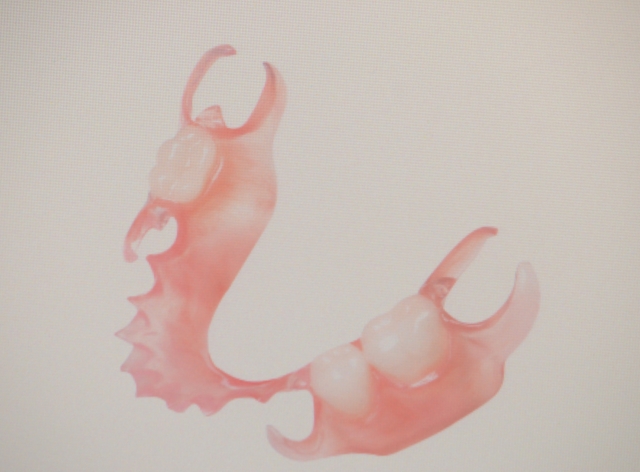
Thermoplastic materials have been available in prosthetic dentistry for more than 30 years, and the market continues to grow, with new and existing companies manufacturing their own products. The material and method of manufacture of these dentures distinguish them from traditional partial dentures. Unlike acrylic dentures, they are made from a thermoplastic nylon resin that is ultra-thin, very flexible (think more comfortable for chewing and speaking), and so durable that one company — Valplast — offers a lifetime warranty for fractures or breaks.
The material doesn’t absorb odors or stains, and it’s a great choice if patients suffer from allergies to acrylic or certain metals. It contains no BPAs and is considered the most biocompatible material. Some patients feel that the appliance “disappears” or is “invisible” in their mouth; thus, its esthetics are far superior to conventional acrylic/metal partial dentures. The cost may be slightly higher than that of a conventional acrylic partial denture because the fitting and finishing time at the lab is increased, but the result makes it well worth it.
Why Patients (and Dentists) Choose Thermoplastic Partials
Thermoplastics like Flexite, TCS (IFLEX), and Valplast all differ from regular thermosets like acrylic powder and liquid because they are already polymerized (cured) when manufactured and shipped to your lab. They can be manufactured in many forms, from sheet to pellets to powder. Once heat is introduced, the plastic is softened to the desired state and injected into a mold. The only thing that changes is its physical shape; no chemical changes exist. Thermoplastics will differ depending on their molecular composition –— some require higher temperatures to become moldable, and some require greater injection pressures.
One advantage of this material is that there is also flexibility in the design of the types of clasps. We can often use the circumferential ring clasp on any freestanding tooth and it works well on medially tipped mandibular molars. It can make an excellent transitional restoration during the healing period on implant cases.
Your dental lab will have its preference for which thermoplastic material it prefers to work with. Some are more difficult to finish, fit, and adjust than others. Some may require more repairs to the teeth than others. Some may prefer a specific material because of the color blending. A conversation with your technician will help you decide the best material for your patient. Click this link for a video lesson on communicating with your technicians.
Challenges in Fabrication, Adjustment and Polishing
The biggest challenge for the dentist is adjusting and polishing the material. Do not think of acrylic when polishing; use a quick, pressure-applied motion. Think of dividing the appliance into sections and spending one minute per section. That will seem like a long time when your experience is only conventional acrylic resin.
Whether or not you are using Valplast, Flexite, TCS or Iflex, each company has a system for polishing. If you are going to provide these partial dentures, be sure you have the armamentarium to polish them well.
The partial needs a smooth and satin finish before polishing, so use the appropriate rubber wheels. I typically round the edges of the wheel when I receive them so that I don’t accidentally cut into the nylon with a sharp edge. If there are any spots that the wheel cannot access, I recommend using a Robinson wheel in a horizontal motion with a light dusting technique.
Patients are pleased with these prostheses because they are readily fabricated and don’t require multiple try-in appointments. I suspect that in the future, we will make very few traditional metal acrylic removable partial dentures, as this material excels for all our patients. The challenge for us is in adjusting them.
Check out this Spear Talk thread for a discussion on Valplast and other thermoplastic partial dentures.
Spear Team Training
Train Your Entire Team, Not Just Yourself
Clinical confidence doesn’t stop with the doctor. Spear gives every role in your practice, hygiene, assistants, and front office, structured training built for their part of patient care, including the Hygiene Excellence Program. When the whole team learns from the same curriculum, your practice runs with more consistency, not just your chair.
Featured Digest articles
Insights and advice from Spear Faculty and industry experts