
Complete vs. Incomplete Caries Removal: Risk of Complications and Failure
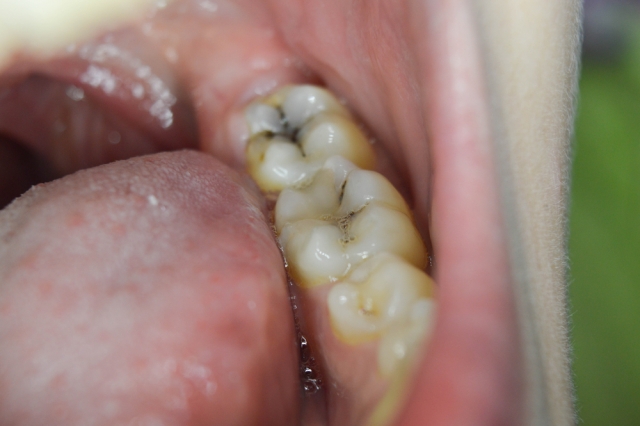
The topic of incomplete caries removal for the treatment of deep caries is one that has been discussed during several of my workshops lately, with most participants unaware of the procedure. Preserving pulpal vitality is a crucial step in reducing complications associated with caries, and there is mounting clinical evidence that one- or two-step incomplete caries removal is a safe and effective treatment for deep caries that minimizes complications.
The question of whether complete deep caries removal is necessary before the cavity is restored has been discussed as dentistry develops a better understanding of dental biofilm and the pathogenesis of caries.1–4 Multiple systematic reviews have been conducted in recent years to determine which procedures to remove caries result in maintenance of pulpal vitality and a reduction in complications and failure rates. Unfortunately, the systematic reviews I was able to find in a thorough search of the literature all reported a high degree of bias present in most of the studies reviewed, including unclear randomization, poor documentation, and sparse or contradictory information presented.1–5 However, there was still compelling evidence for the recommendations made.
The traditional techniques to remove deep carious lesions approaching the pulp is to remove all the soft, demineralized dentin in one visit. The caries may also be totally removed using a two-step procedure, where caries is removed in stages over two visits, up to several months apart, to allow pulp time to form reparative dentin, thereby reducing the risk of pulp exposure.
Numerous clinical trials demonstrate the benefits of minimally invasive caries removal, with partial removal in symptomless teeth significantly reducing the risk of pulpal exposure.1,4,5 In one- or two-step incomplete caries removal, some caries close to the pulp of the tooth is left in place; unfortunately, there doesn’t appear to be any research that indicates how much caries should be left in place in incomplete procedures. There is additional evidence that a single one-step incomplete evacuation reduces the risk of failure, compared with two-step incomplete procedures.5
The systematic reviews found there was no advantage to complete vs. incomplete caries removal, with an overall reduced risk of pulpal complications and failures after incomplete compared with complete evacuation of the caries.1–5 Using one- or two-step partial caries removal showed success rates of over 95% up to three years and approximately 80% at five years, with partial caries removal likely more effective than step procedures at preserving tooth vitality.2
In addition, treatments in patients younger than 50 were more likely to result in sustained pulp vitality without radiolucency than treatments on patients 50 and older.3 Failure rates were also influenced by the number of restored surfaces. The type of restoration used — for example, crowns and inlays — may reduce failure risk.5
There are several current and recent studies evaluating the use of a doxycycline-containing resin-modified glass ionomer cement to inhibit cariogenic microorganisms, so this is another step to be considered when restoring the tooth. An adequate seal over the caries remaining in incomplete evacuations deprives the bacteria of its nutritional source, arresting caries development and allows for remineralization of carious dentin.
Preliminary data shows a significant reduction of S. mutans without affecting the surface microhardness of the cement when doxycycline is present.6,7 Whether this translates into a reduction of caries reoccurrence under restorations long-term will require additional study.
References
- Schwendicke F, Göstemeyer G. Understanding dentists’ management of deep carious lesions in permanent teeth: a systematic review and meta-analysis. Implement Sci. 2016 Oct 19; 11(1):142.
- Hoefler V, Nagaoka H, Miller CS. Long-term survival and vitality outcomes of permanent teeth following deep caries treatment with step-wise and partial-caries removal: A systematic review. Journal of Dentistry 54 (2016): 25–32.
- Bjorndal L et al. Treatment of deep caries lesions in adults: Randomized clinical trials comparing stepwise vs. direct complete excavation, and direct pulp capping vs. partial pulpotomy. European Journal of Oral Sciences 118.3 (2010): 290–297.
- Ricketts DN et al. Complete or ultraconservative removal of decayed tissue in unfilled teeth. Cochrane Database Syst Rev 3 (2006): CD003808.
- Schwendicke F et al. Failure of incompletely excavated teeth—a systematic review. Journal of Dentistry 41.7 (2013): 569–580.
- de Castilho, ARF et al. Doxycycline-containing glass ionomer cement for arresting residual caries: An in vitro study and a pilot trial. Journal of Applied Oral Science 26 (2018).
- de Castilho, ARF, et al. Mechanical and biological characterization of resin-modified glass-ionomer cement containing doxycycline hyclate. Archives of Oral Biology 57.2 (2012): 131–138.
VIRTUAL SEMINARS
Stay Sharp. Stay Current. Stay Ahead.
Join live, focused training designed to help you implement immediately and strengthen your expertise.

By: Robert Winter
Date: August 19, 2018
Featured Digest articles
Insights and advice from Spear Faculty and industry experts