- Airway
- Article
A-EFSB: Airway and 3D Treatment Planning
Jeffrey Rouse
•
December 2, 2019
In 1985, Dr. Frank Spear introduced the concept of Facially Generated Treatment Planning (FGTP). Until that point, treatment planning was based on mechanical concepts of occlusion: Monson’s sphere, curves of Spee and Wilson, and Bonwill’s triangle.
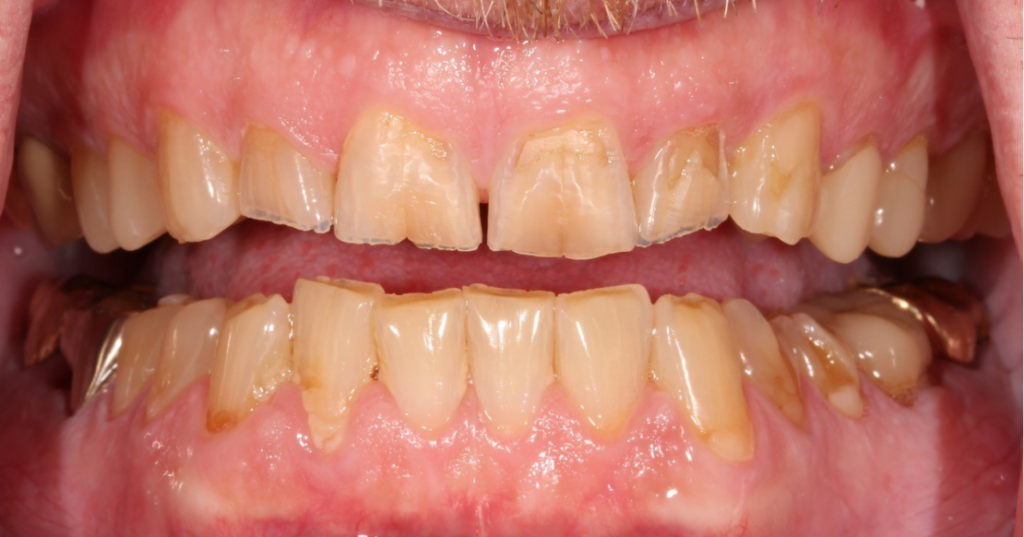
Dentists determined the proper mandibular tooth position and then focused on the lingual surfaces of the maxillary anterior teeth for disocclusion. These concepts were ideal for dentures or when the teeth presented only minor wear. The difficulty in severe wear cases is that the teeth, especially the maxillary anteriors, are in the wrong position to restore.
Dr. Spear suggested that esthetics should be considered before the functional aspects of care. He reminded us that those decisions cannot be made on an articulator. You have to visualize the face and smile when choosing the correct position. Why did it take so long to develop this seemingly simplistic idea of treating a rehab like you would do a denture?
I would suggest that it was one of the first times that a top-level orthodontist was associated with the treatment planning and execution of complex restorative cases. During the time that spherical and gnathological occlusal concepts came into vogue, pre-restorative orthodontic movement of the damaged teeth was not being done on adult patients. Dr. Spear had the opportunity to work with world-renowned orthodontist Dr. Vince Kokich Sr. By including orthodontics, severely worn teeth could be returned to their original or an even more ideal position, just like setting a denture.
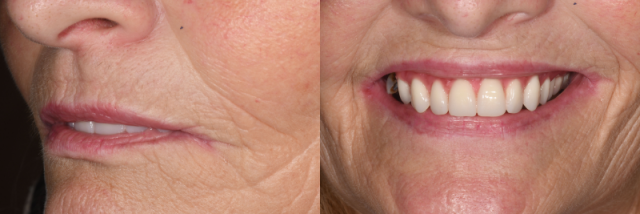
The EFSB (esthetics, function, structure, biology) concept is still the cornerstone of our treatment planning strategy at Spear. It has recently been modified to include airway at the beginning of the process. The AEFSB sequence allows dentists to include the airway as a guidepost for decisions made in treatment plans (i.e., rather than cosmetic expansion of your smile with veneers, your compromised airway and smile will be improved with skeletal expansion). Patients can choose to manage their dental and health needs in a single procedure.
A constricted maxilla most impacts the airway. Transverse discrepancies of the maxilla have been found in 50% of apnea patients, compared to only 5% in the control group. That restricts oral volume for the tongue, thus reducing the posterior airway space. The maxilla is the floor of the nasal cavity, so maxillary hypoplasia reduces nasal volume and alters nasal airflow. In these cases, the forward growth of the maxilla is routinely impacted, as well. This alteration can redirect the maxillary soft palatal tissue growth and cause narrowing at the junction of the nasopharynx and oropharynx. This narrowing increases pharyngeal resistance and thus increases the risk of collapse. Transverse and forward deficiencies in growth dramatically alter the airway, esthetics, and function.
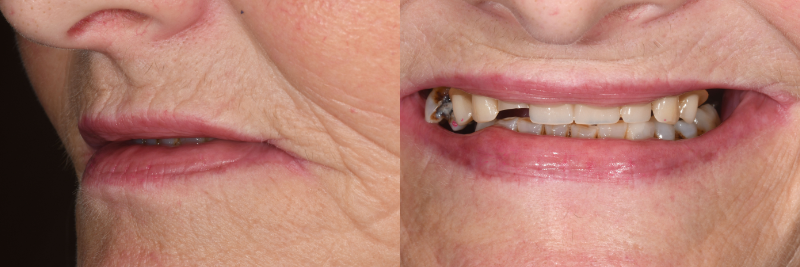
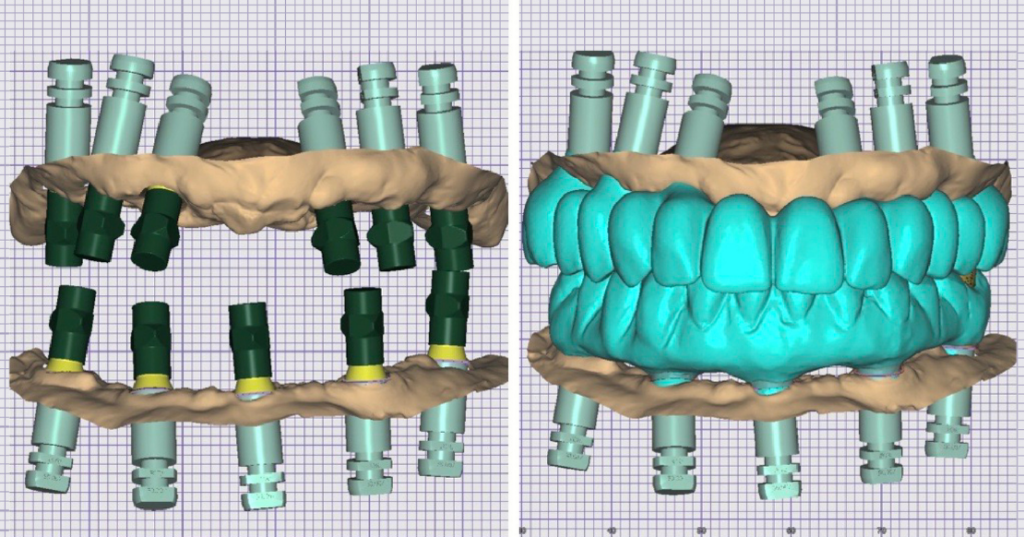
In FGTP, we ask you to visualize the ideal tooth position and “draw” it before you begin working on planning care. Initially, The drawing was done on tracing paper that overlaid a photograph of the patient’s smile or bite. Currently, the images are modified using a Keynote or PowerPoint template. While this tool is very effective for interdisciplinary planning and patient case presentations, it is only a two-dimensional representation.
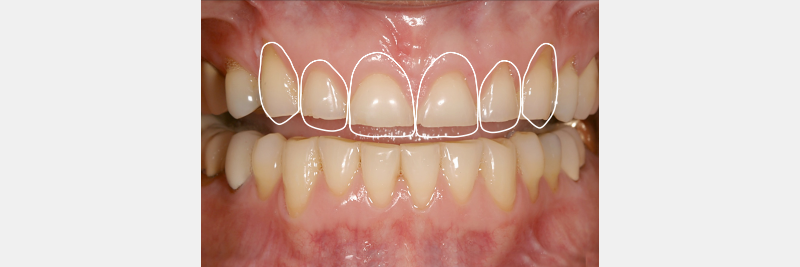
With the addition of airway, our focus is now 3D. It does not change the idea of setting a denture – it completes the analogy. When setting a denture, you never begin by setting the central incisors. Every dentist places the maxillary wax rim and evaluates it for lip support, transverse dimension, and cants. Teeth are not set until any deficiencies in the rim have been corrected. What you are adjusting is the airway. You would never work with an unacceptable wax rim, yet restorative dentistry and orthodontics are routinely conducted within a poorly constructed wax rim or skeleton.
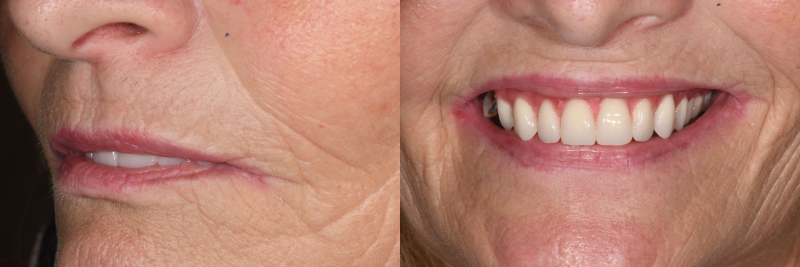
When transverse and A/P changes are made to the maxilla, the nasal cavity volume/flow and oral volume can be improved. These dimensional changes can beautify a smile and improve the overjet issues we encounter in many complex cases. As we continue to evolve the FGTP framework, altering the wax rim with more innovative strategies is going to drive our decision-making.
SPEAR campus Workshops
Learn Hands-on From Faculty Who Still Practice
A few days at Spear Campus can change how you diagnose, plan, and present cases, not through more lectures, but through hands-on training led by faculty who treat patients every week. Work through real cases in small groups and leave with techniques you can use on your next patient.
Featured Digest articles
Insights and advice from Spear Faculty and industry experts