- Article
- Techniques / Materials
Heated Composite for Efficient Restorations
Andy Janiga
•
June 19, 2019
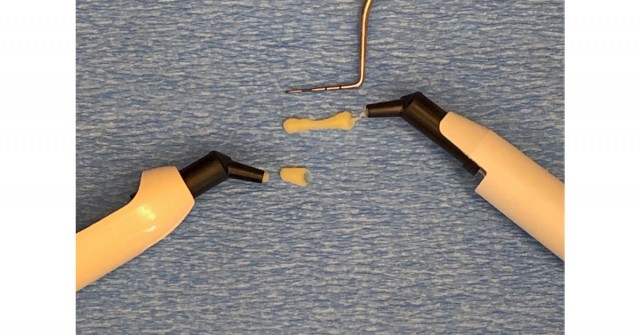
There has been recent discussion on Spear Talk concerning using a heated composite. Many clinicians have heard of the concept, with early research dating back to the 1980s.1 But many still question why a heated composite may be beneficial and how to heat a composite for restorations effectively.
The Science of Heated Composite
When composite is heated, the physical properties of the material are modified. Many of these modifications can help make it easier to handle the composite and enable a better adaptation of the material to our preparations.
What happens to composites as they heat? At a microscopic level, the particles of composite experience an increase in kinetic energy and move faster than their room-temperature counterparts. This increased movement of monomers and free radicals in heated composite increase the degree of conversion when curing and may also even increase the depth of cure.2,3
In addition, heating composite will change the consistency of the material. When it is warmed, packable composite can become less viscous in nature. This results in a packable composite that handles more like a flowable resin. When placing a heated composite, the ability of the material to flow enables a better adaptation of the composite to the prep and can reduce the incidence of voids in the restoration and improve the marginal adaptation.2,4 Heated composite can also lead to a decrease in sorption and solubility compared with room temperature composite.2
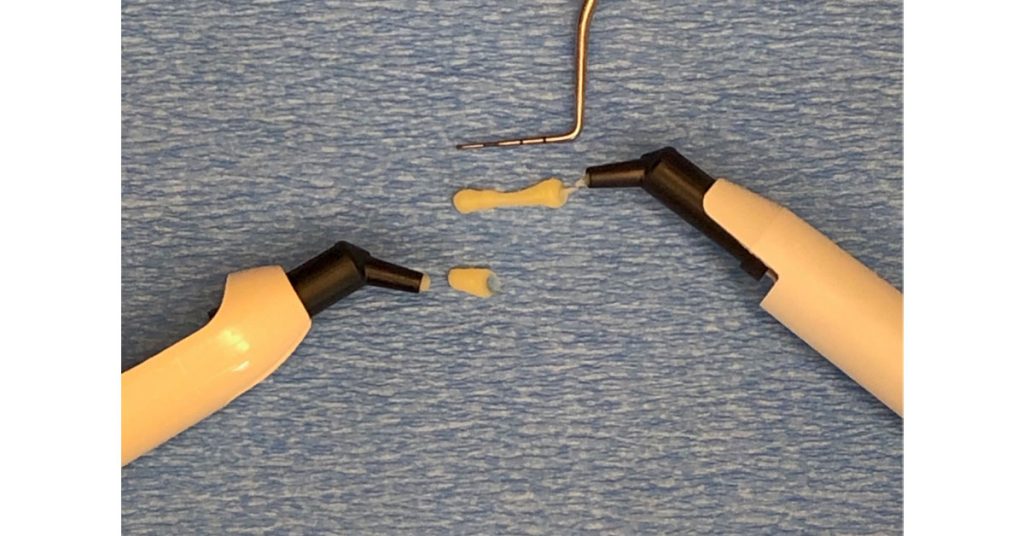
How Can Composite Be Heated?
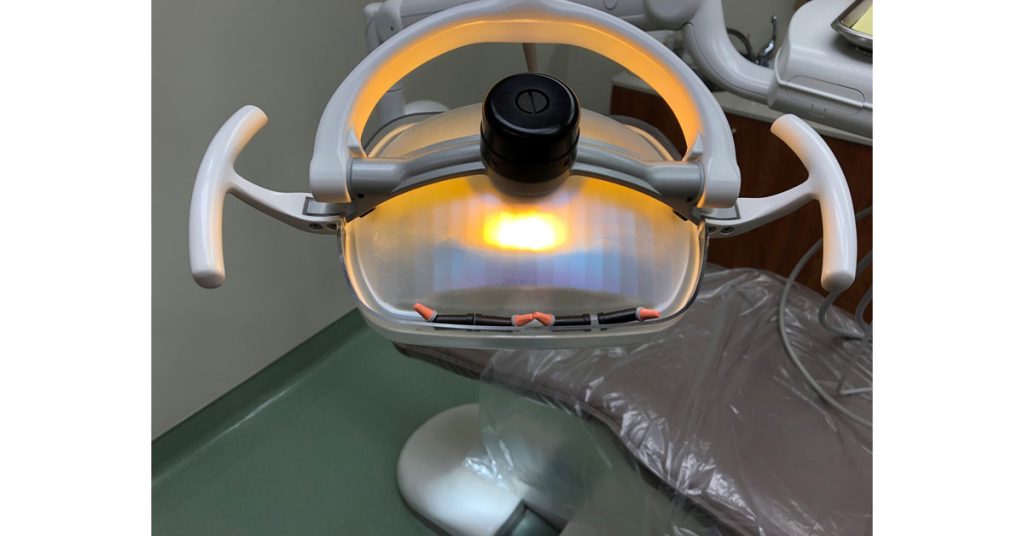
There are many different ways to heat composite materials. Various dental-specific composite heating units are on the market that can hold compules in a composite gun for easy access. Spear Online offers an excellent course on posterior composite restorations that demonstrates how to warm composite using this method. Other alternative methods have been implemented, including hot water baths, coffee cup heaters, and dental operatory overhead lights.
Regardless of how you heat your composite, it’s essential to heat your material to at least 60 °C (140 °F)5 and place the material shortly after removing it from the heat source. As soon as two minutes after it’s been removed, composites lose approximately half of their heat.6
References
- Bausch, J. D., Delange, C., & Davidson, C. L. (1981). The influence of temperature on some physical properties of dental composites. Journal of Oral Rehabilitation, 8(4), 309-317.
- Castro, F. L., Pazinatto, F. B., de Lima, É., Cesar, P. F., & Reges, R. V. (2016). The effect of preheating and opacity on the sorption and solubility of a composite resin. General Dentistry, 64(4), 57-61.
- El-Korashy, D. I. (2010). Post-gel shrinkage strain and degree of conversion of preheated resin composite cured using different regimens. Operative Dentistry, 35(2), 172-179.
- Fróes-Salgado, N. R., Silva, L. M., Kawano, Y., Francci, C., Reis, A., & Loguercio, A. D. (2010). Composite pre-heating: effects on marginal adaptation, degree of conversion and mechanical properties. Dental Materials, 26(9), 908-914.
- Munoz, C. A., Bond, P. R., Sy-Muñoz, J., Tan, D., & Peterson, J. (2008). Effect of pre-heating on depth of cure and surface hardness of light-polymerized resin composites. American Journal of Dentistry, 21(4), 215-22.
- Daronch, M., Rueggeberg, F. A., Moss, L., & De Goes, M. F. (2006). Clinically relevant issues related to preheating composites. Journal of Esthetic and Restorative Dentistry, 18(6), 340-350.
SPEAR campus Workshops
Learn Hands-on From Faculty Who Still Practice
A few days at Spear Campus can change how you diagnose, plan, and present cases, not through more lectures, but through hands-on training led by faculty who treat patients every week. Work through real cases in small groups and leave with techniques you can use on your next patient.
Featured Digest articles
Insights and advice from Spear Faculty and industry experts