
- Article
- |
- Techniques / Materials
Tools of the Trade: Electric Handpieces for Optimal Precision
Look at these two photos. Do you see anything out of place in each of them?

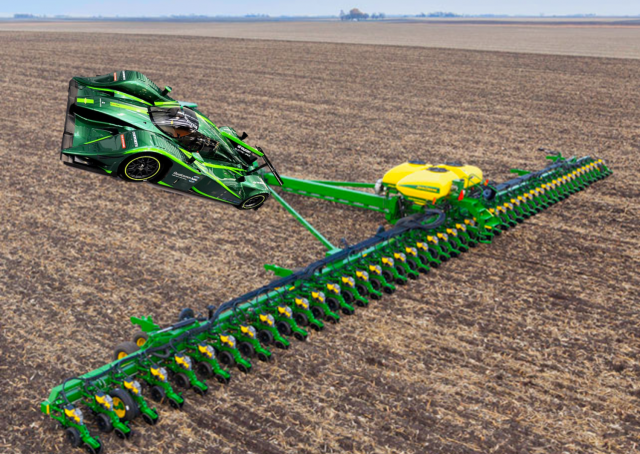
Hopefully it’s obvious: Who would ever consider driving a tractor up Stelvia Pass in Bormio, Italy? This pass is the most famous mountain-driving pass in the world. A Porsche 917 would be way better!
And does it seem appropriate to use a Lola-Drayson Formula race car to plant a row of vegetables in a vast field? Is that not more appropriate for a John Deere?
The photographs are comical for what they are, but the reality is that there are correlations between the two situations in dentistry. It’s common for dentists to use dental handpieces inappropriately for various circumstances. Slowing a “high-speed” down to refine crown preparation margins will not create smooth and accurate finish lines; the subsequent restoration is likely to be ill-fitting with open margins. A high-speed wants to run at high speed! Using the right tools for the job and understanding how they work will provide more predictability and better precision to the final restorative results.
Handpieces are the most important tools we dentists use in caring for our patients. Removing decay, contouring esthetics and adjusting occlusion are everyday procedures that involve handpiece use. But is a handpiece a handpiece? And can one handpiece do it all to meet our needs and requirements of precision and predictability?
Air-driven vs. electric handpieces for tooth prep
Air-driven handpieces are a mainstay for dentists in America. However, in Europe, 80% of dental offices use electric handpieces to prepare teeth. But there is an increasing trend toward electric handpiece use for U.S. dentists. There are a few reasons for these increases.
- Sound and vibration. As electric handpieces have improved, the high-pitched sound and vibrational effects have decreased. Even patients comment on the quieter sound and pitch of the electric handpiece. This improvement comes from greater manufacturing precision, improved materials and better gearing mechanisms.
- Bur chatter. The “chatter” comes from bur wobble caused by ball-bearing wear in the air turbine. The turbines are supported by O-rings that allow for turbine rotation. The more bearing wear, the more wobble. Wobble can also be defined as “bur whipping.” At a high speed, the bur loses concentricity if the bearings and turbine are worn. The more wear, the more whip and the more inaccurate the cutting efficiency and precision. Regular replacement of the turbine and O-rings can rectify the problem, but it is expensive. Electric handpieces, on the other hand, use direct gear-to-gear contact to drive the bur. There is a rigid bearing support within the head of the handpiece to provide better concentricity and less friction. This mechanical structure allows for improved trueness and definitive preparation. There is also less heat production and less chance of tooth sensitivity. The tooth preparation is “milled” rather than “chopped.”
But the real difference between air and electric handpieces is speed and torque. Speed refers to revolutions per minute (rpm). Torque is expressed as watts and is an indication of “cutting power.” Air-driven handpieces can have high speeds that vary between 250,000 and 420,000 rpm, but the torque of these handpieces is low, in the range of 20 watts.
The cutting efficiency of the air-driven handpieces are affected by this lack of torque. Dentists learn to “feather” the handpiece to maintain the high speed. This “on-off-on” feathering takes more time and reduces smoothness of the tooth preparation as well. Applying force while cutting can stall an air-driven handpiece. Additionally, pushing a handpiece to the point of stalling creates heat buildup within the tooth. This may result in tooth sensitivity and pulpitis.
Electric handpieces, on the other hand, have lower RPMs but have tremendously higher torque. Electric handpieces have variable speeds from 100 to 200,000 rpm. (Yes, a bur can cut at 100 rpm with an electric!) The torque of electric handpieces is in the 60-watt range, three times that of air-driven handpieces. The bur will not slow down, no matter what material, through all the speed ranges. Because the electric handpiece provides consistent torque and power, “feathering” is not necessary. The bur may be applied to the tooth structure and will cut or “mill” smoothly and consistently.
Because the speed and torque are consistent, minimal heat buildup occurs within the tooth. There is a learning curve to this preparation technique, but it results in tooth preparations that your dental laboratory will notice!
The speed, efficiency and smoothness of the final preparation results outweigh the increased costs for electric versus air-driven handpieces.
There are many different manufacturers of electric handpieces. Weight, head size and ergonomics may be factors for choice. Maintenance of all electric handpieces is similar to air-driven counterparts. Each manufacturer has its individual recommendations for maintenance. Because the head of the handpiece snaps onto the electric motor, various attachments may be used. High-speed attachments may be used for crown and veneer preparations and low-speed attachments for decay removal, margin refinement and polishing materials. Additionally, because of the variable speeds of electric motors, endodontic, surgical and implant attachments are all possible.
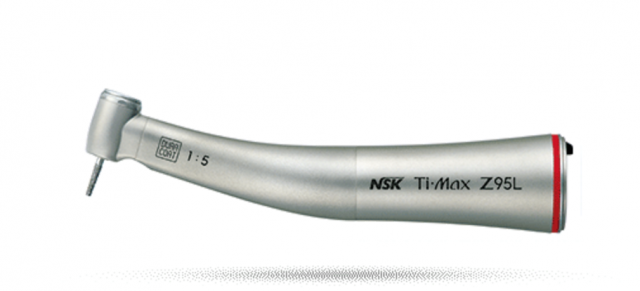
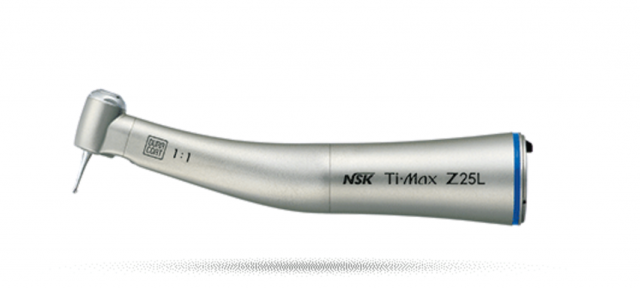
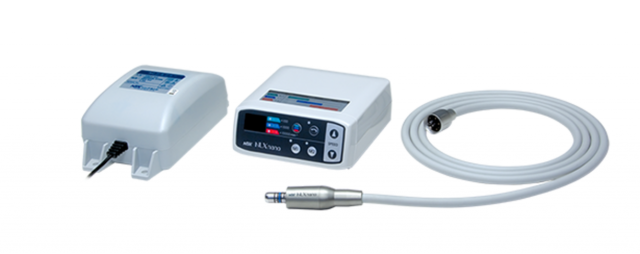
The efficiency of high-speed handpieces far outweighs that of air-driven counterparts. Applied pressure to the tooth structure won’t alter the speed of the bur and will result in faster and more efficient tooth preparation. All electric handpieces provide this ability.
Low-speed electric handpieces are far superior to “slowing down” or “feathering” both air and electric high-speeds. By having the ability to adjust the speed of rotation of the handpiece, greater control of preparation margin smoothness and accuracy is increased. Generally, the lower the speed, the greater the accuracy. Restoration fit is very noticeable. By using slow speed and refining preparations, the dental laboratory will notice and appreciate the improved impressions and the resultant restoration.
Low speed is also very important for porcelain adjustment and polishing. Microfractures are easily introduced into ceramic restorations with occlusal adjustments made with high-speed handpieces (electric or air-driven). These microfractures or flaws may create restoration failure. Ceramic polishing is best performed at a known speed of around 5,000 to 9,000 rpm. Speeds greater than this may be catastrophic to the ceramic restoration. Low-speed precision is vital to creating successful, predictable, and long-lasting restorations.
Electric handpieces provide precision, accuracy, and efficiency to our everyday practice. Having the right tools for the job increase our production and make our outcomes more predictable and provide greater satisfaction for our patients and ourselves.
Technical comparisons: air-driven vs. electric handpieces
Air-driven handpieces
- Bur speed: 400,000 to 420,000 rpm
- Torque: 14 to 20 watts power
- Bur slows with applied pressure
- Air turbine drives
- Less bur concentricity
- Loud and high-pitched sound
- Bur “chatter;” “chopping” smooth bur cutting; “milling”
- Weight: lighter/smaller
- Less cost
Electric handpieces
- Bur speed: 100,000 to 200,000 rpm
- 60 watts power
- No bur slowing; maintains torque
- Direct gear drive
- Greater bur concentricity
- Smoother and quieter sound
- Motor heavier/larger head
- Greater upfront cost
FOUNDATIONS MEMBERSHIP
New Dentist?
This Program Is Just for You.
Spear’s Foundations membership is specifically for dentists in their first five years of practice. For less than you charge for one crown, get a full year of training that applies to your daily work, including guidance from trusted faculty and support from a community of peers.

By: Jeffrey Bonk
Date: September 13, 2017
Featured Digest articles
Insights and advice from Spear Faculty and industry experts