The Cost of Laboratory Remakes
Good communication is key to a successful outcome for interdisciplinary teams. Depending on where the breakdown occurs, the consequences of poor communication can be reflected in several ways.
The costs associated with these breakdowns can have financial and professional ramifications. Remakes or chairside/lab adjustments may be required for various reasons, including poor marginal integrity, open contacts, occlusal adjustments, or a poor color match. This article looks at the real costs associated with restoration remakes.
According to various studies, the average dental practice has overhead expenses of 70-80% of revenue. In a recent article published by the Academy of General Dentistry, the average dental practice overhead in the U.S. is approximately $600,000 per year, with the average dentist seeing patients between 200 and 208 days per year.
Breaking this down equals an overhead cost of approximately $375 per hour (overhead costs: $600,000 per year ÷ 200 days = $3,000 per day, $3,000 per day ÷ 8 hours = $375 per hour). Your overhead expenses may be higher or lower than this, but from a decision-making perspective, you must understand your cost per hour of doing business.
So, what does this all mean? It’s essential to minimize the time you spend on adjustments or, in a worst-case scenario, the need to call the patient back to re-prep or re-impress the teeth. Any of these activities takes time, and you could see new patients and generate rather than lose income.
For example, suppose you spend 20 minutes adjusting each time you seat a restoration. In that case, you are losing $125 of time you could be spending on generating new revenue with a different patient. If it takes 30 minutes out of your schedule to call a patient back to do a new impression, it equates to a loss of $187.50 for that timeframe.
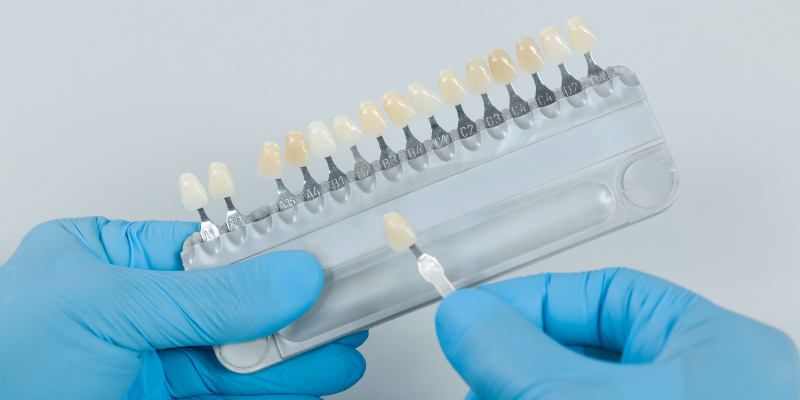
Finally, suppose you try a restoration that doesn’t match esthetically because your lab did not copy the shade information you sent or did not send the appropriate photos to the lab with your case. In that case, you may lose up to an entire hour (the original time you booked to seat the crown or veneer, plus the additional appointment needed for the remake).
Each minute you spend doing any of the above equates to a loss of revenue, which can add up to thousands of dollars each year. So, how can you minimize the costs associated with remakes or adjustments?
Establish a Relationship With a Quality Laboratory
The national average for dental laboratory remakes in the U.S. is 4%, with a range of 1% to as high as 6-7%. Using a cheaper lab with a higher remake rate can cost you more money than working with one, which may be a bit more expensive upfront, but is less expensive in the long run if it delivers a product that fits or matches well the first time it’s inserted.
By working with a quality technician or lab, you develop a relationship in which preferences and expectations on both sides are clearly understood, minimizing the time and money lost on adjustments and remakes.
Communicate, Communicate, Communicate
You must clearly communicate the proper information needed for each case sent to the lab, and the lab clearly communicates its needs to you to accomplish the desired outcome. You cannot expect the technician to deliver a quality product if you do not include all the records needed to fabricate the case correctly.
Properly Prepare the Teeth
It is important you create enough space to accommodate the appropriate thickness of dental material needed to meet the esthetic and functional goals of the case. If the teeth are underprepared, it weakens the restoration due to a lack of appropriate material thickness and/or may not allow enough room to mask the underlying tooth structure to achieve the color changes you or your patient may desire.
If not enough space is created when you initially prep the teeth, you will reschedule the patient to re-prep or compromise the esthetic and/or functional outcome.
“Using a cheaper lab with a higher remake rate can cost you more money than working with one, which may be a bit more expensive upfront, but is less expensive in the long run if it delivers a product that fits or matches well the first time it’s inserted.”
Take a Good Impression
You may have heard the expression “garbage in, garbage out.” This is especially true when it comes to your impressions. If the technician cannot clearly see the margins, whether a physical impression or taken digitally, you will not have a proper fit.
Complete the Prescription in Its Entirety
Eighty percent of dentists do not complete the information legally required on the prescription form. Most of this information is needed by the lab to properly complete the case.
Provide Visual Documentation
Take quality photographs to convey all the information needed by the technician to properly fabricate your restoration(s). There are excellent resources in Spear Online if you are unsure of which photos are needed and how to properly compose them.
Remakes and adjustments can cost your dental practice a significant amount of money each year or negatively affect your professional reputation. If you spend a lot of time dealing with these types of issues, it may be beneficial for you and your staff to set up a time to clearly communicate your expectations to your lab and listen to their suggestions on what they may need from you to achieve the desired outcomes.
VIRTUAL SEMINARS
The Campus CE Experience
– Online, Anywhere
Spear Virtual Seminars give you versatility to refine your clinical skills following the same lessons that you would at the Spear Campus in Scottsdale — but from anywhere, as a safe online alternative to large-attendance campus events. Ask an advisor how your practice can take advantage of this new CE option.

By: Robert Winter
Date: November 9, 2020
Featured Digest articles
Insights and advice from Spear Faculty and industry experts