Posts in the Age of Adhesive Dentistry
Most dentists encounter the challenge of restoring endodontically treated teeth daily. In many cases, endodontic therapy was initiated after significant breakdown from caries and previous restorations.
One of the main challenges, which has puzzled dentists for years, is finding the most predictable option for restoring endodontically treated teeth and whether or not a post and core should be utilized as part of the treatment plan.
What Does a Post Do?
There are misconceptions about using a post when restoring endodontically treated teeth. Some misconceptions include that posts strengthen teeth and help retain a crown. However, neither of these things is true. The sole purpose of a post is to retain the core.1 In many cases, if there is sufficient remaining tooth structure for a core build-up, a post is not necessary.2,3
There are many risks associated with placing a post in an endodontically treated tooth, including perforation during post preparation and tooth fracture due to the removal of dentin within the canal space.1
Which Teeth Are More Likely to Require a Post?
Due to their anatomy, some teeth are more appropriate for post placement than others. Maxillary and mandibular molars are least likely to require a post to retain a core build-up. This is because build-up material can be placed in the orifice of each canal to retain the core material.2,3
In the rare instance that insufficient tooth structure remains and a post is required for a molar, the post is typically placed in the palatal canal of a maxillary molar and the distal canal of a mandibular molar.
These canals are preferred because they tend to be the largest and straightest canals of molars. When needed, only one post in a maxillary or mandibular molar is sufficient to retain the core.
Premolar teeth have fewer retentive features than molars and are more likely to require a post to retain the core. However, the anatomy of the canal system must be examined prior to planning the post placement to minimize the risk of perforation in premolars with more complex root morphology.
Anterior teeth are the most likely to benefit from the use of a post. This is because anterior teeth typically present with a single canal and are subject to lateral forces that can dislodge a core if insufficient tooth structure remains. However, if an adequate amount of tooth structure remains to retain the core, a post should be avoided.4
Types of Post Systems
Historically, the cast post and core were utilized in endodontically treated teeth. However, they are time-intensive, require two visits, and must be fabricated by a lab. As a result, prefabricated posts have gained popularity. Multiple materials and designs of post systems are currently on the market.
Most modern post systems are composed of either metal or fiber-reinforced materials. Metal posts are generally stronger than fiber posts. Titanium posts have been observed to be the weakest compared to other metal posts (such as stainless-steel posts) and are more difficult to retrieve, so they should be avoided.
Fiber posts have a similar modulus of elasticity to dentin, which minimizes the post’s stress on the root. When fiber posts fail, they are more likely to leave the tooth in a restorable state, as opposed to metal posts, which tend to exhibit catastrophic failures that lead to a hopeless prognosis of the tooth.4,5
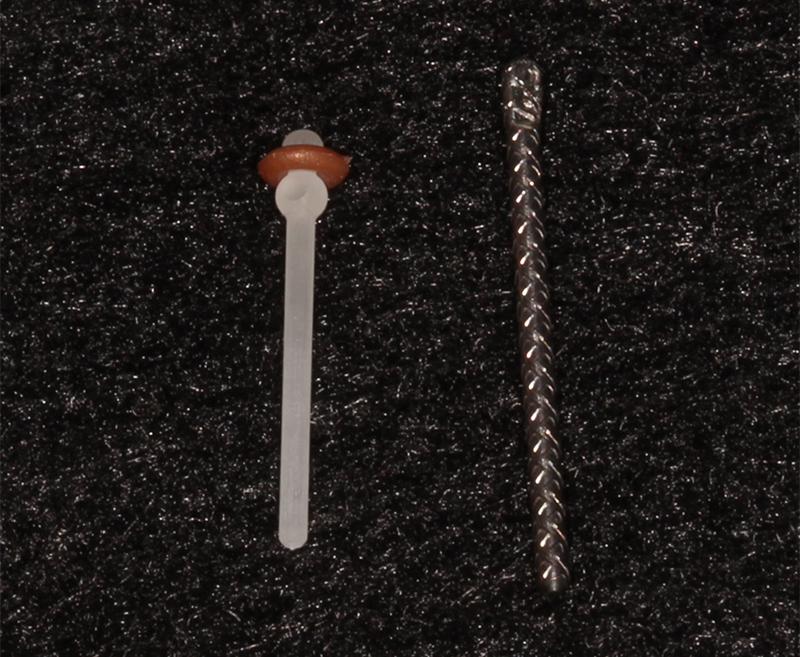
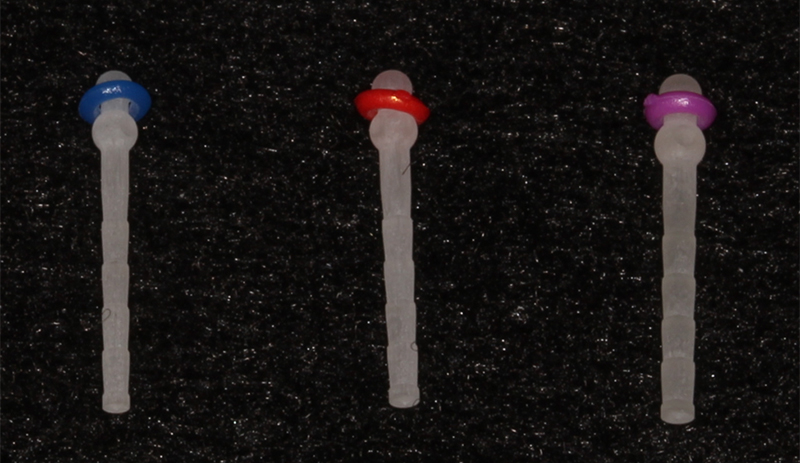
Post systems are designed with different retentive features. The retentive aspects of a post can be divided into active and passive posts. Active posts have retentive features that engage the root. This makes them more retentive than passive posts, which passively seat in the canal space and are retained by a cement or bonded in place. However, due to their engaging features, active posts stress the tooth’s root more and are only advised for teeth with short roots.
Posts can also have a parallel or tapered design. Parallel posts generally are more retentive than tapered posts; however, more tooth structure must be removed to facilitate the placement of a parallel post.4
Posts in the Age of Adhesive Dentistry
As stated earlier, the only purpose for a post is to retain the core buildup material. With advancements in adhesive dentistry, the need for posts has been decreasing. Some early studies have even shown that there is not a statistically significant difference in failure rates in endodontically treated molars with posts and cores compared to those only consisting of a core buildup.6
Some companies have discontinued manufacturing their post systems due to decreased use. While posts are still used in severely compromised teeth, the advances in adhesion of core materials and bonded indirect restorations have minimized the need for posts when restoring endodontically treated teeth.
References
- Cheung, W. (2005). A review of the management of endodontically treated teeth: Post, core and the final restoration. The Journal of the American Dental Association, 136(5), 611-619.
- Bitter, K., Noetzel, J., Stamm, O., Vaudt, J., Meyer-Lueckel, H., Neumann, K., & Kielbassa, A. M. (2009). Randomized clinical trial comparing the effects of post placement on failure rate of postendodontic restorations: preliminary results of a mean period of 32 months. Journal of Endodontics, 35(11), 1477-1482.
- Ferrari, M., Cagidiaco, M. C., Grandini, S., De Sanctis, M., & Goracci, C. (2007). Post placement affects survival of endodontically treated premolars. Journal of Dental Research, 86(8), 729-734.
- Schwartz, R. S., & Robbins, J. W. (2004). Post placement and restoration of endodontically treated teeth: a literature review. Journal of Endodontics, 30(5), 289-301.
- Schwartz, R., & Jordan, R. (2004). Restoration of endodontically treated teeth: the endodontist’s perspective, Part 1. Endodontics, 28, 2-16.
- Magne, P., Goldberg, J., Edelhoff, D., & Güth, J. F. (2016). Composite resin core buildups with and without post for the restoration of endodontically treated molars without ferrule. Operative Dentistry, 41(1), 64-75.
SPEAR Membership
Learn Faster. Treat Better.
Whether you have 10 minutes or time to dive deeper, Spear Membership gives you the learning, tools, and support to keep improving.
Choose the level of support and structure that fits your goals.

By: Andy Janiga
Date: March 18, 2020
Featured Digest articles
Insights and advice from Spear Faculty and industry experts