- Article
- Occlusion
The Occlusal Plane Guide
Greggory Kinzer
•
December 17, 2014
When communicating the desired tooth position to the dental technician for a diagnostic wax-up, the more accurate and detailed the information provided, the more accurate the diagnostic wax-up will be. Given that the diagnostic wax-up will be used to fabricate the provisional restorations, increasing the accuracy of the wax-up will save the clinician time back in the operatory.
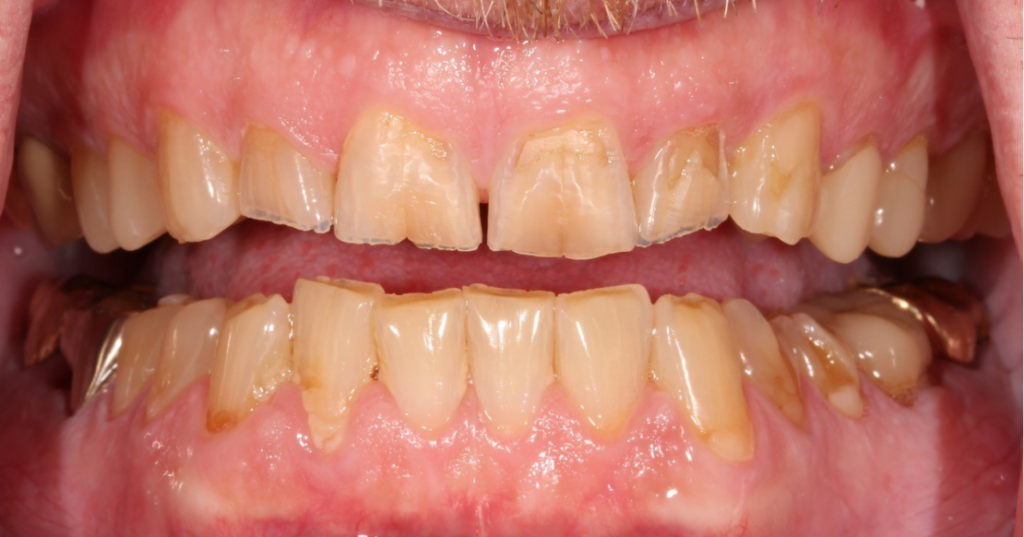
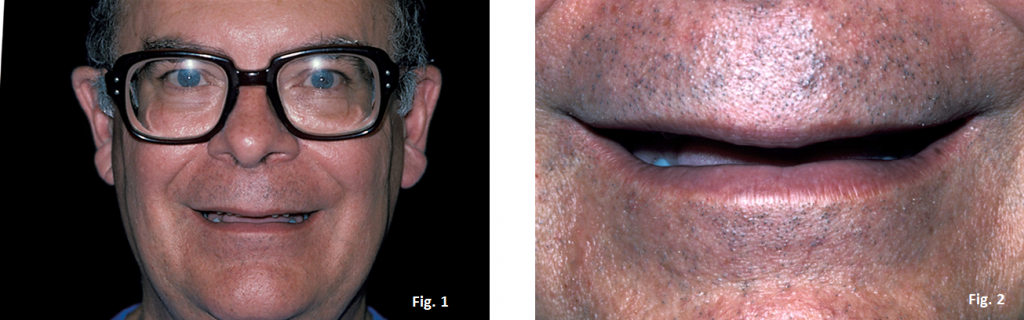
Nothing can be more disruptive than fabricating provisionals for a patient that turn out to have a canted occlusal plane, be too short, or have a midline issue. To provide accurate information to the technician, clinical photos are crucial. In the majority of cases, there are reference points that can guide the technician during the diagnostic wax-up (i.e., teeth or tissue already in the correct position or close to it). However, there are times when no references are available. (Figs. 1-2)
In this patient, the entire occlusal plane needs to be lengthened. How do you communicate to the technician where to wax the teeth? Although we can communicate where to place the maxillary central incisors (in this example, I desired to lengthen the centrals 3 mm), how does this relate to the desired position of the laterals, canines, premolars, and molars?
The use of an occlusal plane guide
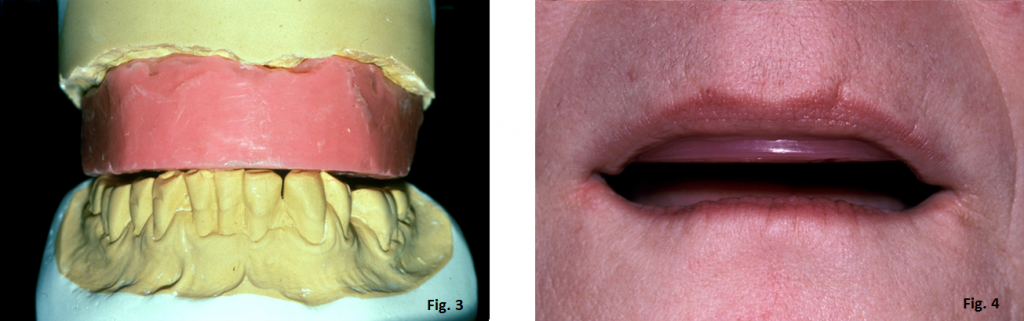
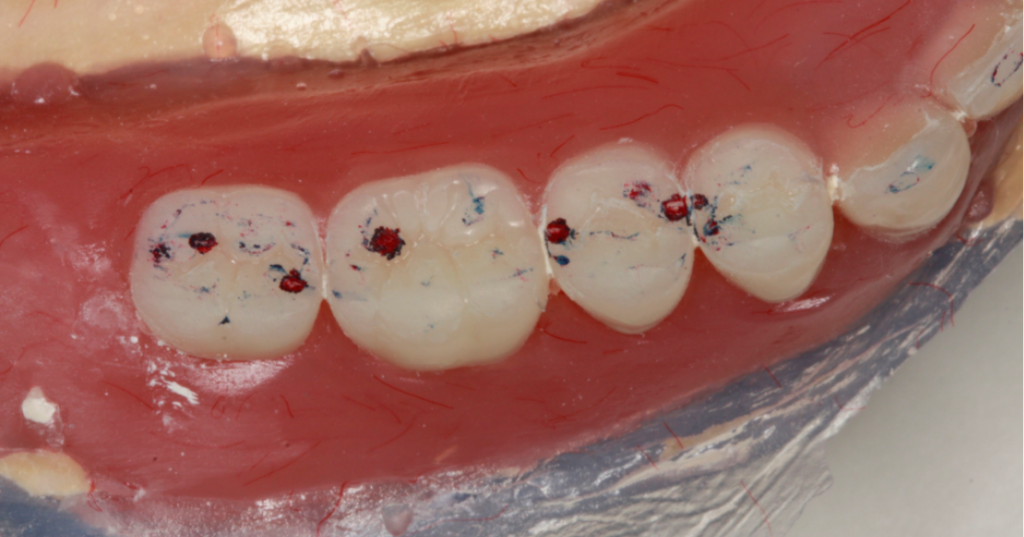
A technique that can be extremely helpful for communicating tooth position in situations where significant changes are desired in the occlusal plane (either lengthening or shortening) is the use of an “Occlusal Plane Guide”.1 The concept of the occlusal plane guide was derived from the concept of using a wax occlusal rim when determining tooth position for complete dentures. (Figs. 3-4)
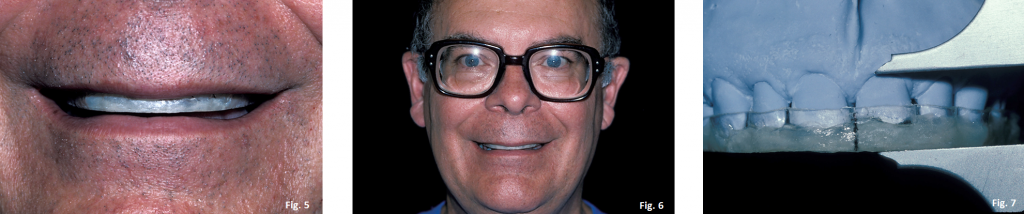
However in the dentate patient, 1 mm Biocryl is pressed over a model of the maxillary arch and Triad is added to check and correct the occlusal plane in the mouth. (Figs. 5-7)
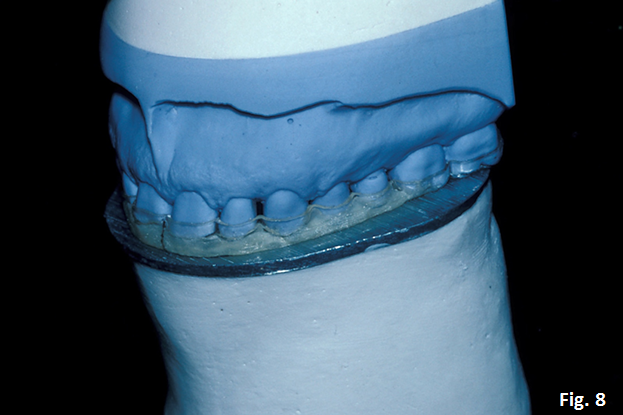
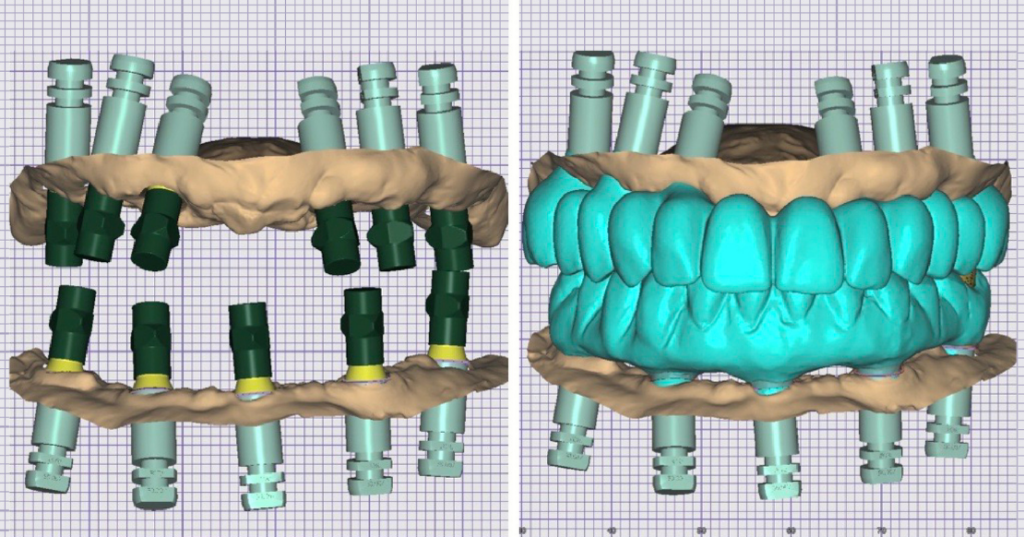
Once the desired tooth position is established and verified in the mouth with photos, the occlusal plane guide is sent to the technician to aid in developing the new occlusal plane in the diagnostic wax-up. The technician can attach the occlusal plane guide to the previously mounted upper model, and after removing the lower model from the articulator, mount a “flat plane” against the occlusal plane guide (in this example, it’s a mounting plate that has been turned upside down). (Fig. 8)
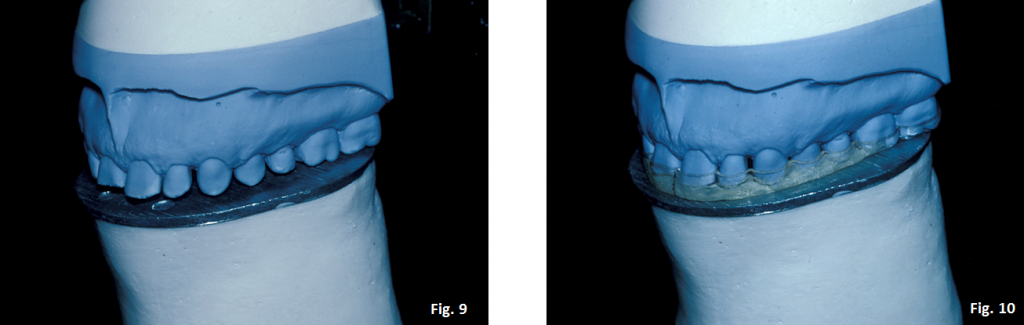
The instructions to the technician are to wax the incisal edges and buccal cusp tips of the maxillary arch to touch the flat plane (a natural Curve of Spee can be added to the distal buccal cusp of the first molar and in the second molar region). (Figs. 9-10)
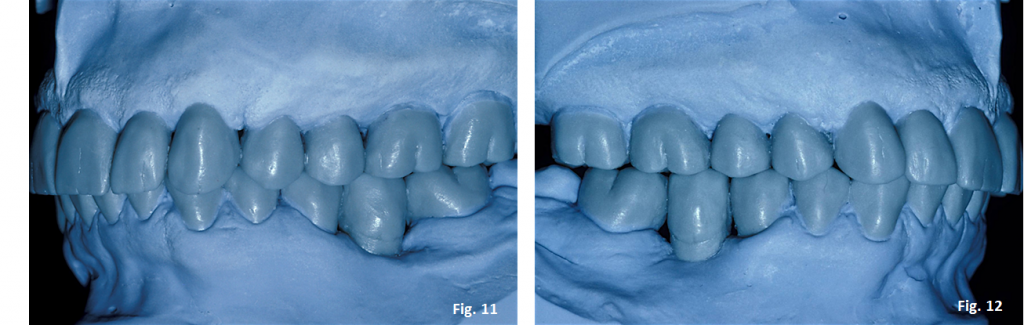
Once the maxillary occlusal plane has been waxed, the table can be removed and the lower model replaced to finish the wax-up. (Figs. 11-12)
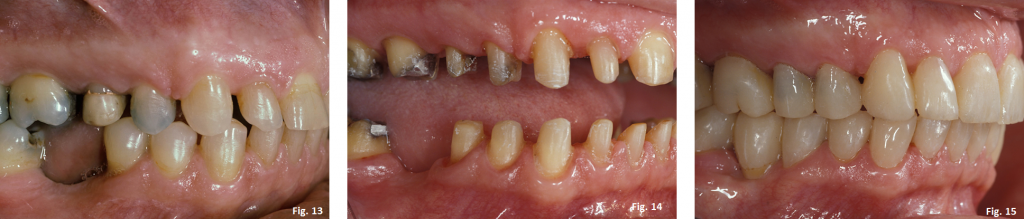
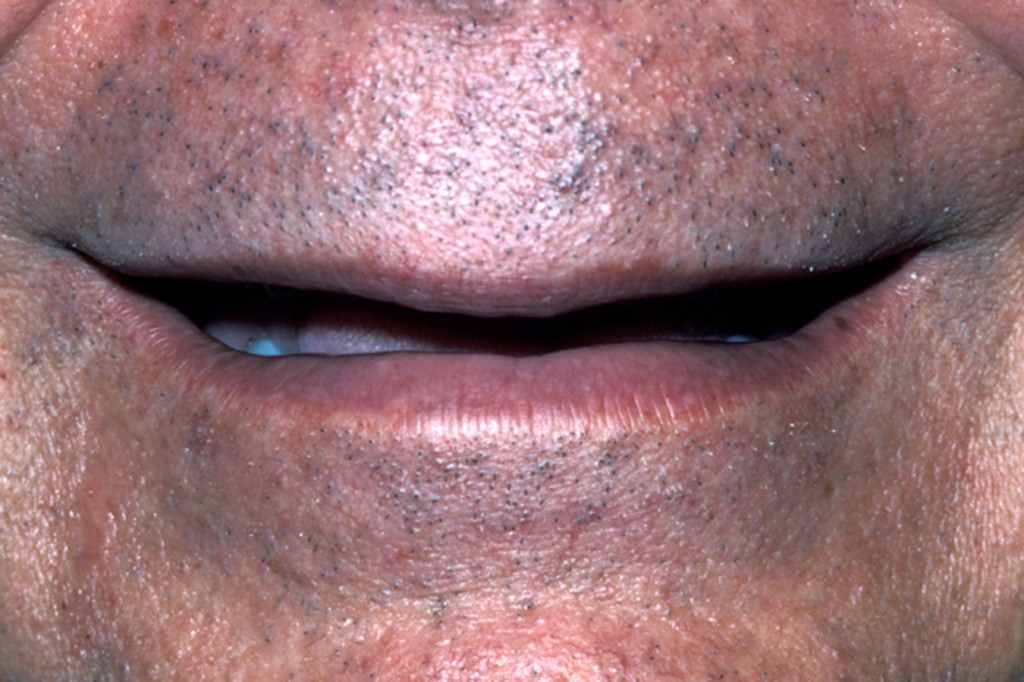
Taking this “additional” step to create the occlusal plane guide is a great way to help assure that the provisional restorations are created in the correct plane of space anterio-posteriorly and mesio-distally. (Figs. 13-15)
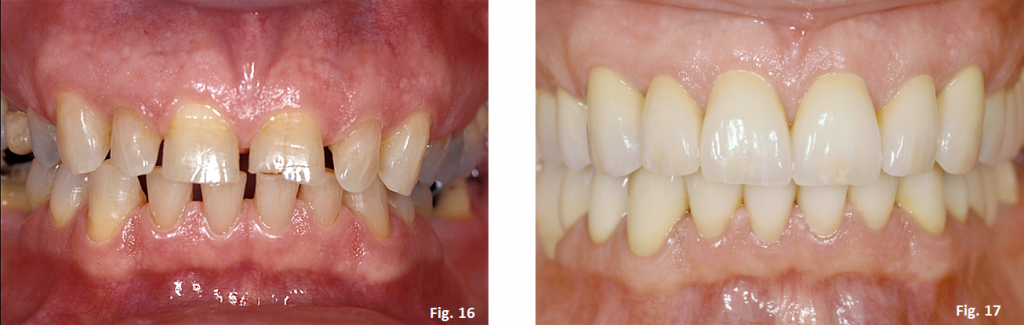
Again, the more accurate the diagnostic wax-up can be, the more accurate the provisionals will be, and the easier it will be to get the correct tooth position in the definitive restorations. (Figs. 16-17)
The occlusal plane is one of several components of a stable occlusion. See Spear’s guide to occlusion fundamentals for the complete system.
Reference
Phillips, K., & Morgan, R. (2001). The acrylic occlusal plane guide: a tool for esthetic occlusal reconstruction. Compendium of Continuing Education in Dentistry (Jamesburg, NJ: 1995), 22(4), 302-4.
SPEAR campus Workshops
Learn Hands-on From Faculty Who Still Practice
A few days at Spear Campus can change how you diagnose, plan, and present cases, not through more lectures, but through hands-on training led by faculty who treat patients every week. Work through real cases in small groups and leave with techniques you can use on your next patient.
Featured Digest articles
Insights and advice from Spear Faculty and industry experts