- Article
- Practice Management
Is There a Gorilla in Your Patient’s Mouth?
Imtiaz Manji
•
February 15, 2013

By now you’re likely familiar with the “gorilla” perception test. That’s where researchers had test subjects watch a video of two groups of people passing a basketball and asked them to count the number of passes one group made.
The incredible thing was that half the observers didn’t notice a gorilla that slowly walked out into the middle of the scene, beat its chest and walked off. It was a wonderful illustration of how much can escape the average person’s attention when they’re focused on something else.
Recently, some other researchers did a new version of the gorilla test, but this time they used a specially selected group of observers: people who are specially trained to have outstanding powers of observation.
An image of a gorilla was superimposed on a CT scan and given to a group of radiologists. Remember, these are people who are professional “noticers.” Very often, lives depend on them being able to see something in the scanned images that others can’t detect. The researchers found that 87% of the radiologists didn’t see the gorilla.
In a way, this is not all that surprising. As one of the researchers put it, “They’re trained to look for cancer, not gorillas.” But that’s the point. What we’re trained to look for determines what we see.
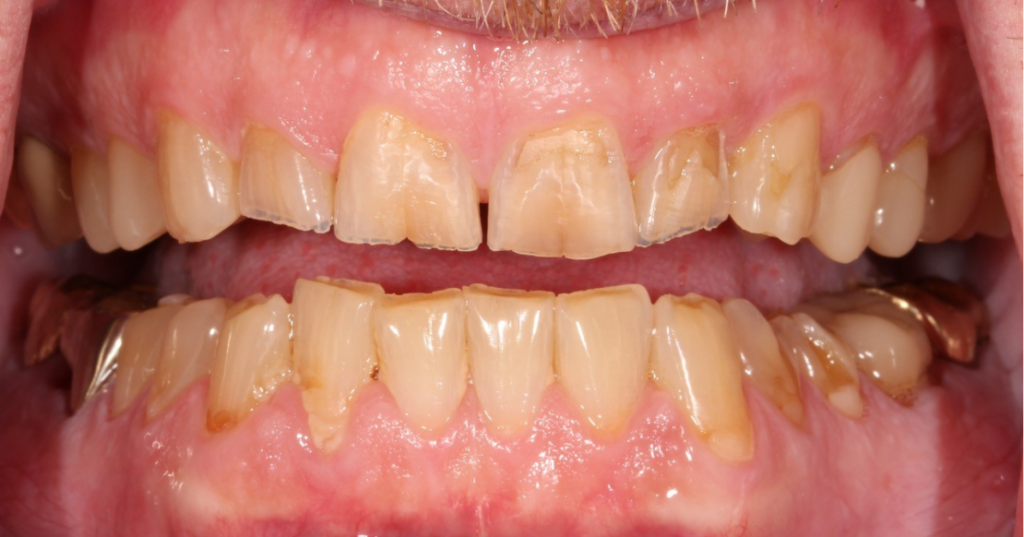
This goes to the heart of the difference between diagnosing tooth-based dentistry versus comprehensive dentistry. As dentists, we’re experts in teeth, and at the tooth level we can detect things that non-experts simply can’t.
The problem comes when you’re so focused on the teeth that you don’t notice the smile. Diagnosing comprehensively simply requires a different way of seeing. It’s what Facially Generated Treatment Planning, for instance, is all about. It’s about seeing the gorilla in your midst.
SPEAR campus Workshops
Learn Hands-on From Faculty Who Still Practice
A few days at Spear Campus can change how you diagnose, plan, and present cases, not through more lectures, but through hands-on training led by faculty who treat patients every week. Work through real cases in small groups and leave with techniques you can use on your next patient.
Featured Digest articles
Insights and advice from Spear Faculty and industry experts