- Article
- Techniques / Materials
Fabricating Surgical Guides for Esthetic Crown-Lengthening Procedures
Robert Winter
•
January 18, 2014
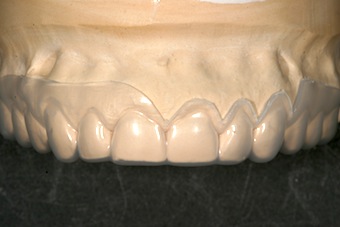
There are two types of surgical guides I recommend for surgical crown-lengthening procedures: an overlay guide or a copyplast stent. An overlay guide is made on the diagnostic cast without reducing any stone. The stone model can be sealed with a product such as Great Lakes Separator. Composite, such as Triad, that is used to make the guide is placed over the existing dentition and tissue. The composite is then trimmed to the desired gingival level, contouring it to simulate the desired outline form of the tooth in the gingival third. The alternative technique uses a 1.5mm copyplast made on the diagnostic cast. The copyplast is trimmed and contoured to simulate the desired outcome that is similar to the overlay guide; both will fit accurately over the existing dentition. The clinician performing the periodontal surgery uses the stent to make bleeding points or to make the incision.

Clinicians have asked if a surgical guide can be fabricated from a diagnostic wax-up. Sometimes, clinicians prescribe a diagnostic wax-up that includes the alteration of gingival levels for esthetic reasons. To accomplish the prescribed changes, the technician can alter the cast by grinding on the stone to approximate the desired level and shape of the gingival tissue. The technician does not know the position, angulation or size of the root, so this step can only produce an approximation of the clinical presentation. The wax-up is then completed, establishing the prescribed position and morphology of the crown form. Since the tooth form has been changed in the wax-up, a guide that is fabricated using the newly waxed form will not fit onto the existing dentition, making it unusable for the periodontal surgery.
SPEAR campus Workshops
Learn Hands-on From Faculty Who Still Practice
A few days at Spear Campus can change how you diagnose, plan, and present cases, not through more lectures, but through hands-on training led by faculty who treat patients every week. Work through real cases in small groups and leave with techniques you can use on your next patient.
Featured Digest articles
Insights and advice from Spear Faculty and industry experts