- Airway
- Article
- Spear Updates
Watch the ‘Seattle Protocol’ in Action
Editor Spear Education
•
May 6, 2019
Studies show mandibular advancement appliances can reduce bruxism by 50-80%, providing evidence that improving the airway — that is, keeping the airway unobstructed during sleep — is an important strategy for patients who grind their teeth.
However, with all the available devices and so many nuances involved with sleep bruxism, it can be challenging to narrow down which appliance is best for a patient. That’s where the “Seattle Protocol” can help.
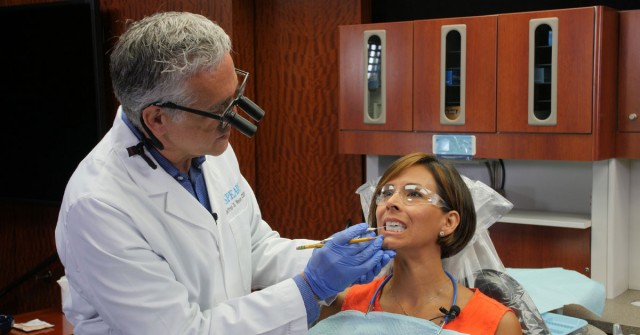
In a new Spear Online course, “Seattle Protocol Chairside Demonstration,” Resident Faculty member Dr. Jeff Rouse provides a live chairside demonstration of the six steps of the Seattle Protocol on a patient and provides an up-close look on how to fabricate nightguards.
Rouse explains the Seattle Protocol as a systematic approach to develop a customized treatment plan for dental conditions like bruxism, TMD, erosion, wear, etc., but that it often becomes a plan to resolve an airway issue in the process of doing dentistry.
The course is divided into six lessons, one for each step of the Seattle Protocol:
- Nasal Breathing Therapy
- Mandibular Orthotic
- Mandibular Anterior Repositioning Splint
- Dual Arch Splint
- Dual Arch Anterior Repositioning Splint
- Mandibular Advancement Splint
Learners will develop confidence in their ability to:
- Handle Seattle Protocol failure
- Understand the Seattle Protocol and how it fits into a restorative dental practice
- Comprehend the control-resolution strategies unique for each patient
- Create an upper-lower night guard to double vertical dimension
Spear Team Training
Train Your Entire Team, Not Just Yourself
Clinical confidence doesn’t stop with the doctor. Spear gives every role in your practice, hygiene, assistants, and front office, structured training built for their part of patient care, including the Hygiene Excellence Program. When the whole team learns from the same curriculum, your practice runs with more consistency, not just your chair.
Featured Digest articles
Insights and advice from Spear Faculty and industry experts