- Article
- Spear Member Stories
Dental Mentorship for New Dentists: A Career Guide
Andy Janiga
•
August 4, 2026
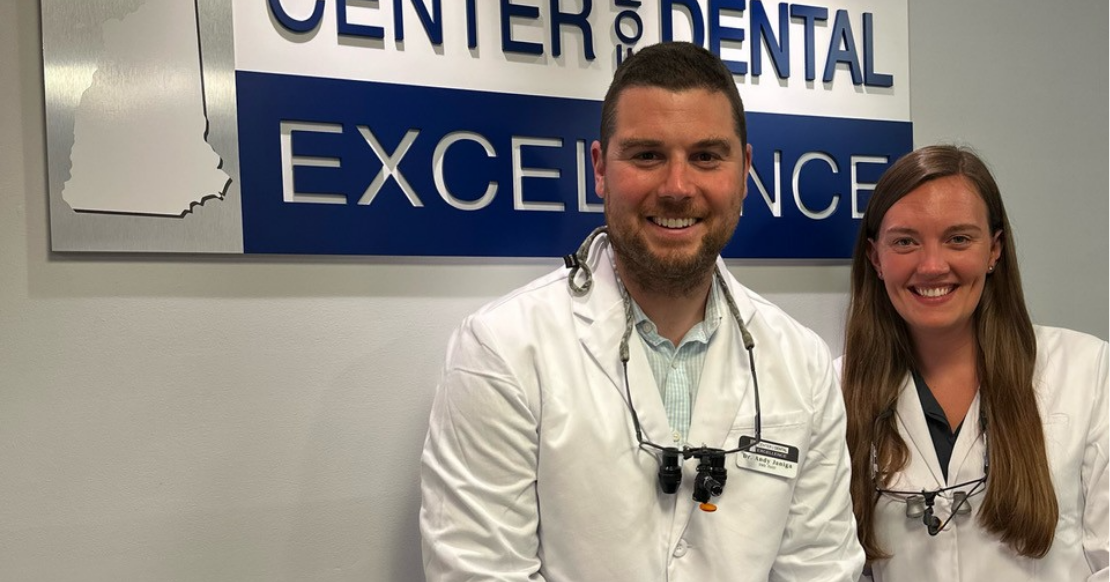
Dental mentorship for new dentists helps bridge the gap between dental school and clinical practice by providing guidance, confidence, and real-world experience. The right dental mentorship for new dentists can improve clinical decision-making, strengthen treatment planning, and help associates develop leadership and practice management skills much faster than they can learn on their own.
It’s the difference between muddling through the first few years alone and building real clinical confidence fast. In a previous article, Finding Mentors for Life, I wrote about my two mentors, Dr. Tara Sexton and Dr. David Swiecinski, who shaped the early years of my career.
Their mentorship was just one piece of finding my footing in those first few years. A part of a much bigger set of decisions, alongside financial planning and eventual ownership, that shapes my new dentist career advice worth passing on.
What does dental mentorship for new dentists provide?
In the early years of my career, mentors filled the gaps that dental school couldn’t. There was so much I didn’t yet know about comprehensive, multidisciplinary care, let alone about running a practice.
Dental mentorship for new dentists works because it pairs clinical judgment with real business experience, the two things a diploma doesn’t teach. Finding mentors who understood both complex case planning and how to run a well-managed private practice was instrumental in helping me become a better dentist and a better leader.
Research on mentoring in the dental profession supports this: structured mentorship consistently appears in the data as a driver of greater job satisfaction, faster clinical development, and improved retention.
If you can’t find time to do it right the first time, when will you find time to do it over again? — Dr. David Swiecinski
How do you actually find a mentor?
Finding a mentor mostly comes down to asking for help. It can feel intimidating to raise your hand and admit what you don’t know, but that’s usually the first step toward finding a real mentor.
Swiz and Tara were faculty members while I was still in dental school, and they were always willing to answer my questions, even after I graduated. In the study club, being honest about what I didn’t know helped me find members who wanted to mentor a younger dentist.

What’s the biggest mentorship mistake new dentists make?
One of the biggest mistakes I made early in my career was doubting my own ability to create treatment plans and present comprehensive cases. It’s easy to lose confidence when you’re a young clinician facing a complex case for the first time.
My mentors helped me see that I already had the knowledge and tools I needed. Their guidance and reassurance gave me the confidence actually to discuss and execute more complex, comprehensive treatment.
How can a Spear Study Club help new dentists find mentors?
I joined my first Spear Study Club in 2016, while I was still practicing in the Army in the greater Richmond, Virginia, area, under Dr. Karen McAndrew. I sought out Spear because it offered a different way of practicing dentistry than what I was seeing in the military.
Spear pulled me away from typical “drill and fill” dentistry, and it’s a big part of why I’m the dentist I am today. When I arrived in Nashua, New Hampshire, in 2020, I joined a new Spear Study Club led by Dr. Diane Shieh and Dr. Joe Torio.
Beyond the study club modules themselves, I received real-world guidance from members with decades more experience than I have. They took the concepts from each module and showed me how those ideas actually played out in a treatment room and on a P&L statement. Being surrounded by that kind of mentorship inside my study club shaped the kind of dentist I wanted to become, long before I could have identified it on my own.
Being part of that club has meant collaborating with specialists, hearing different opinions on cases from other general dentists, and building relationships that go well beyond the meetings themselves.
Working with my study club members has repeatedly changed how I approach a case. Using orthodontics ahead of restorative treatment, for example, has been a game-changer for my treatment planning. Before joining Spear, I didn’t fully appreciate how useful orthodontic treatment could be before starting restorative work. That shift has allowed me to collaborate with our orthodontist and study club leader, Dr. Shieh, to tag-team comprehensive restorative cases.
Why is a study club valuable for new dentists?
A Spear Study Club meets with the same group of dentists each month, so the mentorship compounds. You’re not meeting a stranger once at a conference. You’re building a relationship with people who remember your last case and ask how it turned out.
How do Spear workshops expand dental mentorship for new dentists?
As I pursued continuing education, I met more dentists who became mentors in their own right. Attending Spear’s Foundations Workshop on campus introduced me to Spear Visiting and Resident Faculty members who pushed me past single-tooth dentistry.
I met Dr. Steve Ratcliff at the 2019 AGD meeting, where I received my FAGD award, and he served as the keynote speaker for the FAGD and MAGD award ceremony. During his speech, he was refreshingly humble about mentoring younger dentists and invited anyone in the audience to reach out if they wanted to help advance the profession.
Two other dentists and I took him up on it after the conference, and together we formed the Grasshopper Study Club. We started by meeting over Zoom to talk through cases and lecture material, and we still meet with Dr. Ratcliff once a year in Idaho to review cases, dentistry, and life.
Dr. Ed Roman mentored me during the occlusion workshop, where he helped me understand how occlusion affects the entire oral system, including its lab perspective. Dr. Jeffrey Bonk mentored me through both the Restorative Design and Worn Dentition workshops, and his guidance still shapes how I treatment plan worn dentitions and prepare teeth more efficiently in the chair.
I still see many of these mentors every year on campus and at Spear Summit, and I still look forward to catching up on what’s new in the dental community.
For early-career dentists specifically, Spear Foundations is exactly this kind of access. It puts you in the room with faculty who’ve spent decades solving the cases you’re just starting to see.
How can new dentists stay connected with mentors between workshops?
Not every mentorship moment happens on campus. Between workshops and study club meetings, I’ve leaned on Spear Talk, Spear’s online community, to ask a quick question or see how someone else handled a similar case. It’s not a replacement for an in-person mentor, but it’s a good way to keep that network close when you can’t get in the same room.
Spear Talk has been especially useful for clinical questions. I can post a question and get input from a network of dentists around the world who’ve likely faced a similar case.
When should dentists become mentors themselves?
In 2025, I had the good fortune of bringing on an associate, Dr. Kayla Sargent. A member of our study club knew Kayla was looking for a position right out of dental school, and that connection led her to join our practice. My goal in bringing her on was simple. I wanted to have the same kind of impact on her career that Drs. Ratcliff, Roman, Bonk, Swiecinski, and Sexton had on mine.
We did weekly case reviews together so she could learn the nuances of comprehensive treatment planning. By the time she left our office, I was confident Kayla could treatment plan using FGTP concepts as well as any member of our study club.
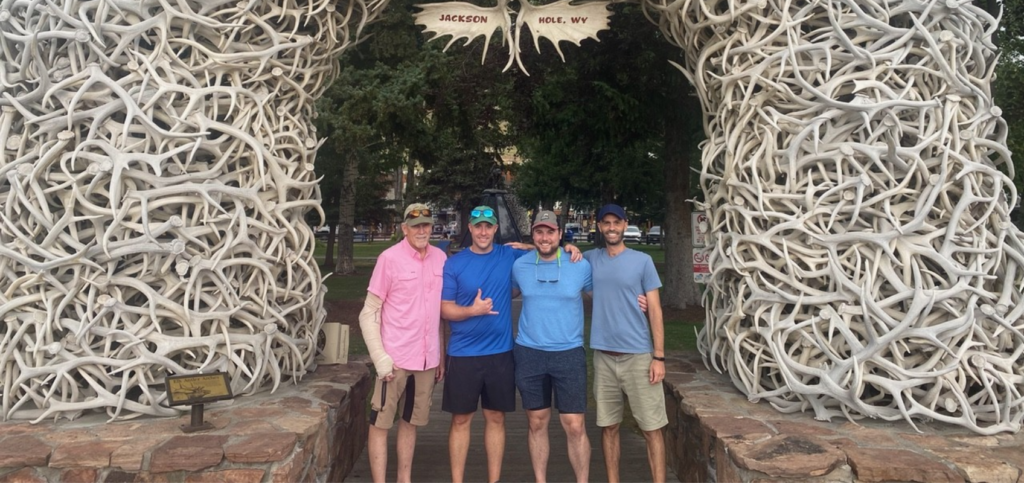
Mentoring Kayla confirmed that teaching and mentoring are something I want to keep doing throughout my career. Working with her gave me my “why” for what I do every day. Hearing her perspective as a newer clinician also pushed me to take a second look at some of our office systems and workflows, and we adjusted a few protocols as a result, making our practice more efficient.
Kayla finished at our office in June 2026 and is now pursuing prosthodontics at Tufts University. I’m proud of where she’s headed, and I’m looking forward to bringing that same mentorship to the next associate who joins our practice.
Why is dental mentorship for new dentists important for long-term success?
Dental mentorship for new dentists has had a real, measurable impact on our practice. Working with Kayla from the start of her career helped shift our focus toward comprehensive care rather than single-tooth dentistry. Between the two of us, taking clinical photography, applying FGTP concepts, and co-discovering with patients, we helped more patients say yes to the treatment they needed, and our case acceptance improved as a result.
Dental mentorship for new dentists doesn’t happen by accident. It comes from showing up: to a Spear Study Club, to a Foundations workshop, to a conversation on Spear Talk. Whether you’re looking for your first mentor or getting ready to become one, the same principle holds: find the room where experienced dentists are willing to share what they know, and don’t be afraid to ask.
If you’re early in your career and looking for that room, a Spear Online Membership will get you there. It’s the fastest way to land in a study club, get in front of the faculty who taught me, and start building the kind of relationships that shaped my own career. Explore Spear for free with a 7-day trial membership to start finding the dental mentorship for new dentists who will shape your your success.
Frequently Asked Questions
FOUNDATIONS MEMBERSHIP
Build Clinical Confidence In Your First Five Years
The first five years of practice come with decisions that dental school never fully prepared you for. Spear Foundations Membership gives you a full year of practical training, guidance from trusted faculty, and a community of peers working through the same challenges, for less than you’d charge for one crown.
Featured Digest articles
Insights and advice from Spear Faculty and industry experts