- Article
- Techniques / Materials
Integrating Your Lab Into Your Daily Workflow
Edward Roman
•
August 26, 2025
The word teamwork connotes different thoughts based on each dental practice’s priorities. Many successful practices my dental laboratory works with consider us as much a part of their daily routine as a hygienist or assistant throughout the course of the day. Working closely with your lab and integrating them as part of your team can help you save time and increase your productivity. When it comes to prioritizing the most valuable asset in your practice, the answer always returns to time. You can’t store it, duplicate it, or retrieve it — once it’s used, that time is gone forever.
This is important in a dental practice because time is money: The time wasted in the operatories can affect the bottom line in profound ways. Much of the time spent when working with your dental lab can be greatly reduced by simply following a few ideas.
Optimize — Or Outsource — Your Shade-Taking
Nothing kills a patient’s confidence in you more than having difficulty matching shades in the esthetic zone. A few steps taken by the dental team can help improve your accuracy and avoid rescheduling.
- Operatory lights play a huge factor in shade-taking. Your light source is different from what most labs use in their lab lights, so when taking shades, try to use the same lighting as your lab, such as 5500k temperature bulbs and a color rendering index over 92 (a quantitative measurement of color integrity, as compared to natural sunlight). You can also try using natural sunlight from a south-facing window between 10 a.m. and 2 p.m., which is when we take our custom shades when patients visit our lab.
- A frequently overlooked aspect of shade-taking is hydration of the teeth during a procedure. Teeth can begin to dehydrate in less than 10 minutes, which results in lighter shades, more opacity, and less translucency.1 Prevent desiccation by ensuring that shade-taking is done before any anesthesia, isolation, or tooth preparation.2 In certain instances, we can see the desiccation progress in real time when photos are taken sequentially during the procedure.
- We also see problems with the actual shade guides, which deteriorate with time and are subject to breakdown with all of the disinfection procedures used on them. When was the last time you changed your guides? To help prevent taking shades on worn-out shade guides, which leads to poor results, consider getting new ones on a regular basis.
- When all else fails, or you still don’t feel confident in your shade-taking abilities, establish a relationship with a dental lab that’s driving distance for your patients, and ask it to register the shades. I used this approach a lot as a dentist because it allowed me more time in my operatories for better production, and I didn’t spend time on fruitless shade-taking sessions.
Create and Use a Lab Checklist
Dental offices never like the call from the lab that requires them to bring a patient back into the office to gather required information. Consider compiling a checklist for lab cases, to ensure your team gathers all the required information before the patient is dismissed. During busy clinical days, it was easy for me to forget critical information to send to the dental lab; a checklist helps avoid this problem and the wasted operatory time from bringing the patient back to the office.
Leverage Integrated Case Management Systems
Most design, scanning, and fabrication in a dental lab is done using software systems that are becoming more sophisticated, including the ability to communicate with dental offices in real time. Dentists and their team members can now see their scans — even with physical impressions, labs scan their physical models to allow digital design in their software — to allow the dental office and the lab to collaborate on cases for a more effective and time-saving experience. This works most effectively when a more comprehensive case needs input back and forth with the lab.
Preschedule Lab Work
Dental practices schedule their time according to the amount of work involved for each case — for example, a single crown needs less time than a rehabilitation case. So why do practices assume that a dental lab can complete a full rehab case in the same amount of time as a single crown? This faulty assumption can lead to having to reschedule a patient because the practice underestimated the amount of time it would take to complete a case.
A few ways to address this issue:
- Contact the lab to share your treatment plan before seeing or dismissing the patient. This allow the lab to give you an estimate of the return date.
- Or, wait to schedule the patient until the lab receives the case, to allow for a more precise timeline for return of your case.
Avoid Remakes
Remakes not only waste appointment time but can also be profit-killers if additional lab fees are involved. In the digital world, labs can accurately re-create what the scan or impression tells them and, using info provided by the dentist, create consistently high-quality prostheses.
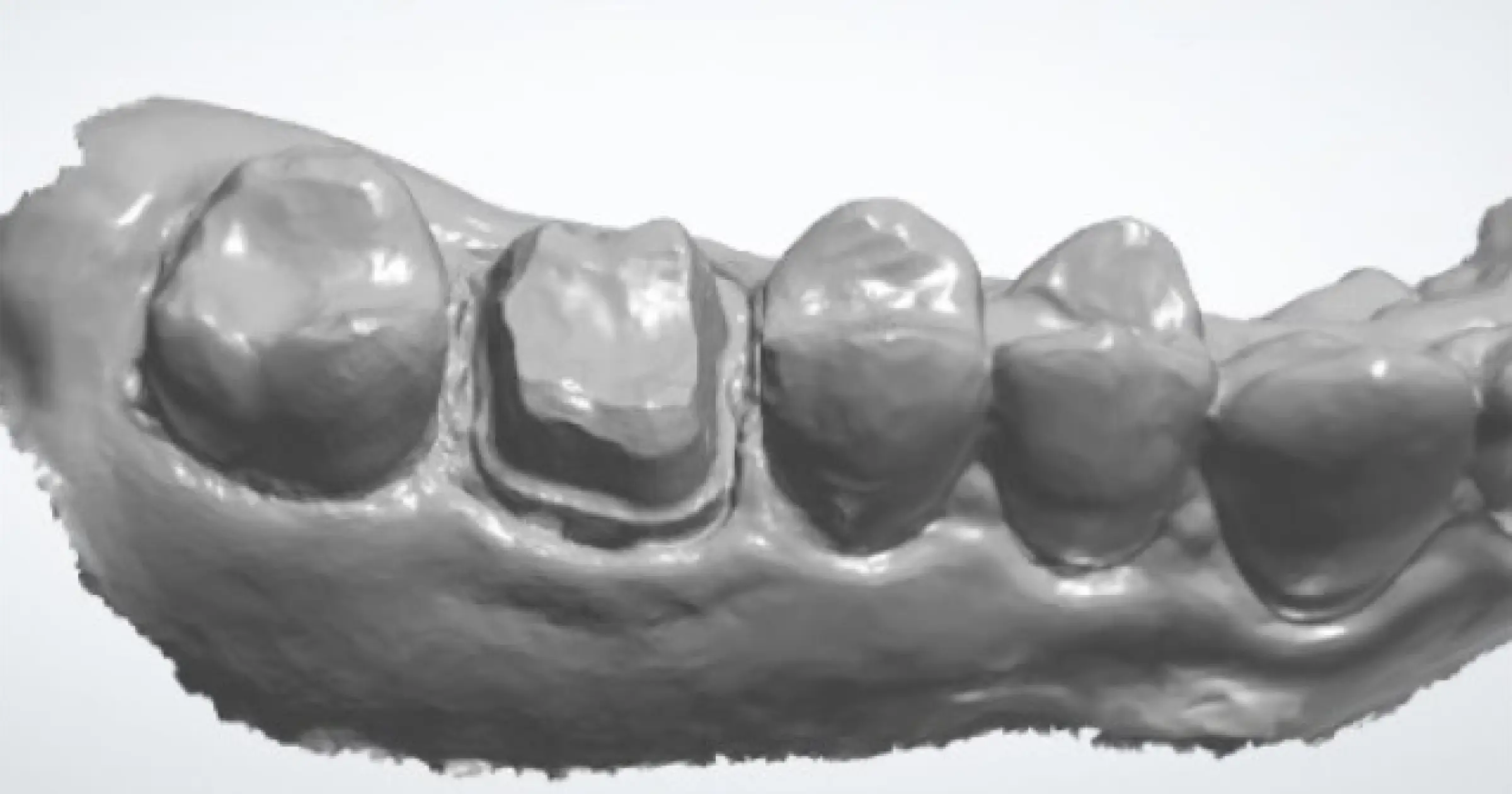
One common cause of ill-fitting restorations, however, is the lack of a readable margin on a scan or impression. Figures 1–3 show scans where we can see the margins pretty well, while Figures 4–6 show scans on which it’s a challenge to accurately identify the margins. For the latter, the lab needs to call the dental office to see how the dentist would like to proceed. This is not a conversation for the dentist to delegate to an assistant — the dentist needs to speak directly to the technician.


Other discrepancies we see are usually caused by lack of adequate gingival retraction, open contacts from an overly tight provisional (especially in second molars), and teeth moving during the provisional stage, causing occlusal discrepancies.
Having your team acknowledge these potential discrepancies will increase your success rate and protect your production.
Discover What Works For You
These examples are only a few ways that integrating your dental lab into your daily workflow as part of your team can protect and improve your productivity. Every dental office has its own operational dynamics where the practice can discover their own ability to use their lab as part of their team.
SPEAR All access
One Membership, $555 More a Day
Practices on Spear All Access see a median daily production gain of $555, with a 9.9% median lift in hygiene production. That’s not from one course or one workshop. It comes from unlimited Spear and CDOCS workshops, the full online course library, role-based team training, practice analytics, and a dedicated Practice Growth Partner working with your team every month, all in one membership.
SPEAR Membership
Try Spear Free For 7 Days
See what a Spear Membership can do for you and your team before you decide. A free 7-day trial gives you full access to Spear Online’s clinical CE courses and practice team training, so you can find the membership level that fits your practice.
Spear Team Training
Train Your Entire Team, Not Just Yourself
Clinical confidence doesn’t stop with the doctor. Spear gives every role in your practice, hygiene, assistants, and front office, structured training built for their part of patient care, including the Hygiene Excellence Program. When the whole team learns from the same curriculum, your practice runs with more consistency, not just your chair.
SPEAR campus Workshops
Learn Hands-on From Faculty Who Still Practice
A few days at Spear Campus can change how you diagnose, plan, and present cases, not through more lectures, but through hands-on training led by faculty who treat patients every week. Work through real cases in small groups and leave with techniques you can use on your next patient.
VIRTUAL SEMINARS
Get Live Training Without Leaving Your Practice
Traveling for CE means blocking out days you don’t have. Spear’s virtual seminars bring live, faculty-led training straight to your office, so you can learn from home or between patients and apply what you learned right away.
FOUNDATIONS MEMBERSHIP
Build Clinical Confidence In Your First Five Years
The first five years of practice come with decisions that dental school never fully prepared you for. Spear Foundations Membership gives you a full year of practical training, guidance from trusted faculty, and a community of peers working through the same challenges, for less than you’d charge for one crown.
Featured Digest articles
Insights and advice from Spear Faculty and industry experts