- Article
- Techniques / Materials
Cements Dentistry: Pros, Cons, and How to Choose
John Carson
•
April 11, 2023
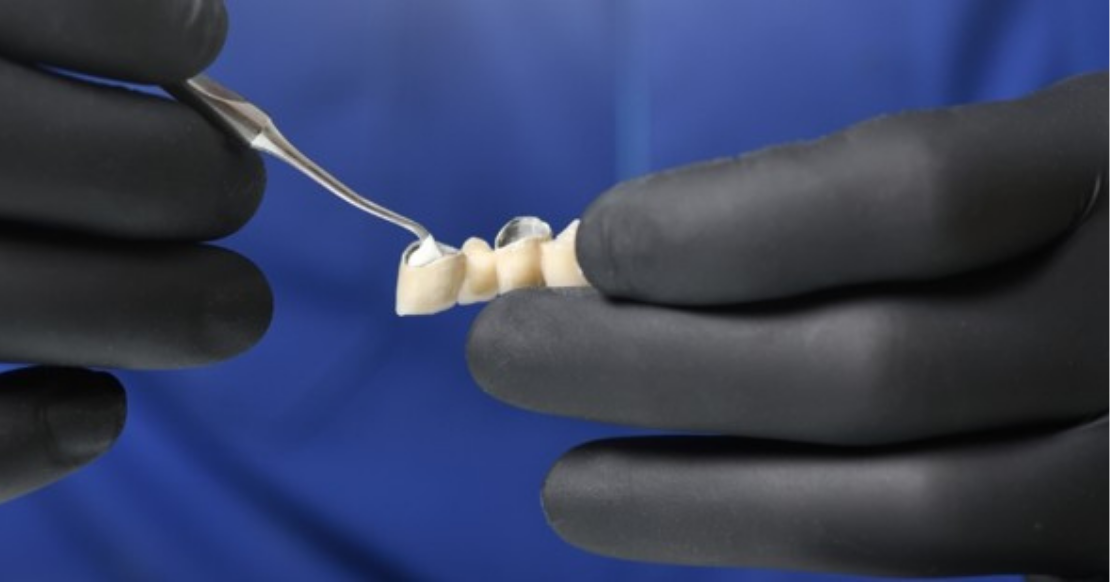
Cements dentistry plays a critical role in the long-term success of indirect restorations. Choosing the right dental cement affects retention, sensitivity, restoration longevity, retrievability, and overall clinical outcomes. While no single cement is ideal for every situation, understanding the strengths and limitations of different cements helps clinicians make more predictable restorative decisions.
Do you ever stop and think about the cements you use?
Many clinicians have a go-to material for routine cementation, but revisiting the available options can reveal whether a different approach may be better suited to a specific restoration. The choice among cements in dentistry can influence not only how easily a restoration is delivered but also how it performs years later.
Consequences of poor cements dentistry selection can include debonding, post-operative sensitivity, difficult restoration retrieval, or even restoration failure. Understanding the properties, indications, and trade-offs of modern cements in dentistry enables clinicians to match cements to restorations, preparation designs, and long-term treatment goals.
This article explains how cements dentistry are classified, compares the advantages and disadvantages of the three primary cement categories, and provides a practical framework for selecting the right cement for common clinical scenarios.
What are the main types of cements dentistry professionals use?
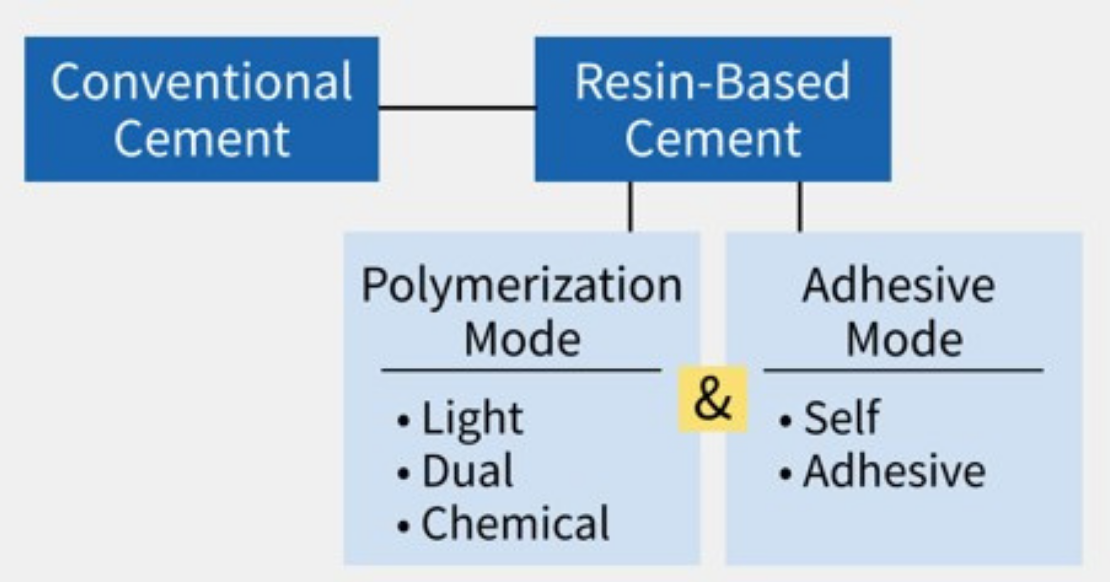
Before evaluating individual cement types, it helps to understand how cements in dentistry are broadly organized. At the highest level, dental cements fall into two overarching categories: conventional cements and resin-based cements.
Conventional cements include glass ionomer (e.g., 3M Ketac Cem), resin-modified glass ionomer (e.g., GC FujiCEM 2), zinc phosphate, and modified zinc oxide eugenol. These cements rely primarily on mechanical retention and require adequate preparation geometry to achieve acceptable retention. Conventional cement should not be used with non-retentive indirect restorations such as veneers, overlays, onlays, or resin-bonded fixed dental prostheses.
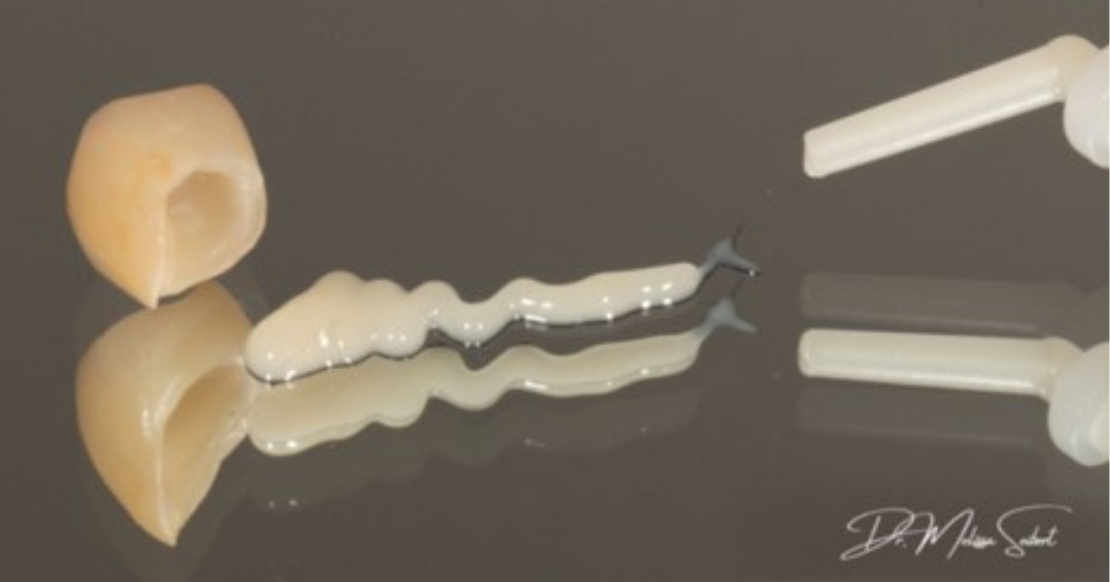
Resin-based cements are further defined by two properties: their mode of adhesion (self-adhesive or adhesive) and their polymerization mode (light-cure, chemical-cure, or dual-cure). Self-adhesive cements do not require separate acid etching or bonding agent on the tooth preparation. Adhesive cements do. In either case, the indirect restoration should still be pre-treated per the manufacturer’s instructions, regardless of whether the material is lithium disilicate, zirconia, or hybrid ceramic.
Within these two broad categories, the following sections examine the three main groups of definitive or permanent cements dentistry, organized by how clinicians most commonly encounter and select them.
The pros and cons of the three main dental cements
Keep in mind that no magic cement eliminates every possible challenge. Many issues stem from other causes, such as improper moisture isolation, occlusion problems, or preparation design. While some cements can compensate for shortcomings in these areas, they cannot fully overcome them.
1. Luting cements (conventional)
This category includes resin-modified glass ionomers (RMGIs), such as RelyX Luting and FujiCEM 2, as well as zinc phosphate cements. For most luting scenarios, the RMGI is the clear choice: it is simpler to use, more moisture-tolerant, and associated with less sensitivity than zinc phosphate, whose liquid component is acidic and can cause post-operative sensitivity if not mixed precisely.
Because luting cements rely on mechanical retention, adequate preparation geometry is critical. For molars, approximately 4.0 mm of axial wall height (AWH) and 10 to 20 degrees of taper are required. For anterior teeth, approximately 3.0 mm AWH with relatively parallel axial walls is recommended. Without sufficient retention form, even the best luting cement will be challenged.
Pros:
- Very easy to use, especially RMGIs with auto-mix tips.
- Moisture-tolerant, more so than other categories.
- Easy cleanup, especially with RMGIs.
- Low sensitivity potential with RMGIs.
- Easiest removal of restorations in the future should replacement be necessary.
- Works well on sound, unaltered tooth structure.
Cons:
- Least retentive of the three categories; requires the most from preparation geometry.
- Not indicated for lower-strength all-ceramic restorations such as feldspathic porcelain.
- Limited working time.
- Not suitable for veneers, overlays, onlays, or resin-bonded fixed dental prostheses.
2. Self-adhesive resin cements
This category includes cements such as RelyX Unicem 2 and PANAVIA SA Cement Universal. They are typically supplied in auto-mix delivery systems and require no separate etching, priming, or bonding of the tooth preparation. However, the indirect restoration itself should still be pre-treated according to the manufacturer’s instructions.
Most self-adhesive resin cements are dual-cure, meaning they polymerize via both chemical reaction and light activation. This makes them appropriate for restorations where adequate light penetration may be limited, such as thicker, more opaque posterior restorations. For very thin or highly translucent restorations, light-cure-only cements may be considered, but these should be limited to restorations 1.5 to 2.0 mm thick or less. Chemical-cure and dual-cure options are preferred when cementing over deep preparations or when restorative material significantly attenuates light.
Pros:
- Very easy to use, nearly as straightforward as RMGI luting cements.
- Moisture-tolerant, comparable to RMGIs.
- Low sensitivity potential, though slightly more than RMGI.
- Easier cleanup than resin cements that require separate adhesive components.
- Less demanding of preparation retention compared to luting cements.
- Works well on altered tooth structure, though not as well as luting cements.
Cons:
- Not indicated where the highest bond strengths are required, such as with veneers.
- Typically, more difficult cleanup than with luting cements.
- Restoration removal in the future will be more complicated than with luting cements.
- Good preparation and retention are still needed for the best outcomes.
- Limited working time.
- May not be color-stable with all formulations.
3. Resin cements that use separate adhesive components
This category includes cements dentistry such as RelyX Veneer Cement and PANAVIA Veneer LC. These cements use a separate adhesive component applied to the tooth preparation before cementation. They come in both dual-cure and light-cure-only options. Light-cure-only versions are typically used for thinner, more translucent restorations such as veneers, where full light penetration is achievable. Dual-cure options are used for thicker, more opaque restorations where you may not achieve adequate light penetration to set a light-cure-only product fully.
Pros:
- The most retentive option among the three categories.
- Indicated for all all-ceramic restorations, including lower-strength materials.
- Unlimited working time with light-cure-only options.
- Light-cure options are typically color-stable; some dual-cure options are as well.
Cons:
- Highly sensitive to altered tooth structure.
- Requires excellent moisture isolation throughout placement.
- Some formulations are very technique-sensitive.
- Working time can end abruptly.
- Cleanup can be difficult.
Common resin-based cement options: a quick reference
The following table outlines commonly used resin-based cements, their adhesion mode, and polymerization mode. Always consult the manufacturer’s instructions for use (IFU) for current protocols, as formulations evolve.
|
Brand Name |
Adhesive Mode |
Polymerization Mode |
|---|---|---|
|
3M™ RelyX™ Unicem 2 |
Self-Adhesive |
Dual-Cure |
|
PANAVIA™ SA Cement Universal (Kuraray) |
Self-Adhesive |
Dual-Cure |
|
Variolink™ Esthetic DC (Ivoclar) |
Adhesive |
Dual-Cure |
|
Variolink™ Esthetic LC (Ivoclar) |
Adhesive |
Light-Cure |
|
PANAVIA™ V5 (Kuraray) |
Adhesive |
Dual-Cure |
|
RelyX™ Universal (3M™) |
Adhesive and Self-Adhesive |
Dual-Cure |
|
Multilink™ Automix (Ivoclar) |
Adhesive |
Chemical-Cure w/ light cure option |
|
PANAVIA™ 21 (Kuraray) |
Adhesive |
Chemical-Cure |
How to apply the pros and cons: a clinical decision framework
So how do we actually pick? If most of the marketing out there is to be believed, we need the strongest or easiest option every time. But the strongest and easiest rarely go together, and more importantly, the strongest is not always best.
Understanding cements dentistry principles is especially important when selecting a cement for zirconia, lithium disilicate, or veneer restorations.
Gold crowns and high-strength zirconia: In nearly every case, a resin cement is unnecessary. High-strength zirconia behaves much like a gold restoration, with inherent physical strength independent of the cement. Luting is simpler at delivery and makes future removal significantly easier if the tooth requires re-treatment.
Lower-strength ceramics (e.g., e.max, GC Initial LiSi Press, lower-translucency zirconia): Luting is ruled out for these materials. If the preparation has good resistance and retention form and the restoration has appropriate thickness, a self-adhesive resin cement is often the best balance of simplicity, bond strength, and future serviceability. It also makes future removal slightly easier than with adhesive resin cements.
Minimal-thickness restorations and non-retentive preparations (veneers): This is where resin cement with separate adhesive components earns its place. When restoration thickness is minimal and preparation is non-retentive, the superior bond strength justifies the added technique sensitivity and cleanup challenge.
The right cement for the job is not always the most retentive one. The goal is to match the cement to the restoration, the preparation, and the long-term clinical scenario.
Why choosing the right cement matters
Understanding cements dentistry is not about finding one material that works for every restoration. It is about selecting the right cement based on the restoration type, preparation design, clinical conditions, and long-term treatment goals.
While adhesive resin cements provide the highest bond strengths, stronger is not always better. In many situations, a luting cement or self-adhesive resin cement may offer the ideal balance of retention, ease of use, retrievability, and long-term success.
By understanding the advantages and limitations cements dentistry, clinicians can make more predictable restorative decisions, reduce complications, and improve patient outcomes. The best cement is not necessarily the strongest or the easiest to use. It’s the most appropriate for the specific clinical situation.
Want to deepen your understanding of material selection, restorative protocols, and cements dentistry? Spear Campus workshops provide hands-on training that helps clinicians apply evidence-based techniques with greater confidence and predictability in everyday practice.
Contributing Author
Dr. Melissa Seibert
References
- Pameijer, C. H. (2012). A review of luting agents. International Journal of Dentistry, 2012(1), 752861.
- Heboyan, A., et al. (2023). Dental luting cements: an updated comprehensive review. Molecules, 28(4), 1619.
- Wingo, K. (2018). A review of dental cements. Journal of Veterinary Dentistry, 35(1), 18-27.
- Shillingburg, H. T., Hobo, S., Whitsett, L. D., Jacobi, R., & Brackett, S. E. (1997). Fundamentals of Fixed Prosthodontics (Vol. 194). Chicago, IL, USA: Quintessence Publishing Company.
- Stamatacos, C., and Simon, J. F. (2013). Cementation of indirect restorations: an overview of resin cements. Compendium of Continuing Education in Dentistry, 34(1).
- Radovic, I., et al. (2008). Self-adhesive resin cements: a literature review. Journal of Adhesive Dentistry, 10(4).
- David-Perez, M., et al. (2022). Degree of conversion of resin-cements (light-cured/dual-cured) under different thicknesses of vitreous ceramics: Systematic review. Journal of Prosthodontic Research, 66(3), 385-394.
Frequently Asked Questions
SPEAR campus Workshops
Learn Hands-on From Faculty Who Still Practice
A few days at Spear Campus can change how you diagnose, plan, and present cases, not through more lectures, but through hands-on training led by faculty who treat patients every week. Work through real cases in small groups and leave with techniques you can use on your next patient.
Featured Digest articles
Insights and advice from Spear Faculty and industry experts