
- Article
- |
- Restorative Dentistry
Triple Tray Impressions: When and How to Use Them
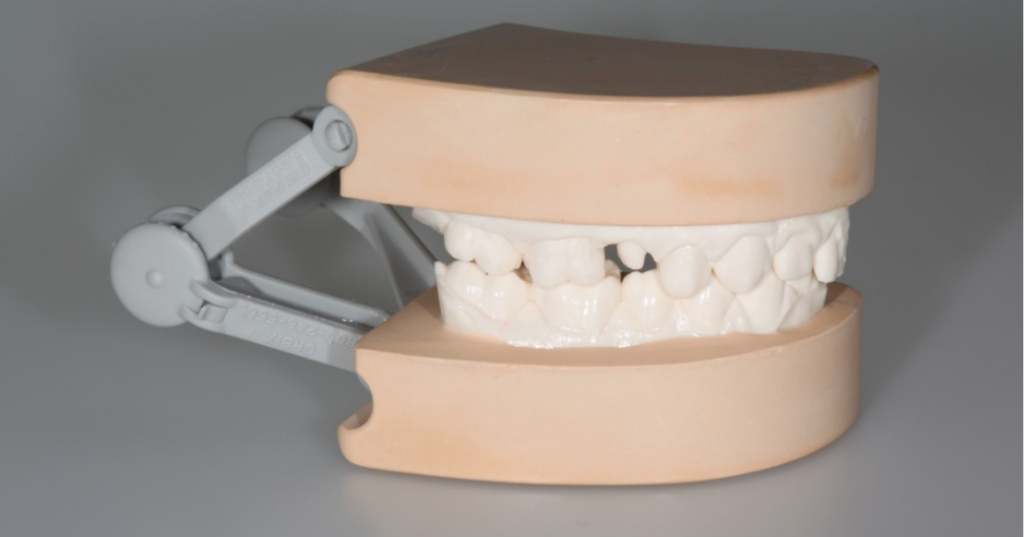
Triple tray impressions are an efficient and predictable option for many single-unit posterior restorations when the right cases, trays, and materials are selected. By capturing the prepared tooth, opposing arch, and bite registration in a single impression, the technique can save chair time while producing accurate restorations; however, its success depends on proper case selection and an understanding of its limitations.
Using triple tray impressions for simple, single-unit posterior cases and for select short-span two- to three-unit posterior cases under specific conditions can be a highly predictable and effective way for restorative dentists to achieve consistent outcomes.
One important exception is when the distal-most tooth in the arch is being prepared. When the second molar is present, its anatomy and cusp inclination help guide the anatomy and occlusal morphology of restorations fabricated anterior to it. Without that natural reference, the laboratory loses an important guide for recreating proper anatomy.
What is a triple tray impression?
The dual arch, or triple tray, impression technique was first described in 1983 by Wilson and Werrin as a simplified method for restorative impressions. The tray records the prepared tooth, the opposing arch, and the patient’s occlusal relationship simultaneously.
During the procedure, the patient bites into a plastic or metal tray containing a mesh or perforated divider that separates the upper and lower arches while the impression material sets. The resulting cast can then be mounted directly on a simple hinge articulator, making the process faster and more efficient than traditional full arch impressions.
What are the advantages of a triple tray impression?
When used appropriately, a triple tray impression offers several advantages:
- Captures the prepared tooth, opposing dentition, and bite registration in one step
- Reduces chair time and patient discomfort
- Uses fewer materials than separate impressions and bite registrations
- Simplifies laboratory mounting procedures
- Produces highly predictable results for many single-unit posterior restorations
These efficiencies have made triple tray impressions one of the most widely used impression techniques in restorative dentistry.
When should you use a triple tray impression?
The technique is widely accepted for posterior restorative dentistry. A 2016 Glidewell Laboratories report found that 85% of restorative impressions received were triple tray impressions. A National Dental Practice-Based Research Network survey of more than 1,700 dentists found that polyvinyl siloxane is the most common impression material used for single-unit crowns (77%), followed by polyether (12%) and digital or optical scanning (9%).
These findings illustrate how central the technique has become to everyday restorative practice.
The literature surrounding multi-unit dual arch impressions is less definitive. While two- to three-unit posterior spans have been successfully restored in carefully selected cases using rigid trays and higher-viscosity impression materials, the strongest clinical evidence continues to support single-unit posterior restorations as the most predictable indication.
When considering a short-span multi-unit restoration, clinicians should carefully evaluate occlusion, tray rigidity, and impression stability, and thoroughly verify occlusal contacts during insertion.
When should you avoid a triple tray impression?
Although efficient, triple tray impressions are not appropriate for every clinical situation. Avoid using a triple tray when:
- The distal-most tooth in the arch is being prepared.
- The patient has a complex occlusion that requires evaluation of eccentric movements.
- Multiple quadrants or extensive restorative work require a comprehensive occlusal analysis.
- A predictable maximum intercuspation record cannot be achieved.
Several design limitations should also be considered. The mesh or septum separating the arches can slightly distort the occlusal morphology of unprepared teeth or alter the patient’s bite as they close into the impression material.
Because the bite registration is captured simultaneously, its accuracy can be difficult to verify. For this reason, many clinicians recommend obtaining a separate bite registration over the prepared tooth.
Since casts are mounted on a simple hinge articulator, only maximum intercuspation can be evaluated by the laboratory. Lateral and protrusive movements are not reproduced, making centric and eccentric contacts more likely to require adjustment during insertion than restorations fabricated from full arch impressions mounted on a semi-adjustable articulator.
In addition, the contralateral side is not captured, preventing the laboratory from evaluating tooth morphology, wear patterns, or contour on the opposite side of the arch.
Most dual arch trays also provide minimal lateral support, increasing the potential for buccolingual distortion. Plastic trays are particularly susceptible because they flex more than metal trays under the pressure of heavy-body impression materials.
What affects triple tray impression accuracy?
As with any impression technique, the accuracy of a triple tray impression depends on factors controlled by the clinician, the laboratory, and the patient.
Dentist-controlled factors
• Incomplete margin detail
• Air bubbles or voids
• Impression pulls or tears
• Incompletely set material
• Blood, saliva, or debris contaminating the impression
Laboratory-controlled factors
• Incorrect water-to-powder ratios when pouring stone
• Inadequate tray support during pouring
• Tray flexure during model fabrication
Patient-controlled factors
• Moisture control
• Bite force and closure direction during impression setting
• Mandibular flexure
• Tongue movement during the procedure
Distortion is ultimately a three-dimensional issue. Impression material must resist permanent deformation during removal from the mouth, and material that has not fully polymerized is especially vulnerable.
The literature reports mixed findings regarding overall dimensional accuracy. Metal trays generally outperform plastic trays because of their greater rigidity. One study found triple tray impressions to be as accurate as custom single-arch trays. At the same time, another reported that gypsum dies from plastic trays measured approximately 30 microns smaller in the mesiodistal dimension than control trays.
Which triple tray materials and trays work best?
Tray selection plays an important role in the predictability of triple tray impressions.
Metal trays are generally preferred because they resist flexure better than plastic trays, particularly when used with heavy-body vinyl polysiloxane (PVS) impression materials.
Polyether impression materials, however, have demonstrated greater distortion in dual arch trays regardless of tray type. When polyether is the preferred material, a conventional quadrant tray may provide greater accuracy.
Clinicians should also be cautious when using aluminum-handled trays. Bending or twisting the handle during removal can permanently distort the tray without visible signs of damage. The problem often becomes apparent only when the restoration fails to seat or when the laboratory attempts to pour a second cast from the same impression.
For a deeper discussion of tray selection and impression viscosity, see What Is the Best Type of Triple Tray Material?
Triple tray vs. full arch impressions
|
Triple tray impression |
Full arch impression |
|---|---|
|
Records prepared tooth, opposing arch, and bite simultaneously |
Records the complete arch |
|
Faster and more efficient |
More comprehensive |
|
Mounted on a hinge articulator |
Mounted on a semi-adjustable articulator |
|
Best suited for posterior single-unit restorations |
Better for complex restorative cases |
|
Limited occlusal analysis |
Allows evaluation of centric and eccentric movements |
Key takeaways about triple tray impressions
Triple tray impressions remain one of the most efficient techniques in posterior restorative dentistry. When clinicians understand the technique’s limitations and carefully select appropriate cases, trays, and impression materials, they can consistently produce accurate restorations with high efficiency.
Although triple tray impressions are best supported for single-unit posterior restorations, carefully selected short-span posterior cases may also be successful when rigid trays, appropriate materials, and meticulous occlusal verification are used. Proper case selection, rather than speed alone, remains the key to predictable restorative outcomes.
Contributing Authors
Dr. Jeffrey Bonk and Dr. Mary Anne Salcetti
References
- Wilson, E. G., & Werrin, S. R. (1983). Double arch impressions for simplified restorative dentistry. The Journal of Prosthetic Dentistry, 49(2), 198-202.
- Breeding, L. C., & Dixon, D. L. (2000). Accuracy of casts generated from dual-arch impressions. The Journal of Prosthetic Dentistry, 84(4), 403-407.
- Ceyhan, J. A., Johnson, G. H., & Lepe, X. (2003). The effect of tray selection, viscosity of impression material, and sequence of pour on the accuracy of dies made from dual-arch impressions. The Journal of Prosthetic Dentistry, 90(2), 143-149.
- Ceyhan, J. A., Johnson, G. H., Lepe, X., & Phillips, K. M. (2003). A clinical study comparing the three-dimensional accuracy of a working die generated from two dual-arch trays and a complete-arch custom tray. The Journal of Prosthetic Dentistry, 90(3), 228-234.
- de Lima, L. M. S., Borges, G. A., Júnior, L. H. B., & Spohr, A. M. (2014). In vivo study of the accuracy of dual-arch impressions. Journal of International Oral Health: JIOH, 6(3), 50.
- McCracken, M. S., Louis, D. R., Litaker, M. S., et al. (2018). Impression techniques used for single-unit crowns: Findings from the National Dental Practice-Based Research Network. Journal of Prosthodontics, 27(8), 722-732.
- Withrow, D. (2017). By the Numbers. Chairside Magazine, Glidewell 11(4).
SPEAR ONLINE
Follow a Clear Path to Clinical and Practice Confidence
Next-level confidence isn’t random. It’s structured. Follow a clear pathway that will accelerate your clinical and practice progression.

By: Robert Winter
Date: October 26, 2012
Featured Digest articles
Insights and advice from Spear Faculty and industry experts