- Article
- Techniques / Materials
Hybrid Digital/Analog Technique for Maxillofacial Prosthodontics
Brandon Stapleton
•
January 24, 2018
I often feel as a prosthodontist that I’m constantly brainstorming new ways to make things that don’t work with traditional techniques possible with new or hybrid techniques.
That’s precisely what Bart Hyde, C.D.T., and I did with a recent provisional complete obturator prosthesis. Oftentimes, with these maxillofacial cases, we’re working in challenging and restrictive spaces due to muscle contracture from radiation. This results in limited opening, microstomia, and xerostomia, along with other, often compounding, factors.
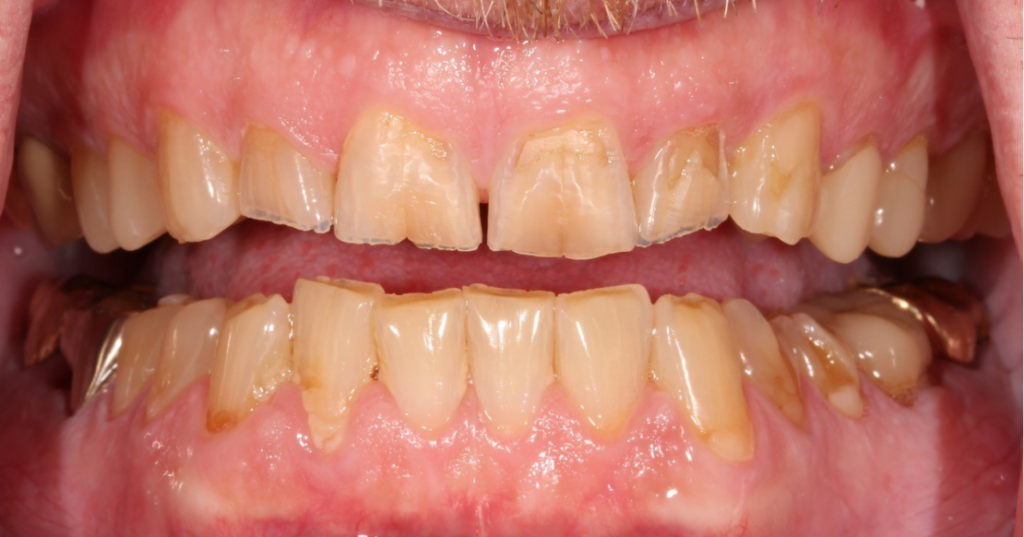
Let me introduce you to Debbie, a 52-year-old cancer survivor. In 2014, Debbie completed surgical and radiation therapy to treat primary adenoid cystic carcinoma, which resulted in a hemimaxillectomy of her right maxilla.
There were subsequent attempts to close and reconstruct the defect with grafts. After her last surgical revision in 2016, her remaining maxillary dentition was condemned and arch bars were used to stabilize the dentition until a plan could be made for transition.
It is clinically and radiographically very obvious that periodontal disease and caries have destroyed the supporting structures around the remaining maxillary teeth. Debbie has a history of periodontal disease in the mandible; however, that it is under control at the moment.
In terms of complications, Debbie presented a unique scenario that required some creativity and the combination of old and new techniques/technologies to achieve a provisional complete obturator prosthesis.
First, while Debbie performed well with her presenting situation, she had zero desire to walk around without teeth for weeks or months following extractions. She had a severely restricted opening, complicated by supraeruption of the maxillary and mandibular anterior teeth, which yielded approximately 10 to 15 mm of inter-arch space on her left side, where she still had opposing teeth.
Also, the maxillary soft tissue flap that covered much of her defect actually complicated prosthesis fabrication (and function). Bart Hyde, C.D.T., and I developed an innovative approach to capturing data for the provisional complete obturator prosthesis, utilizing new technologies in conjunction with fundamental (or “old school”) prosthodontic techniques.
Our treatment plan included the extraction of the remaining maxillary teeth, grafting of the extraction sites, and the fabrication of a provisional complete obturator prosthesis. Debbie desires an implant rehabilitation; however, space and bone availability were too difficult to assess with the teeth still in place (not to mention her limited opening, which severely compromises our definitive prosthesis design). We elected to proceed with the staged approach and will return for Phase II planning after the healing period.
The proposed plan was accepted and Phase I was executed. The restorative sequence was as follows:
1. We attempted maxillary/mandibular alginate impressions (and failed due to difficulty opening and limited inter-arch space).
2. Intraoral scans of maxilla and mandible were taken. I was unable to capture everything required due to her limited opening; however, all of the hard tissue and enough soft tissue was obtained, allowing me to come back to capture the tissue in an altered cast impression technique.
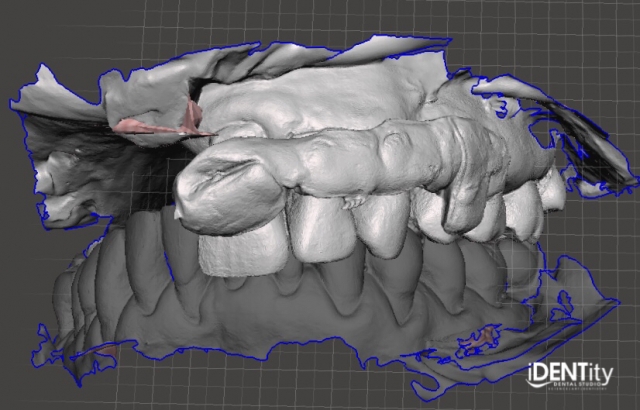
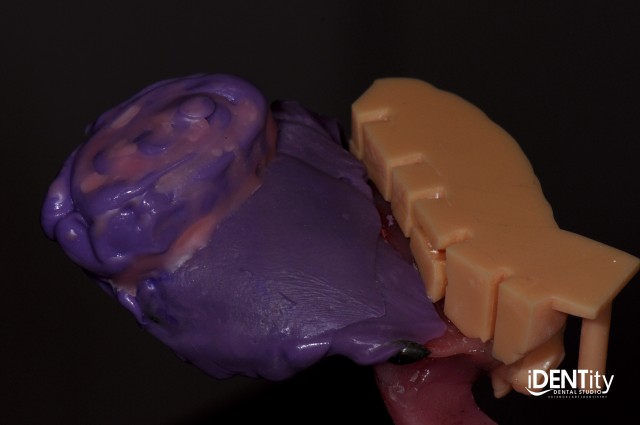
3. A maxillary baseplate/custom tray was used to capture the lateral extent of the right maxilla and posterior defect, utilizing border molding compound and VPS bite registration material.
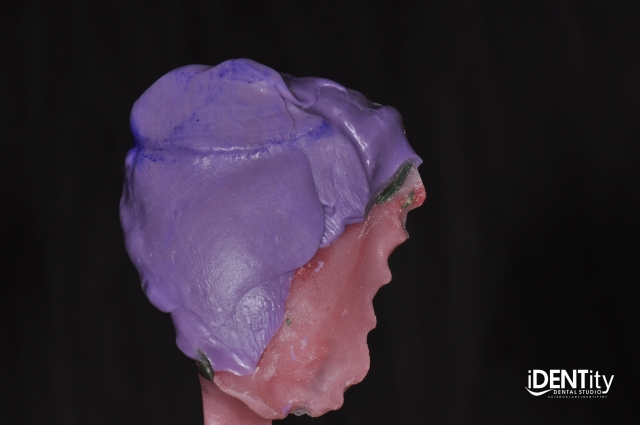
4. Using the printed dental cast of maxillary teeth, the remainder of the palate was removed, and grooves were added to allow conversion to an altered cast.
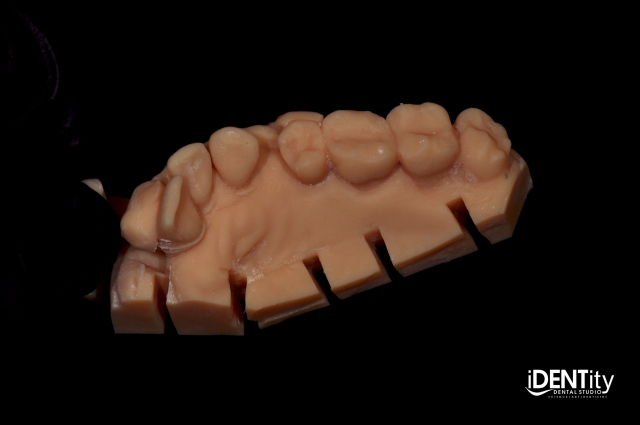
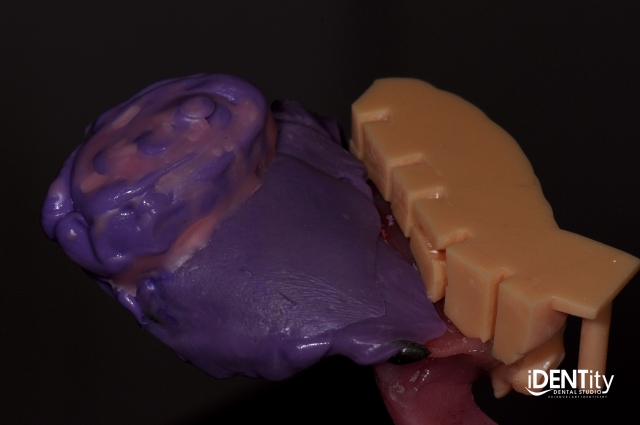
5. The impression and printed cast were joined and boxed to allow fabrication of a hybrid altered cast.
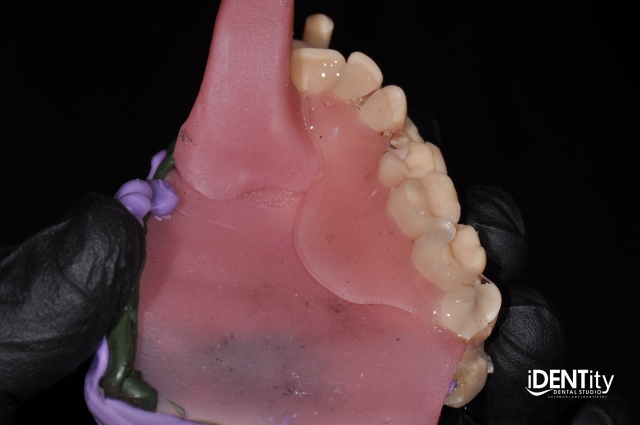
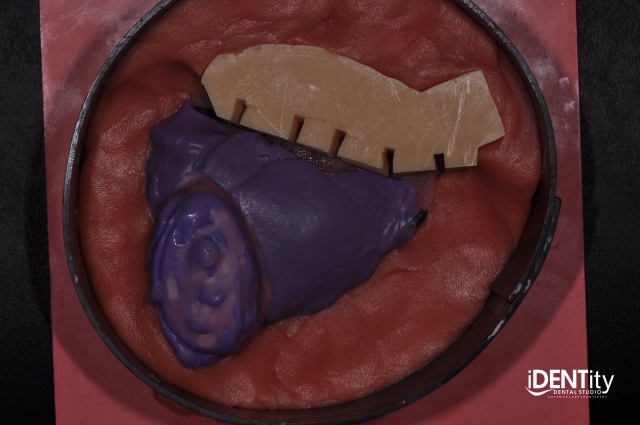
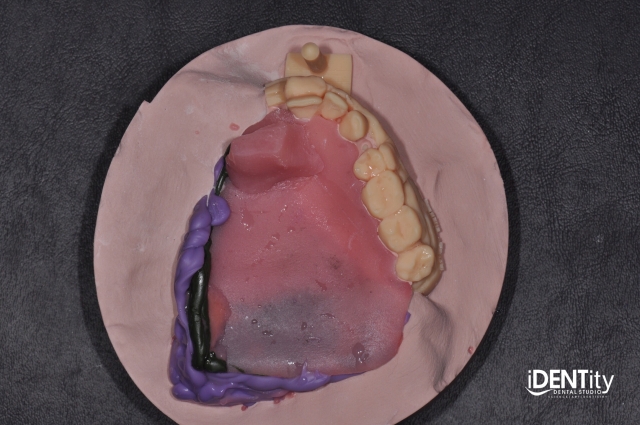
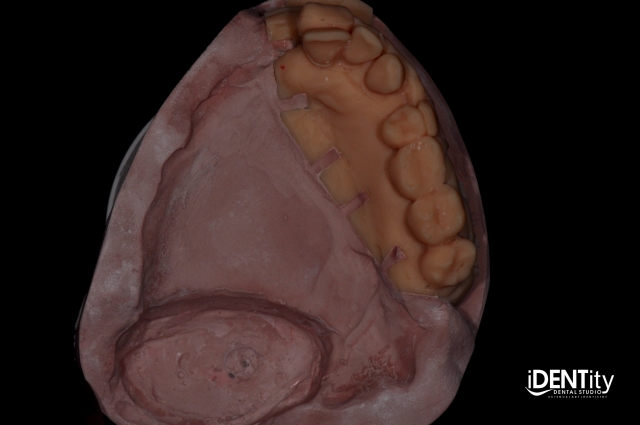
6. The new hybrid altered cast was articulated.
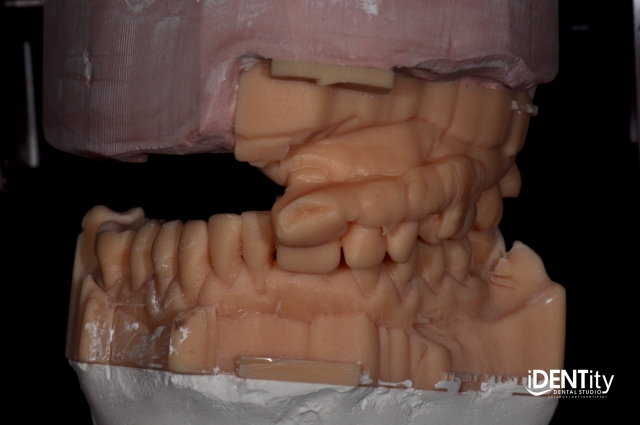
7. Esthetic changes were made during a new setup following ESFB protocol, and an immediate maxillary complete obturator prosthesis was completed. Bart duplicated the hybrid altered cast to fabricate the provisional complete obturator prosthesis.
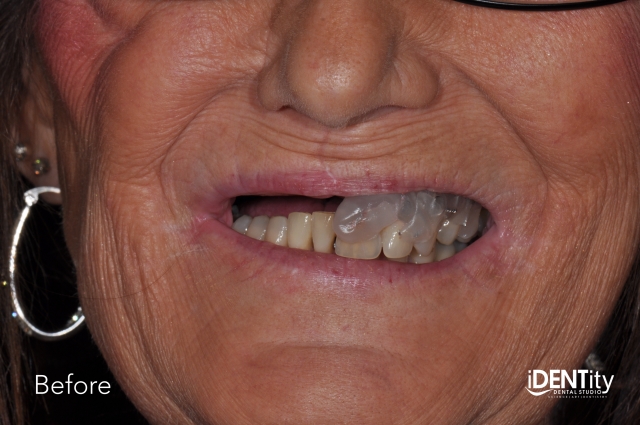
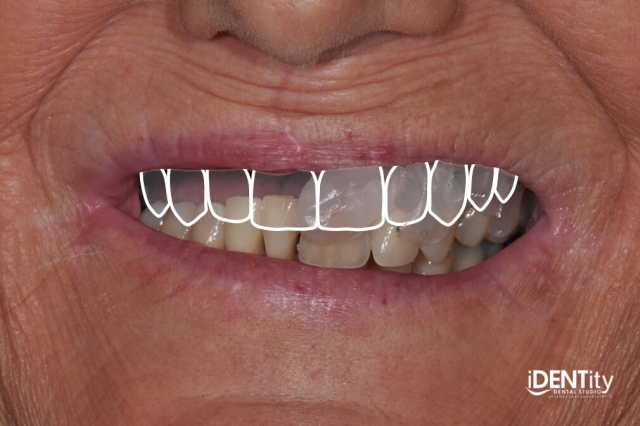
8. Maxillary teeth were removed and sites were grafted by oral surgeon Dr. Jason Ford, and the provisional maxillary complete obturator prosthesis was delivered.
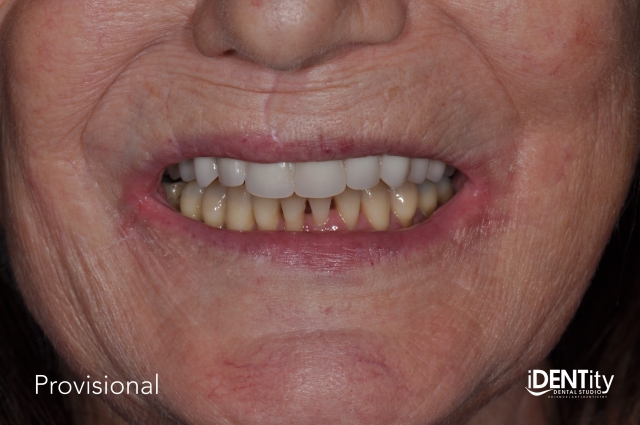
We’re now approximately one month post-extraction and grafting. Once the graft and tissues have matured, we will proceed with a new CBCT scan, utilizing a double scan technique to integrate tooth position into the planning software.
Debbie has done remarkably well with the transition, although there were some initial adjustments required to retrofit the prosthesis around the defect and depressible tissues.
Maxillary provisional complete obturator prosthesis completed by Bart Hyde, C.D.T., Hyde Dental Prosthetics
Surgical procedures completed by Oral Surgeon, Jason Ford, DMD, MD. The Kentucky Center for Oral and Maxillofacial Surgery
SPEAR campus Workshops
Learn Hands-on From Faculty Who Still Practice
A few days at Spear Campus can change how you diagnose, plan, and present cases, not through more lectures, but through hands-on training led by faculty who treat patients every week. Work through real cases in small groups and leave with techniques you can use on your next patient.
Featured Digest articles
Insights and advice from Spear Faculty and industry experts