How MMPs Affect Your Adhesive Dentistry
What is a matrix metalloproteinase (MMP)?
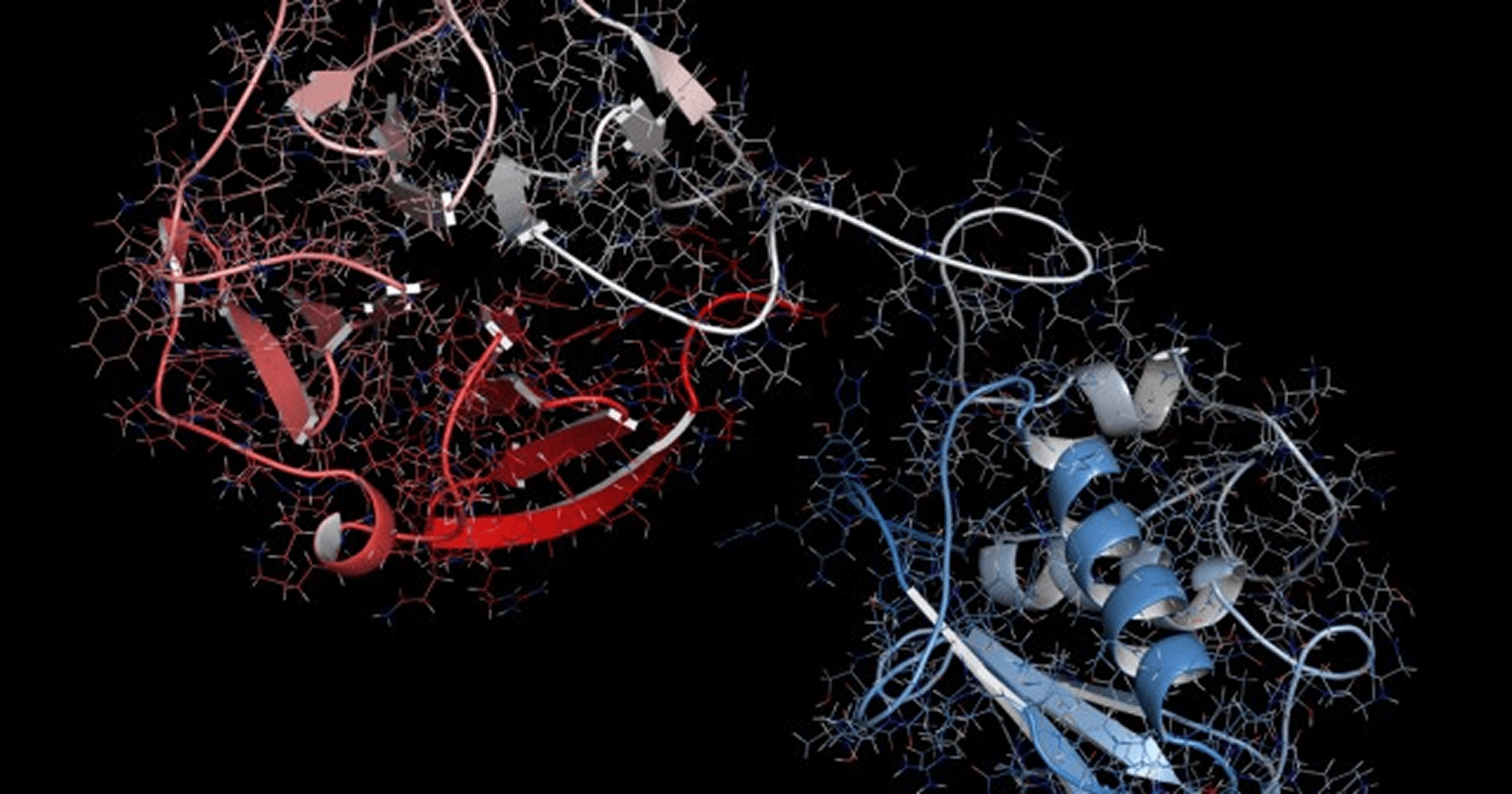
MMPs (Fig. 1), which were discovered in the early 1960s,1 are extracellular proteolytic enzymes that are critical to physiologic functions such as embryonic development, bone remodeling and tissue repair. They’re also involved in several pathologic processes, including inflammation, dental caries, periodontitis and peri-implantitis. During tooth development, MMPs are produced by fibroblasts, endothelial cells, cementoblasts, and epithelial cells.2
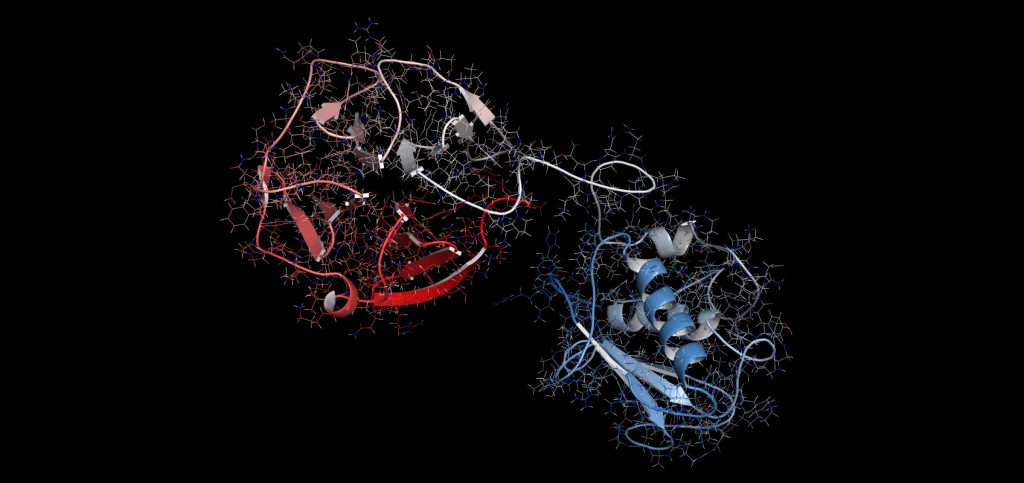
MMP molecules have only two domains (distinct functional or structural units):
- The pro-peptide domain, which contains an essential cysteine residue,
- And the catalytic domain, which encompasses a zinc-binding site.
During dentin formation, MMPs formed by odontoblasts may have a role in forming the organic matrix before mineralization.3 After mineralization, the MMPs are trapped in the calcified matrix and become inactive as a complex forms between the cysteine residue and zinc ions in the catalytic domain, blocking the active site.
MMPs can be reactivated, however, in acidic, low-pH environments such as dental caries and acid etching during creation of the hybrid layer. This cysteine switch mechanism happens when the cysteine residue separates from the complex, opening the active site4 and allowing cariogenic bacteria to release acids. The reactivated MMPs then play a key role in dentin destruction during the carious process.5
In one in-vitro study, pretreatment of dentin with chlorhexidine, an MMP inhibitor, slowed the development of secondary caries.6
Etching adhesives and MMPs
With etch-and-rinse adhesives, exposing the dentin to phosphoric acid forms a hybrid layer; the demineralized dentin–collagen matrix is then infiltrated with adhesive resin.7 The low pH created during this phase of bonding results in the release and activation of MMPs.8
It’s well established that the bond to dentin weakens over time as MMPs, cysteine cathepsins, and endogenous collagenolytic enzymes break down the collagen matrix and degrade the hybrid layer.8
The amount of proteolytic activity within dentin is directly proportional to the degree of acidity of the adhesive system,9 etch-and-rinse versions generally being more acidic. However, Lehmann demonstrated that even the mildly acidic self-etching adhesives could stimulate the release of MMP-2 from odontoblasts.10
MMP inhibitors
Dental materials researchers have long searched for MMP inhibitors (MMPIs) that favor improved and more long-term bond strengths to dentin. MMPIs are generally either applied directly to the dentin or incorporated into the etchant, primer, or adhesive.
The most common MMPIs are chlorhexidine (CHX) and benzalkonium chloride (BAC).
Chlorhexidine: Indications and concentration
CHX, the most widely studied MMPI, is sold commercially as Consepsis (Ultradent).
The positive charges of CHX bind electrostatically to negatively charged carboxyl groups on collagen at the dentinal surface11 and inhibit MMPs by chelating their calcium and zinc ions (Fig. 2).12 Scrubbing dentin with 2% CHX or incorporating it into phosphoric acid etchant has been shown to reduce collagen degradation13; this has been demonstrated in vivo.11

CHX binds to demineralized dentin eight times more effectively than to mineralized dentin.14 CHX can also rehydrate the etched collagen fibrils within the dentin,15 so it should be applied to etched dentin without rinsing.
Regarding concentration: The application of low concentrations of CHX for short periods (15 seconds) is sufficient to preserve dentin bonds.16 However, 2% CHX applied for 60 seconds created the densest hybrid layer and highest microtensile bond strength (MTBS) when compared with other MMPIs.17
The literature is inconclusive regarding minimum MMP inhibition concentration of CHX.
- It’s generally accepted that CHX has no significant adverse effects on immediate bond strengths, but some studies have shown a significant decrease in immediate bond strength.18 These studies may be regarded as outliers.
- There is speculation in these studies that using acidic CHX after acid-etching may increase collagen exposure, reducing bond strength.
- Further, large CHX molecules have considerable water solubility, which means they easily leach out, resulting in reduced bond strength.19
CHX exhibits substantivity — it remains active on dentin for prolonged periods20 and can serve as an MMPI for long-term bond stability when using etch-and-rinse systems. CHX molecules have been observed in the hybrid layer even after 5 years.21
Benzalkonium chloride: Indications and concentration
BAC tends to be added to etchants such as Select HV Etch (Bisco) and dentin bonding agents. A positively charged quaternary ammonium compound group, BAC is attracted to the negative carboxylic groups in collagen.22
It has been demonstrated that BAC increases MTBS, and after treatment with BAC, the collagen in dentin is less soluble.6 Formulations with BAC reduce the expression of MMPs23 and effectively deactivate dentin proteinases after acid-etching.
The activity of BAC extends over long periods and is dosage-dependent: At a concentration of 1% applied for 60 seconds, total MMP activity is reduced by 54%.24
Conclusion
Incorporating MMPIs into any of the steps of placing a dental bonding agent on dentin will reduce the hybrid layer’s degradation rate. This will markedly contribute to the longevity of resin-based adhesive restorations. Further, some MMPIs show antimicrobial and cariostatic activity.
References
- Sabatini, C., & Pashley, D. H. (2015). Aging of adhesive interfaces treated with benzalkonium chloride and benzalkonium methacrylate. EuropeanJournal of Oral Sciences, 123(2), 102-107.
- Birkedal‐Hansen, H. (1988). From tadpole collagenase to a family of matrix metalloproteinases. Journal of Oral Pathology & Medicine, 17(9‐10), 445-451.
- Du, M., Wang, Y., Liu, Z., Wang, L., Cao, Z., Zhang, C., … & He, H. (2019). Effects of IL-1β on MMP-9 expression in cementoblast-derived cell line and MMP-mediated degradation of type I collagen. Inflammation, 42(2), 413-425.
- Caron, C., Xue, J., & Bartlett, J. D. (1998). Expression and localization of membrane type 1 matrix metalloproteinase in tooth tissues. Matrix Biology, 17(7), 501-511.
- Van Wart, H. E., & Birkedal-Hansen, H. (1990). The cysteine switch: a principle of regulation of metalloproteinase activity with potential applicability to the entire matrix metalloproteinase gene family. Proceedings of the National Academy of Sciences, 87(14), 5578-5582.
- Tjäderhane, L., Larjava, H., Sorsa, T., Uitto, V. J., Larmas, M., & Salo, T. (1998). The activation and function of host matrix metalloproteinases in dentin matrix breakdown in caries lesions. Journal of Dental Research, 77(8), 1622-1629.
- Maske, T. T., Kuper, N. K., Cenci, M. S., & Huysmans, M. C. D. (2019). Chlorhexidine, a matrix metalloproteinase inhibitor and the development of secondary caries wall lesions in a microcosm biofilm model. Caries Research, 53(1), 107-117.
- Pashley, D. H., Tay, F. R., Breschi, L., Tjäderhane, L., Carvalho, R. M., Carrilho, M., & Tezvergil-Mutluay, A. (2011). State of the art etch-and-rinse adhesives. Dental Materials, 27(1), 1-16.
- Tjäderhane, L., Nascimento, F. D., Breschi, L., Mazzoni, A., Tersariol, I. L., Geraldeli, S., … & Pashley, D. H. (2013). Optimizing dentin bond durability: control of collagen degradation by matrix metalloproteinases and cysteine cathepsins. Dental Materials, 29(1), 116-135.
- Mazzoni, A., Pashley, D. H., Nishitani, Y., Breschi, L., Mannello, F., Tjäderhane, L., … & Tay, F. R. (2006). Reactivation of inactivated endogenous proteolytic activities in phosphoric acid-etched dentine by etch-and-rinse adhesives. Biomaterials, 27(25), 4470-4476.
- Lehmann, N., Debret, R., Roméas, A., Magloire, H., Degrange, M., Bleicher, F., … & Seux, D. (2009). Self-etching increases matrix metalloproteinase expression in the dentin-pulp complex. Journal of dental research, 88(1), 77-82.
- Kim, J., Uchiyama, T., Carrilho, M., Agee, K. A., Mazzoni, A., Breschi, L., … & Pashley, D. H. (2010). Chlorhexidine binding to mineralized versus demineralized dentin powder. Dental Materials, 26(8), 771-778.
- Gendron, R., Grenier, D., Sorsa, T., & Mayrand, D. (1999). Inhibition of the activities of matrix metalloproteinases 2, 8, and 9 by chlorhexidine. Clinical Diagnostic Laboratory Immunology, 6(3), 437-439.
- Brackett, W. W., Tay, F. R., Brackett, M. G., Dib, A., Sword, R. J., & Pashley, D. H. (2007). The effect of chlorhexidine on dentin hybrid layers in vivo. Operative Dentistry, 32(2), 107-111.
- Li, H., Li, T., Li, X., Zhang, Z., Li, P., & Li, Z. (2015). Morphological effects of MMPs inhibitors on the dentin bonding. International Journal of Clinical and Experimental Medicine, 8(7), 10793.
- Loguercio, A. D., Stanislawczuk, R., Polli, L. G., Costa, J. A., Michel, M. D., & Reis, A. (2009). Influence of chlorhexidine digluconate concentration and application time on resin–dentin bond strength durability. European Journal of Oral Sciences, 117(5), 587-596.
- Zheng, P., & Chen, H. (2017). Evaluate the effect of different mmps inhibitors on adhesive physical properties of dental adhesives, bond strength and mmp substarte activity. Scientific Reports, 7(1), 4975.
- Carrilho, M. R., Carvalho, R. M., Sousa, E. N., Nicolau, J., Breschi, L., Mazzoni, A., … & Pashley, D. H. (2010). Substantivity of chlorhexidine to human dentin. Dental Materials, 26(8), 779-785.
- Giacomini, M. C., Scaffa, P. M. C., Chaves, L. P., Vidal, C. D. M. P., Machado, T. N., Honório, H. M., … & Wang, L. (2017). Role of proteolytic enzyme inhibitors on carious and eroded dentin associated with a universal bonding system. Operative Dentistry, 42(6), E188-E196.
- Sabatini, C., Kim, J. H., & Alias, P. O. (2014). In vitro evaluation of benzalkonium chloride in the preservation of adhesive interfaces. Operative Dentistry, 39(3), 283-290.
- Montagner, A. F., Sarkis-Onofre, R., Pereira-Cenci, T., & Cenci, M. S. (2014). MMP inhibitors on dentin stability: a systematic review and meta-analysis. Journal of Dental Research, 93(8), 733-743.
- Page-McCaw, A., Ewald, A. J., & Werb, Z. (2007). Matrix metalloproteinases and the regulation of tissue remodelling. Nature Reviews Molecular Cell Biology, 8(3), 221-233.
- Loguercio, A. D., Hass, V., Gutierrez, M. F., Luque-Martinez, I. V., Szezs, A., Stanislawczuk, R., … & Reis, A. (2016). Five-year Effects of Chlorhexidine on the In Vitro Durability of Resin/Dentin Interfaces. Journal of Adhesive Dentistry, 18(1).
- Comba, A., Maravic, T., Valente, L., Girlando, M., Cunha, S. R., Checchi, V., … & Mazzoni, A. (2019). Effect of benzalkonium chloride on dentin bond strength and endogenous enzymatic activity. Journal of Dentistry, 85, 25-32.
SPEAR campus
Hands-On Learning in Spear Workshops
With enhanced safety and sterilization measures in place, the Spear Campus is now reopened for hands-on clinical CE workshops. As you consider a trip to Scottsdale, please visit our campus page for more details, including information on instructors, CE curricula and dates that will work for your schedule.

By: Jason Smithson
Date: March 25, 2025
Featured Digest articles
Insights and advice from Spear Faculty and industry experts