Bonding a Titanium Base to an Implant Abutment or Crown: Is There an Optimal Material and Technique?
The ideal connection of a definitive restoration to an implant is a metal connection rather than a ceramic one. Suppose there is a direct connection of zirconia to a titanium implant. In that case, there is a significant risk of the internal aspect of the implant connection wearing due to the fact that zirconia is harder than titanium.
Micromovements of the restoration during function will cause the titanium to wear. This also poses a higher risk of the zirconia restoration breaking at the head of the connection, which inserts into the implant.
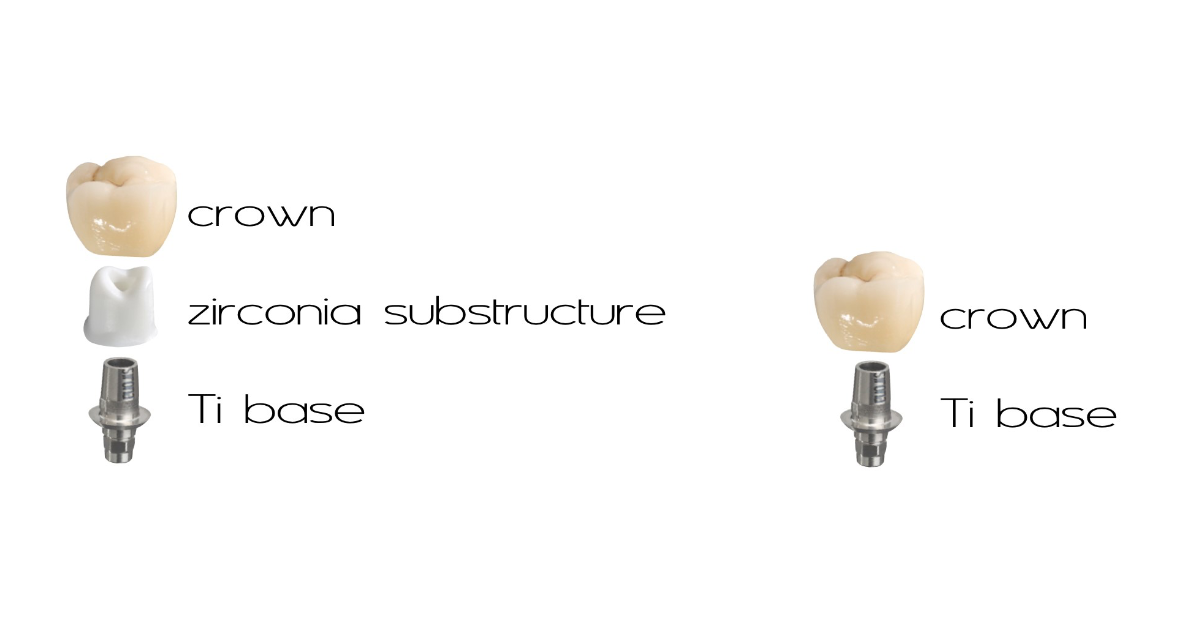
Titanium bases, which are cemented inside the restoration, have eliminated these two problems. The zirconia, e.max, or polymer-infiltrated ceramic network is bonded to the titanium base. Every manufacturer’s titanium base has unique designs and varying surface retention features. The height of the titanium base, which extends inside the restoration, is the most critical factor when considering resistance and retention of the components.
Many manufacturers have recognized this and have introduced height options. The taller the titanium base that fits inside the restoration, the better the retention. Manufacturers also recommend different protocols for cementing the titanium base to the restorative material.
In June, at the Quintessence Publishing 13th International Symposium on Periodontal and Restorative Dentistry in Boston, Dr. Irena Sailer spoke on one of her soon-to-be-published articles. The research goal was to determine whether sandblasting the titanium base improved the bonding stability of a hybrid crown.
The materials evaluated were e.max, zirconia, and Enamic, the cements Multilink Hybrid Abutment with Monobond Plus, Panavia VS with primer, and RelyX Ultimate with RelyX Universal. The results for pull-off forces varied depending on the cement and the restorative material. The best result for e.max was Multilink Hybrid Abutment. The best result for zirconia was 3 M’s RelyX Ultimate. The best results for Enamic were for Panavia VS and RelyX Ultimate. The MultiLink Hybrid Abutment was slightly lower. Her research covers more, but I am waiting for the article to be published before reporting any other information.
Dr. Tomas Linkevicius recently published an article in the Journal of Prosthetic Dentistry that shows abrading the titanium base with 50 µm of aluminum oxide significantly decreases the dislodging force. The materials he tested were G-CEM LinkAcc (GC), RelyX U200 (3M ESPE) and Ceka Site (CEKA PRECI-LINE).
So, what is the bottom line? We cannot rely on a standard protocol for all materials. Following the manufacturer’s recommendations and being aware of independent research is critical. Remember, the research outcomes are technique and material-specific. It is also important to maintain clear lines of communication with your laboratory or lab technician, because they are the ones typically cementing the components together.
VIRTUAL SEMINARS
The Campus CE Experience
– Online, Anywhere
Spear Virtual Seminars give you versatility to refine your clinical skills following the same lessons that you would at the Spear Campus in Scottsdale — but from anywhere, as a safe online alternative to large-attendance campus events. Ask an advisor how your practice can take advantage of this new CE option.

By: Robert Winter
Date: September 19, 2019
Featured Digest articles
Insights and advice from Spear Faculty and industry experts