- Airway
- Article
The Dentist’s Role in Airway Health: 10 Years of Change
Bonnie Serino
•
September 17, 2026
Dr. Jeff Rouse reflects on a decade of airway education at Spear and what he’d tell dentists starting today.
Ten years after Spear Education added airway to its curriculum, the dentist’s role in airway health looks different from what it did in 2016. Dr. Jeff Rouse, the Spear Resident Faculty member who introduced the discipline, no longer believes a dentist needs a specialized screening device to find a problem. A thorough medical history, dental history, and clinical exam are usually enough.
That shift, Dr. Rouse says, is the biggest change in a decade of teaching airway at Spear. It also says a lot about where the profession is headed next.
Dr. Rouse joined Spear’s Resident Faculty in 2017, a year after introducing airway at Spear Summit 2016. He remembers exactly what he wanted dentists to walk away understanding. For him, that meant redefining the dentist’s role in airway health from the start.
“I wanted them to recognize that a lot of the issues that they deal with in practice can be explained by a person’s inability to breathe passively. It wasn’t just apnea. It was things like why they would grind their teeth, why they had erosion due to reflux, periodontal disease, caries, and malocclusion,” he said. “It was the things we see in practice all the time that in fact have confounded us for years, and there is, for many of the cases, a pretty straightforward explanation as to why it happens.”
The second lesson was about timing. “The longer a patient waits to resolve the problem, the more damage is going to occur,” he said. That idea led to one of the earliest wins: a workshop introduced the following year that, for the first time at Spear, addressed airway in pediatric patients. “We ended up saying we really ought to take care of this in the four-year-olds rather than the 40 or 60-year-olds we’ve routinely seen in our practices,” Dr. Rouse said.
Why don’t dentists need a device to spot an airway problem?
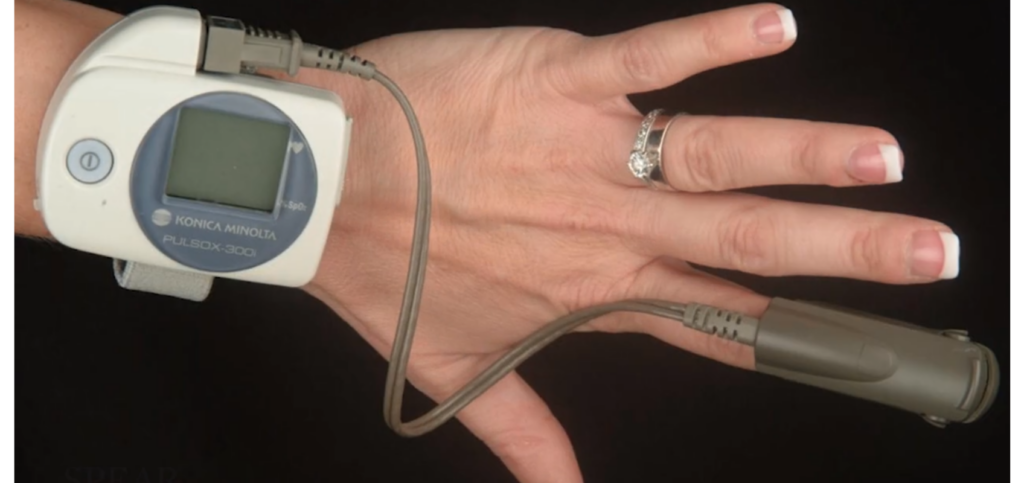
For years, the standard approach was to screen any patient who showed signs of an airway issue with a pulse oximeter, a cardiopulmonary coupling unit, or a home sleep monitor, then wait for a number. Dr. Rouse doesn’t teach that anymore. That shift reflects a broader change in the dentist’s role in airway health, from waiting on a number to reading the exam.
“We know enough about the medical history, dental history, and dental examination link to poor health and poor breathing that we don’t need a number to do dentistry. Because most of the time, the answer is just do dentistry on them. And by doing dentistry, you get to an endpoint that is healthier.”
He describes the change in practical terms, noting that he used to keep a three-page waitlist of patients pending a screening appointment. Today, his screening devices mostly sit unused. “My norm is not to investigate how sick you are,” he said. “My norm is just to make the anatomy as normal as I possibly can make it.”
That approach lines up with where the broader literature has moved. A 2025 review in Seminars in Orthodontics notes that a detailed medical history and careful clinical exam at routine dental visits can flag patients at risk for sleep-disordered breathing, often before more specialized testing is needed.
How has the dentist’s role in airway health become more precise?
Airway still leads the acronym Spear uses for its treatment philosophy: airway, esthetics, function, structure, biology, or AEFSB. But what “looking at the airway” means has changed.
From two dimensions to three
Ten years ago, Dr. Rouse says, Facially Generated Treatment Planning (FGTP) worked largely in two dimensions. “You just stuck within where the bone was,” he said. “I’ll move around, but you’ve got to stay in the bone.” Today, he treats it as a three-dimensional problem.
“Instead of asking, where is the bone, we say, where should the bone be,” he said. “I never think, oh wait, there’s no bone there. I think, where should it be?”
That distinction shapes how he plans cases. Once he identifies where the teeth and skeleton belong, the next question is how to get the bone or skeleton to that position, because a well-positioned skeleton tends to produce a better smile, a better bite, and better breathing together.
The dental exam already does what medicine is asking for
Dr. Rouse points out that even medical literature increasingly supports the dentist’s role in airway health, not just the dental exam. Some of the anatomic markers sleep physicians screen for, things dentists already document during a routine exam, are showing up in medical journals as legitimate screening criteria.
That overlap isn’t new. Sleep researcher Christian Guilleminault reportedly sent residents into exam rooms years ago with two minutes to spot signs that a patient might have sleep-related breathing issues, using observations that closely resemble a standard dental exam.
What’s the biggest misconception still holding dentists back?
Some dentists hesitate to treat airway-related anatomy unless a patient has a confirmed apnea diagnosis, a hesitation that undersells the dentist’s role in airway health. Dr. Rouse doesn’t see it that way anymore.
“What’s the worst thing that happens if you go to a dentist and they make your smile prettier and your bite better? Even if the patient still has apnea, they’re working from a better situation. If it doesn’t fix the apnea, the ENT has a way better chance of making it go away than they did before.”
He’s been surprised by where the resistance has come from. “The amount of pushback I get from orthodontists is incredibly surprising to me,” he said. He notes the debate is active and unsettled across the specialty, including recent position statements from orthodontic organizations that have pushed back on early anatomic intervention. Dentists weighing where they stand should look at the primary literature on both sides rather than any single position paper.
Which specialists should dentists build airway relationships with?
The dentist’s role in airway health doesn’t end with diagnosis. Dr. Rouse says a working airway team covers a short list of roles:
- An orthodontist, a restorative dentist, or a pediatric dentist trained to do orthodontics, to move anatomy into position
- A periodontist, for cases that need additional bone before expansion is possible
- An oral and maxillofacial surgeon, for skeletal cases that need more than orthodontics alone, can provide
- An ENT, particularly for pediatric cases involving tonsils and adenoids
- A myofunctional therapist, to help patients close their lips and breathe through the nose
That last role, he says, matters more than ever. “If you create a good tone and get the lips closed and breathe through the nose, people are healthy,” he said. None of these referrals replaces the dentist’s role in airway health. He’d rather bring in myofunctional therapy after anatomy has been normalized. However, he still recommends it even when a patient declines further treatment, since patients get real benefit from it on its own.
Why does timing matter more than it did 10 years ago?
Asked what’s changed most about the dentist’s role in airway health, Dr. Rouse doesn’t hesitate: timing matters more than the anatomy itself.
“The first two years of life are the most critical, and yet it’s the hardest to intervene because they don’t have the tools then to really start.”
He encourages teams to talk with new parents about breastfeeding, pacifier use, and introducing harder foods earlier, sometimes called baby-led weaning, along with newer devices designed to stimulate craniofacial growth in infants as young as six months, especially preemies.
His warning for dentists tempted to wait and see, “If anyone says they’ll grow out of it, go somewhere else and find another person to help you, because they don’t grow out of it. They grow into the problem.”
What should every dentist take from 10 years of airway education?
Dr. Rouse distills 10 years of thinking about the dentist’s role in airway health into three things.
- Intervene as early as possible. The earliest years offer the most opportunity and the least room for error.
- Learn to see anatomy in three dimensions. Knowing where teeth and bone should sit, not just where they currently are, is what separates modern treatment planning from what Spear taught even a few years ago.
- Surround yourself with an excellent interdisciplinary team. “You have to put yourself in a position to be around really excellent people and create a really excellent interdisciplinary team,” he said. “Spear Study Clubs are probably the best way of doing that. You end up being around them.”
He adds that showing cases at study club meetings builds the confidence to have complex conversations with patients that dentists might otherwise avoid. “You can really help people,” he said. “You can change people’s lives, both young and old, if you’re willing to make that investment.”
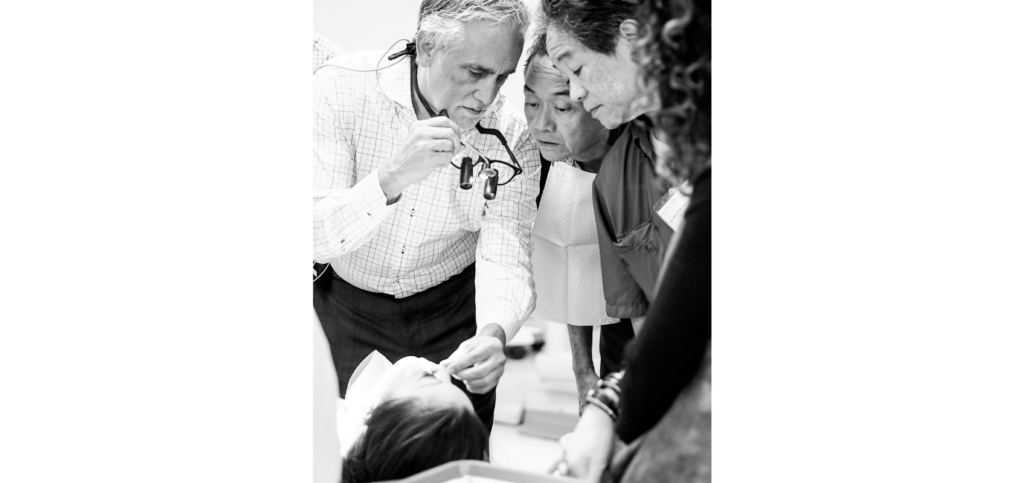
What the dentist’s role in airway health looks like today
Ten years in, the dentist’s role in airway health has moved from chasing a number to reading anatomy, and from treating adults after damage is done to intervening in early childhood.
Spear’s philosophy that Great Dentistry is a way of seeing applies directly here. Seeing where a patient’s anatomy should be is what makes airway-focused treatment planning work. Dentists who want to build that skill can start with the same foundation Dr. Rouse has spent 10 years refining.
Learn hands-on from faculty who still practice
A few days at Spear Campus can change how you understand the dentist’s role in airway health, from diagnosis to case presentation, not through more lectures, but through hands-on training led by faculty who treat patients every week, including Dr. Rouse. Work through real cases in small groups and leave with techniques you can use on your next patient.
References
- Palomo, J. M., Cohen-Levy, J., Flores-Mir, C., Khosravi, R., Levine, M., Pickard, M., … & Siegel, S. M. (2026). Sleep-disordered breathing and orthodontics: An American Association of Orthodontists white paper update. American Journal of Orthodontics and Dentofacial Orthopedics.
- Oh, H., Arab, M., Kim, E. Y., Vaughan, M., Park, J., & Yoon, A. (2025, March). Screening sleep-disordered breathing (SDB) in the everyday dental office–Pediatric and adult patients. In Seminars in Orthodontics. WB Saunders.
Frequently Asked Questions
SPEAR campus Workshops
Learn Hands-on From Faculty Who Still Practice
A few days at Spear Campus can change how you diagnose, plan, and present cases, not through more lectures, but through hands-on training led by faculty who treat patients every week. Work through real cases in small groups and leave with techniques you can use on your next patient.
Featured Digest articles
Insights and advice from Spear Faculty and industry experts