- Article
- Endodontics
Managing Endodontic Emergencies in General Practice: Proven Strategies
Melissa Seibert
•
September 15, 2026

It’s 4:45 p.m. on a Friday, and the last thing on the schedule was a routine hygiene check. Then the front desk gets the call: a longtime patient is in the parking lot, holding her jaw, unable to eat dinner. Whoever picks up that call has about 30 seconds to decide what happens next, and how that decision goes will shape whether she trusts this practice for the next ten years.
Managing endodontic emergencies well is one of the most common and highest-stakes challenges in the general practitioner’s office. An unscheduled visit for acute pain doesn’t announce itself, and how the practice handles it that day can either strengthen years of patient rapport or unravel it.
Many patients don’t know what an endodontist is, and they’re not inclined to look for one when they’re in pain, so they turn to their trusted general practitioner for answers and support. This article reviews managing endodontic emergencies, helping GPs confidently address the practical and clinical challenges these situations present.
How should front office staff approach managing endodontic emergencies?
The front office staff is typically the first point of contact for a dental emergency. Staff must be careful not to provide medical advice or wrongfully deny treatment over the phone.
A recent malpractice lawsuit involved a front-office receptionist who gave unauthorized advice to a patient, ultimately delaying the patient’s care. The case resulted in the office being ordered to pay a costly settlement.¹
One scripted line would have prevented all of it: “Let’s get you on the schedule so the doctor can take a look.” That’s it. No diagnosis, no advice, no liability, just a seat in the chair.
How can a busy schedule accommodate an unscheduled endodontic emergency?
Managing endodontic emergencies on a full schedule is mostly a logistics problem. When an unscheduled emergency comes into the office, the dental team is tasked with fitting a patient into what may already be a packed treatment schedule. A few techniques can help:
- If the schedule doesn’t permit same-day definitive care, palliative treatment may be all that’s rendered that day, with the patient returning for definitive treatment.
- The patient can be double-booked around procedures that already have built-in wait time, letting the dentist transition seamlessly between operatories.
- If the office regularly sees a high volume of unscheduled emergencies, it’s worth creating appointment slots reserved solely for walk-ins.
Why shouldn’t antibiotics be the default response to endodontic pain?
Managing endodontic emergencies responsibly means resisting the reflex to reach for a prescription pad. In a busy practice, the default may be to prescribe antibiotics, then reappoint the patient or refer them out. Although convenient, it isn’t the most evidence-based approach.
Recent publications from the Journal of Endodontics and the American Dental Association have raised awareness around the frequent misuse and overprescribing of antibiotics in dentistry for endodontic pain.² Misuse can condition patients to expect that a pill is as effective as definitive treatment, and the underlying problem will keep recurring until definitive treatment is rendered.
Evidence-based guidelines for managing endodontic emergencies recommend using antibiotics only when there are signs of systemic involvement. 3,4
This is where a systematic diagnostic framework earns its keep. Spear teaches general dentists to work through pulpal and periapical findings in the same sequence every time, rather than defaulting to whatever treatment fits the day’s schedule. That consistency is what turns a walk-in emergency from a disruption into just another well-managed appointment.
What are the most common endodontic emergencies in general practice?
Managing endodontic emergencies starts with recognizing the situation in front of you. Most walk-in endodontic emergencies fall into one of three categories:
- A complicated crown fracture, a fracture that involves the pulp
- An incomplete crown fracture, formerly known as cracked tooth syndrome
- Irreversible pulpitis or pulpal necrosis, which may be accompanied by apical periodontitis or a chronic or acute apical abscess
This list isn’t all-encompassing, but it covers the emergencies GPs manage most often. Here’s how to approach each one.
Managing a complicated crown fracture
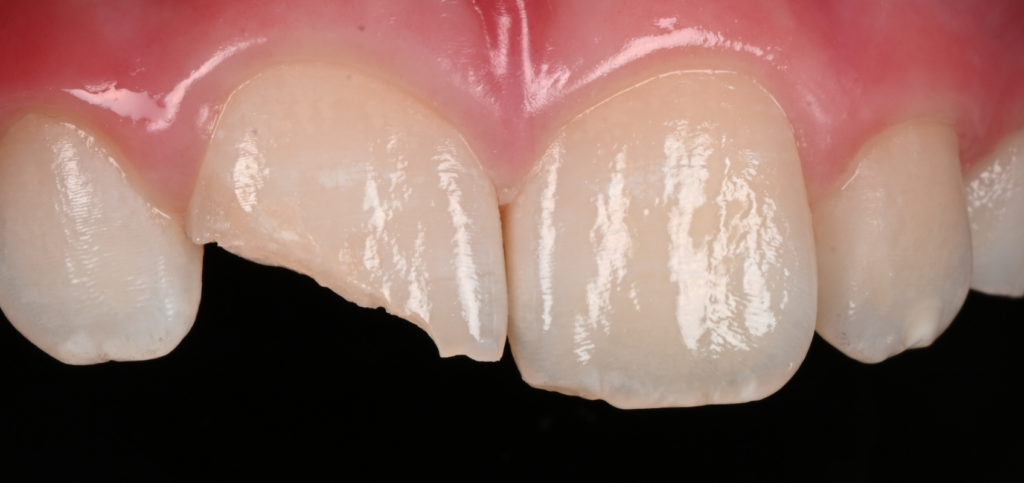
When managing endodontic emergencies involving a complicated crown fracture, the course of treatment depends on whether the pulp is still vital, the root’s maturity, the time elapsed since the injury, and the extent of pulp exposure.
If the pulp is still vital, vital pulp therapy (VPT) is a viable option that has demonstrated long-term success, even in adult dentition with a closed apex. VPT is an umbrella term that actually encompasses several treatments; in effect, it involves carefully placing a calcium-silicate-based material, such as MTA or Biodentine, over the vital, exposed pulp.
Pulpal exposures where the pulp is necrotic, the exposure is large, or a substantial amount of time has passed may warrant root canal therapy rather than VPT.
Managing an incomplete crown fracture (cracked tooth)
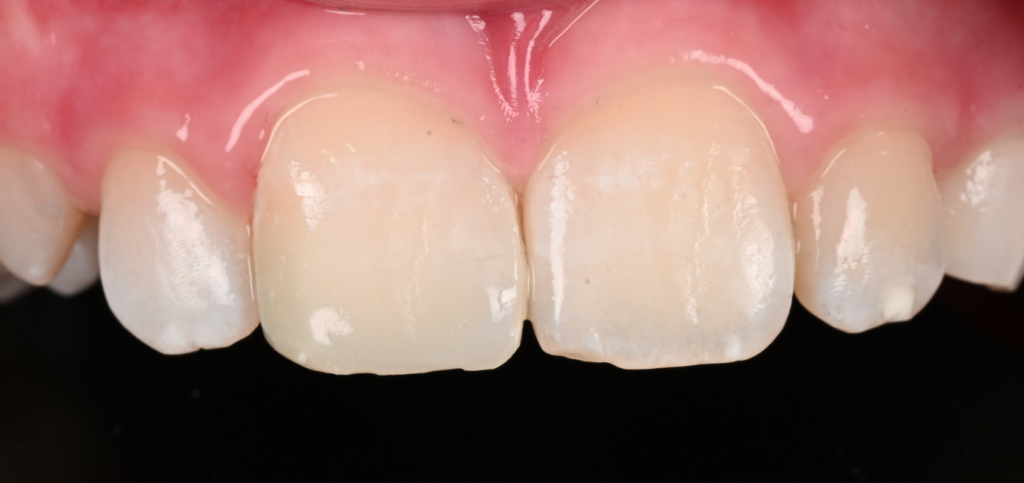
Patients may also present on a walk-in basis for an incomplete crown fracture. It’s important to make an accurate endodontic diagnosis, since some of these cases involve the pulp, and the accompanying periapical diagnosis must also be made.
More recent consensus statements published by the American Association of Endodontists note that pulp vitality testing isn’t always reflective of the histological status of the pulp.⁵ For a closer look at how to classify and treatment-plan cracks once a patient is past the acute phase, see Spear Digest’s Diagnosing and Managing Cracked Tooth Syndrome.
Managing irreversible pulpitis and pulpal necrosis
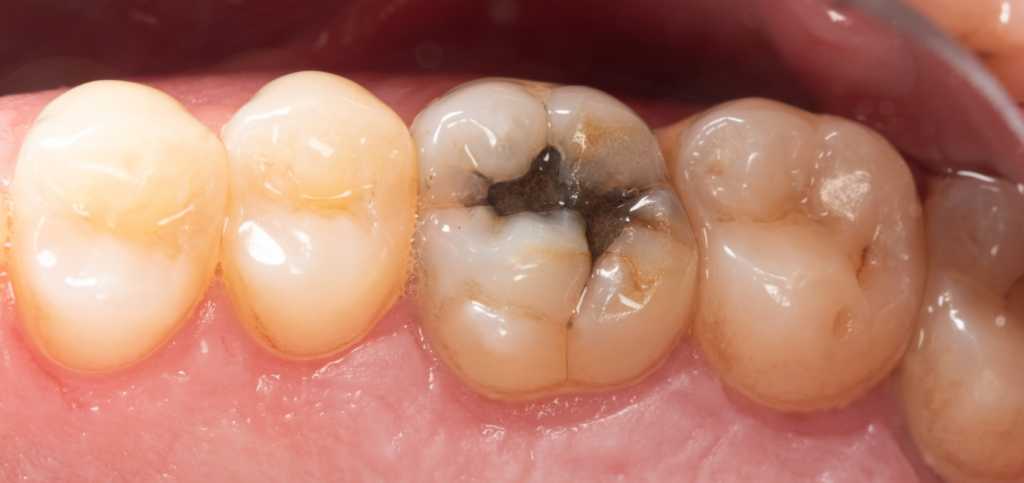
When managing endodontic emergencies, GPs will frequently encounter walk-in patients with irreversible pulpitis or pulpal necrosis. Depending on the diagnosis and clinical circumstances, the GP can provide definitive treatment, offer same-day palliative care, or refer the patient to an endodontist.
A noteworthy mistake to avoid is failing to instrument the canal completely. If root canal therapy is initiated in the office, the goal is complete chemomechanical debridement to working length, which requires instrumenting the apex to at least a size 30 file.⁶
The success rate drops to 53% in canals filed to a size smaller than 30 mm, since incomplete instrumentation leaves behind residual inflamed or necrotic tissue that causes pain. The apex must also be filed large enough to allow penetration of the NaOCl.
Skip even a few millimeters of canal, and that patient isn’t cured. They’re back on the schedule within 48 hours, in more pain than when they walked in, and now wondering why the first visit didn’t work.
Interestingly, evidence supports the use of a pulpotomy in the adult dentition with a closed apex as a means of providing emergency pain relief.⁷ This approach in managing endodontic emergencies is considerably quicker than instrumenting an apex to a size 30 file, which makes it worth considering when time in the chair is limited.
Catching pulpal necrosis before it reaches this point is its own skill. For more on spotting early warning signs before a tooth becomes symptomatic, see Spear Digest’s article on identifying pulpal necrosis.
What’s the recommended pain management protocol for managing endodontic emergencies?
The ADA’s 2024 Clinical Practice Guidelines recommend NSAIDs alone, or acetaminophen plus ibuprofen, as the analgesic strategy for managing endodontic emergencies with pain management.⁸ Interestingly, the analgesic ceiling for pain relief with ibuprofen is 400 mg.⁹ If Tylenol and ibuprofen are prescribed together, the recommended dosing is 400 mg ibuprofen and 1,000 mg acetaminophen every 6 hours.
When managing endodontic emergencies, the right combination of medications, dosed appropriately and explained clearly, can make the difference between a patient who remains comfortable until follow-up and one who is calling the after-hours line at midnight. A full review of steroid and analgesic options is beyond the scope of this article, but getting this protocol right can address the needs of most walk-in cases.
Why managing endodontic emergencies well matters for your practice
A practice’s ability to approach managing endodontic emergencies with compassion and confidence can build tremendous trust with patients and the broader community it serves. GPs need to be prepared with both treatment strategies and office systems to best serve these patients, whether that means sharpening the front desk’s response, refining the schedule, or building clinical confidence in root canal therapy and same-day pain-relief options.
Great Dentistry means seeing an emergency walk-in the same way you’d see a scheduled case: as an opportunity for the right diagnosis, not just the fastest fix. Spear’s Approachable Endodontics program on Spear Online builds that same systematic thinking into clinical protocols for managing endodontic emergencies, so a walk-in doesn’t have to mean a scramble.
References
- MedPro Group. (n.d.). Clindamycin side effects lead to dental malpractice lawsuit. MedPro Dental Malpractice Minute. https://www.medpro.com
- Germack, M., Sedgley, C. M., Sabbah, W., & Whitten, B. (2017). Antibiotic use in 2016 by members of the American Association of Endodontists: Report of a national survey. Journal of Endodontics, 43(10), 1615–1622.
- Lockhart, P. B., Tampi, M. P., Abt, E., Aminoshariae, A., Durkin, M. J., Fouad, A. F., … Carrasco-Labra, A. (2019). Evidence-based clinical practice guideline on antibiotic use for the urgent management of pulpal- and periapical-related dental pain and intraoral swelling: A report from the American Dental Association. Journal of the American Dental Association, 150(11), 906–921.
- Aminoshariae, A., & Kulild, J. C. (2016). Evidence-based recommendations for antibiotic usage to treat endodontic infections and pain: A systematic review of randomized controlled trials. Journal of the American Dental Association, 147(3), 186–191.
- American Association of Endodontists. (2021). AAE position statement on vital pulp therapy. Journal of Endodontics, 47(9), 1340–1344.
- Sabeti, M. A., Saqib Ihsan, M., & Aminoshariae, A. (2024). The effect of master apical preparation size on healing outcomes in endodontic treatment: A systematic review and meta-analysis. Journal of Endodontics, 50(3), 292–298.
- Eren, B., Onay, E. O., & Ungor, M. (2018). Assessment of alternative emergency treatments for symptomatic irreversible pulpitis: A randomized clinical trial. International Endodontic Journal, 51(Suppl 3), e227–e237.
- Carrasco-Labra, A., Polk, D. E., Urquhart, O., Aghaloo, T., Claytor, J. W. Jr., Dhar, V., … Moore, P. A. (2024). Evidence-based clinical practice guideline for the pharmacologic management of acute dental pain in adolescents, adults, and older adults: A report from the American Dental Association Science and Research Institute, the University of Pittsburgh, and the University of Pennsylvania. Journal of the American Dental Association, 155(2), 102–117.
- Motov, S., Masoudi, A., Drapkin, J., Sotomayor, C., Kim, S., Butt, M., … Marshall, J. (2019). Comparison of oral ibuprofen at three single-dose regimens for treating acute pain in the emergency department: A randomized controlled trial. Annals of Emergency Medicine, 74(4), 530–537.
Frequently Asked Questions
Spear Team Training
Train Your Entire Team, Not Just Yourself
Clinical confidence doesn’t stop with the doctor. Spear gives every role in your practice, hygiene, assistants, and front office, structured training built for their part of patient care, including the Hygiene Excellence Program. When the whole team learns from the same curriculum, your practice runs with more consistency, not just your chair.
Featured Digest articles
Insights and advice from Spear Faculty and industry experts