Choosing the Correct Nightguard: Let the Patient Decide
An Amazon website search of diet books yielded over 70,000 results. Google had the Best Nutrition Books sorted by year. Whenever the “ideal” diet is brought up in conversation, it mimics a Congressional debate. All parties have fervent beliefs, and the opposing camps cannot dissuade them. Sugar, fat, carbs, animal protein, fruits, vegetables, fish… the list of what is good and bad to eat is endless. Each book has a plethora of testimonials and photographs of the life-changing nature of the eating guide.
They cannot all be right. They cannot all be wrong. Doesn’t it make sense that everyone’s bodies will respond to food choices differently? So, how do you know? The answer is to follow a diet and see how your body responds. I would assume that specific diets are better for the masses than others — essentially, a safe choice for most people. However, there must also be a significant number of people who require more fringe nutritional guidelines to fulfill their weight loss goals. Finally, some cannot achieve the goal with diet alone and need more dramatic intervention (like surgery) to reach a healthy body mass. So, I ask again, how do you know?
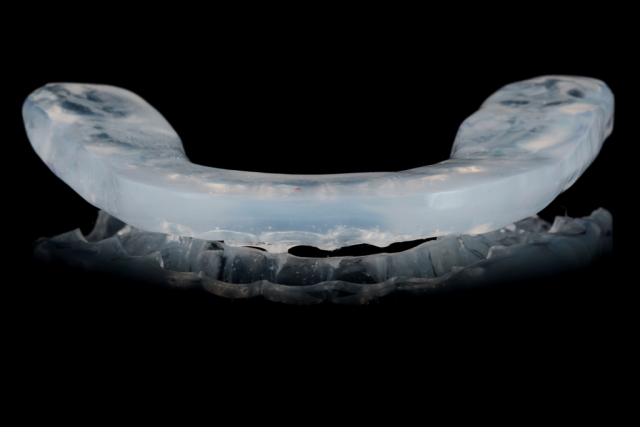
In dentistry, the same fervor can be seen when discussing nightguards. The religious nature of the discussions about a piece of plastic is amazing. Compelling voices promote confident choices when scant science supports the dogma.
Interestingly, most dentists make a single version of a splint and make all their patients (wear, bruxism, TMD, and protection of ceramic) wear that one device. The choice of the splint usually depends on the dental school or residency they attended, the continuing education provider they follow, or the senior partner’s choice. Today, many dentists also make a “sleep” appliance (I place the term in quotations because all appliances are worn while you sleep and impact your ability to breathe, not just the sleep dentistry variety). Again, we make all patients with any degree or cause of apnea wear the one device we fabricate. Dentistry has not customized appliance choices. Patients routinely do not wear the plastic, and many wander from office to office searching for a magical acrylic orthosis.
Educators tend to teach the safest splint design. Most institutions choose a stabilizing splint. The design can range from an anterior deprogrammer to a full arch orthosis. Modifications in bite position and disocclusion are possible. Typically, the splint is fabricated with a minimal vertical opening.
It should be noted that the stabilizing splint is only one of the five categories of splints that are utilized in dentistry. Our patients might do much better with a different category. Yet, once we have the laboratory fabricate our go-to appliance, we become financially committed to make it work. Rarely will a dentist say, “That is not working. Let’s make a different design.”
Instead, we add, adjust, and polish until the patient or the doctor gives up. Wouldn’t it be better to make the design that is best suited for the patient? To do that, we have to be able to fabricate all five categories of splints and let the patient try them out. That is what the Seattle Protocol does. Patients can provisionally test drive all the designs before committing to the expense of a final appliance. The Protocol also offers a splint-free solution that many patients love.
The two keys to developing the Seattle Protocol were my introduction to a three-decade-old sleep breathing technique, Buteyko Mouth Taping, and my development of a provisional sleep appliance, the myTAP (Airway Management Inc). The taping technique has been presented in numerous books, articles, research studies, and internet videos. Spear Digest has information posted as well.
The concept is that nasal breathing is a healthier way to breathe, awake and asleep. The tape is a training tool to assist patients in keeping their mouth shut during the night. Many people find the results life-changing. For those patients, a piece of tape and a nasal dilator will act as their nightguard.
We provide a systematic formula to produce up to five different nightguards for those who do not find resolution with nasal breathing. This is an effort to discern which appliance works best for that unique patient: mandibular flat plane, anterior repositioning, combination splint, monoblock anterior repositioning, or mandibular advancement. All of the provisional splints are made from a single myTAP appliance. The technique will be described in subsequent articles and videos.
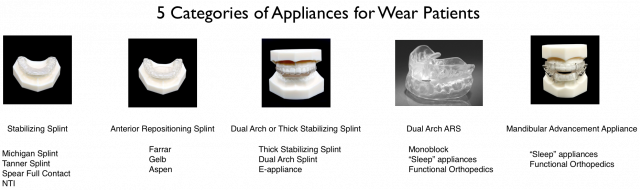
We assume that the patient’s innate ability to open their airway during sleep will be improved with one of the appliances. Which one is a matter of discovery? That improvement will create more quality and quantity of sleep, allowing a homeopathic resolution of dental symptoms. Once that appliance is found, the final splint can be made with greater assurance of compliance and resolution. The technique makes the patient the focus and customizes the appliance for their needs, rather than dentistry’s classic technique of making all our patients fit our appliance choice.
SPEAR Membership
Learn Faster. Treat Better.
Whether you have 10 minutes or time to dive deeper, Spear Membership gives you the learning, tools, and support to keep improving.
Choose the level of support and structure that fits your goals.

By: Jeffrey Rouse
Date: November 11, 2018
Featured Digest articles
Insights and advice from Spear Faculty and industry experts