- Article
- Implants
- Techniques / Materials
Just the Basics Please, Part I: Implant Parts and Pieces 101
Jeff Lineberry
•
February 9, 2017
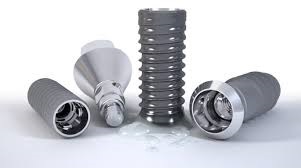
Dental implants are a mainstream part of patient care for replacing missing teeth and/or retaining other prosthetics. And implants are one of the fastest-growing segments in patient care today.
When I was in dental school more than 15 years ago, dental implants were available but more the exception than the norm, leaving me to learn about implants on my own. Fortunately for me, I saw that implants were not just a trend but a viable treatment option for my patients. I completed 200=plus hours in dental implant continuing education in less than a year and recognized that dental implants are still evolving.
Dental school education has adapted to this trend by incorporating dental implants into the current curriculum, but as I have talked to recent graduates, there’s still a lot of confusion about implant basics and fear of even restoring dental implants. And to add to this problem, there are a lot of dental professionals who graduated before me that don’t know a lot about dental implants, either, leaving recent graduates with few options to help them feel even comfortable restoring implants. Often, patients are showing up from the surgeon’s office in the restorative dentist’s office with the implant in place and the needed supplies to “restore” or “finish” the implant.
So, in this series of articles, I plan to put together some basic information, or “cheat sheets,” to help anyone, including your staff, to be able to feel a little better about dental implants. In this first part, we’re going to focus on the basic parts and pieces of dental implants, because this seems to create a lot of stress and confusion for many.
I think the biggest issue when it comes to dental implants is that when I first started with dental implants, there were only a handful of implant manufacturers; today, there are several more companies producing implants, parts, and pieces, and some companies have been “copying” others and offering interchangeable parts and pieces. If that’s not bad enough, some companies have come and gone, leaving the patient with older implants that are still in service and the restorative dentist trying to restore them on a scavenger hunt trying to find parts.
Let’s start by looking at the basic parts of implants, from bottom to top.
- Dental implant or fixture: The part that is placed subgingivally into the bone. (Some older implants are not, but aren’t used very often today). For some, the implant fixture and abutment are one piece.
- Healing/cover screw: This is placed in a two-stage surgery; it covers the opening of the implant and is covered by the gingival tissue/mucosa and fits within the dental implant.
- Healing abutment/cuff: Placed in a single-stage surgery or used after the implant is uncovered; this is often what’s sticking through the gum/gingival tissue. It may be color-coded for size and labeled for identification.
- Impression coping: This is used after removing the healing cuff/abutment to take a tissue-level impression. There are open-tray and closed-tray types and varied sizes and options, depending on the clinical situation.
- Restorative abutment: There are temporary abutments; prefabricated abutments (straight, angled); custom abutments (zirconia, titanium, various other metals; milled, cast types); and abutments to use for overdenture attachments (Ball attachments, ERA type, Locators, etc.).
- Abutment screw: Helps keep the restorative abutment attached to the implant fixture; most overdenture attachments have the screw attached/in one piece.
- Implant replica/abutment replica: This is what is used by the lab to develop a “working” model.
- Manual screwdriver: Used simply to place and finger-tighten abutment screws, healing screws, and healing cuffs.
- Torque wrench: Usually has an attachment to allow screwdriver to fit into it; allows to tighten or torque abutments, implants, etc., to company-specific specs. Can be used to remove tight screws/attachments as well.
As you can see, simply having knowledge of all of the parts and pieces can be intimidating in itself — and this list covers the ones most restorative dentists need to know and use, not all of them! In the next article, I’ll walk you through the basic process of restoring a simple single restoration, which most, if not all, dentist have or will encounter in their practice.
FOUNDATIONS MEMBERSHIP
Build Clinical Confidence In Your First Five Years
The first five years of practice come with decisions that dental school never fully prepared you for. Spear Foundations Membership gives you a full year of practical training, guidance from trusted faculty, and a community of peers working through the same challenges, for less than you’d charge for one crown.
Featured Digest articles
Insights and advice from Spear Faculty and industry experts