- Article
- Esthetics
What To Do With a Gummy Smile
Steve Ratcliff
•
January 18, 2016
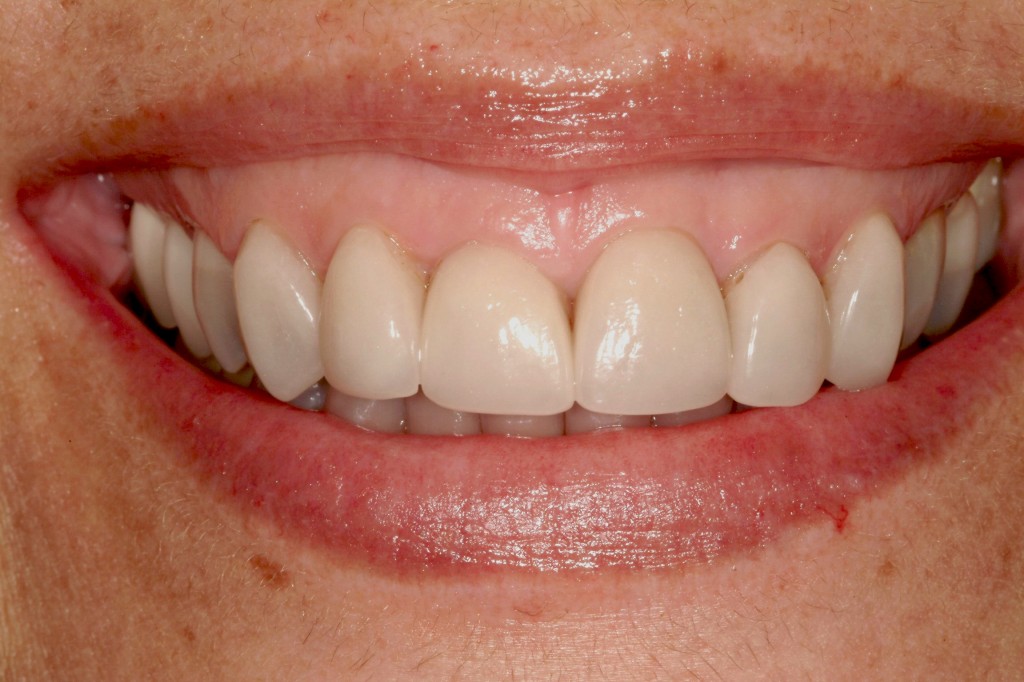
A gummy smile is a highly subjective diagnosis that shows tremendous variability over dental and nondental populations. When patients identify gingival display as an area of concern, a restorative dentist has to be able to determine the etiology before investigating treatment options.
The gingival level is the gingiva-to lip-relationship. A study conducted by Dr. Vincent Kokich Jr. asked a group of lay people, orthodontists and general practitioners what they thought about acceptable gingiva levels for smiles. The results are somewhat surprising.
- Lay people: Those who weren’t professionals viewed the threshold at 3 mm; when the gums hit the 3 mm mark, they rated the smile as less attractive.
- Orthodontists: Orthodontists rated their threshold at 2 mm, the strictest requirement in the study group.
- General practitioners: The threshold for GPs was 4 mm — the most lenient of the study group.
The important question is: When do we treat a gummy smile? The answer: When it bothers the patient. The ideal target is to get somewhere under 3 mm for patients who want to change their smiles.
Before treatment, it’s necessary to understand exactly what causes a gummy smile. There are at least seven different causes, and if you don’t diagnose the cause correctly, you’re going to pick the wrong treatment for your patients.
The 7 causes of a gummy smile

- Short upper lip — if a patient has an extremely short upper lip, it’s not going to cover the gingiva and upper teeth
- Hypermobile lip (lip moves too much)
- Vertical maxillary excess (short ramus and overgrowth of maxilla)
- Anterior overeruption (excess overbite)
- Wear and compensatory eruption
- Altered active eruption (the teeth don’t make it out of bone)
- Altered passive eruption (gingiva doesn’t recede as the person matures)
3 traditional methods for treating a gummy smile
- Orthodontics. Intrudes overerupted teeth and levels them to correct position so it eliminates gingival display.
- Periodontal surgery. Crown lengthening to move gingival levels apically; typically performed on short teeth.
- Orthognathic surgery. Moves the maxilla in an apical direction, affecting the maxilla.
2 nontraditional treatment methods
For instances when these traditional methods of treatment won’t work, such as when a patient has a hypermobile lip, there are a couple of nontraditional methods:
- Botox. Studies suggest that injecting Botox into the muscles of the upper lip can be an effective method; however, the improvement is temporary and must be repeated every three to six months.
- Lip repositioning surgery. Severs the muscles that elevate the lip so it can no longer rise as far in a smile. An irreversible solution diagnosis is the key to a successful outcome.
FOUNDATIONS MEMBERSHIP
Build Clinical Confidence In Your First Five Years
The first five years of practice come with decisions that dental school never fully prepared you for. Spear Foundations Membership gives you a full year of practical training, guidance from trusted faculty, and a community of peers working through the same challenges, for less than you’d charge for one crown.
Featured Digest articles
Insights and advice from Spear Faculty and industry experts