- Article
- Techniques / Materials
Dental Composites: Types and Recommendations
Courtney Lavigne
•
January 18, 2017
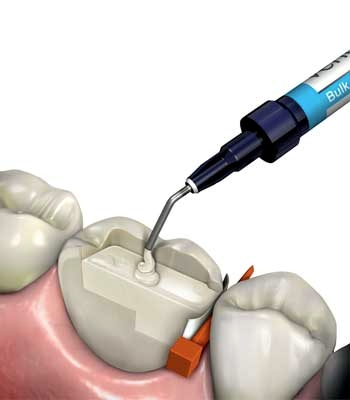
In a previous article, we compared the use, handling and other properties of three different composites. Even if you’re happy with what you’re using, it always benefits us to know the trends and what’s available “out there.” The ultimate goal of your composite material is to replace the biological, functional, and esthetic properties of healthy tooth structure.
Here are a few recommendations for evaluating a new dental composite product.
Types of composites available today
Macrofills
Macrofills were the first composites introduced to the market. Macrofills have particles ranging in size from 10 to 50 micrometers. These large particles provide excellent strength, but poor esthetics. They are challenging to finish and polish. The polishing issue with these was due to the large particle-filler size because these particles, some of which are large enough to see with the naked eye, were “flaking” out of the resin matrix. While there are no widely used macrofill composites today, you may still see some old restorations done with them come into your office.
Microfills
We first saw these in the late 1970s, after the surge of macrofills. Particles are under 100 nanometers. While microfills increase the polishability and overall esthetics that macrofills lack, they’re relatively weak. Microfills aren’t strong enough to withstand the compressive forces in the posterior. Two examples of microfill on the market today are the various versions of Heliomolar from Ivoclar Vivadent and Renamel from Cosmedent.
Hybrids, microhybrids, and nanohybrids
These composites brought together the strength of macrofills and the polishability of microfills. They contain a mixture of particles between 10 and 50 µm and 40-nm particles. Examples of nanohybrids on the market today are Tetric EvoCeram, IPS Empress Direct from Ivoclar Vivadent, and Herculite Ultra from Kerr. Herculite XRV from Kerr is one example of a microhybrid.
Nanocomposites
3M ESPE patented the newest generation of composites. Filtek Supreme Ultra Universal is a nanocomposite containing particles of 20 nm. What’s unique about nanocomposites is that the particles group together to form nanoclusters. This allows smaller particles to unite and function as larger particles, increasing strength, wear resistance, and polishability.
Factors for long-term success of composite restorations
- Compressive strength: The resistance of a material to breaking under compression. This is especially important in posterior restorations.
- Adaptation and handling: How well will it adapt to the walls of the preparation? Seeing your final results on a radiograph helps indicate how well you’re doing with this. Handling is related to personal preference; how well are you able to work with the material to achieve your desired results?
- Translucency: As bulk-fill materials flood the market, you’ll see higher translucency in your restorations. Bulk fills have to be translucent to cure in one layer to greater depths. This can necessitate opaquers and liners to block stains and mimic the natural tooth. Depending on the esthetic demands and the location in the mouth, this can affect material choice.
- Flowability: How easily can the material flow to the walls of the preparation and the pulpal floor?
- Shrinkage: The limiting factor in the long-term effectiveness and prognosis of a composite is shrinkage during polymerization. Shrinkage leads to poor marginal seal, higher potential for recurrent caries, and marginal staining.
- Polishability: Microfilled composites offer high polishability. Hybrid composites also have high polishability. The newer nanofilled composites have even greater polishability than hybrids. You want a material that will polish well and maintain its luster over time.
Top dental composite picks
If you had to pick only one composite to have in your office, your best bet would be a hybrid like Venus Diamond. You can see a comparison of Venus Diamond and Estelite Omega here. If you want creamier feel, another great choice is Venus Pearl. Needless to say there are a lot of other choices out there, so if Venus Diamond or Venus Pearl are not the right fit for you, try some others. It is hard to go too wrong as long as you stick with a major manufacturer.
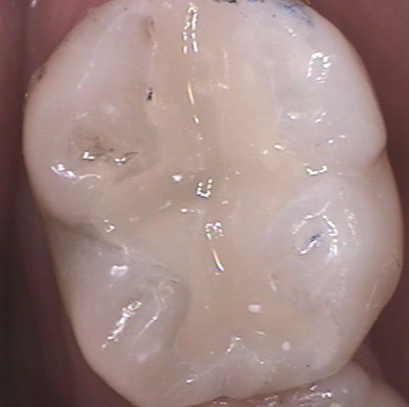
If you are to the point that you’d like to add to your arsenal, your next addition would come down to either a bulk fill or a composite for high esthetics. In the bulk fill category, SonicFill 2 from Kerr is a really great choice. (Check out this article for facts and tips on SonicFill.) The only real drawback is that you have to purchase Kerr’s proprietary handpieces to use it.
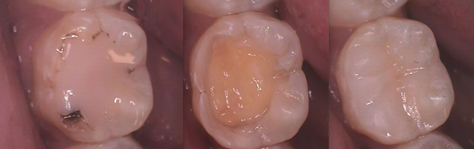
Want a bulk fill without the need for special handpieces? Then give Tetric EvoCeram bulk fill a look. If, on the other hand, you’d rather add a composite for high esthetics, then give Estelite Omega a try; you’ll likely be amazed at what you can achieve with it. Are there other highly esthetic composites out there? Sure, but hands-down, our pick would be Estelite Omega.
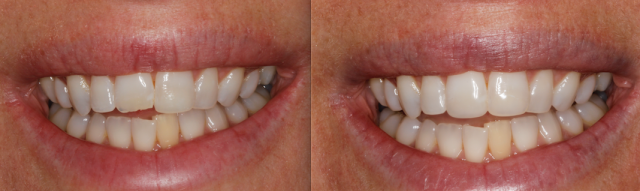
Needless to say, you could end up with a host of composites, and — dare we say it? — it’s easy to go overboard and have too many in your office. This could result in increased overhead and waste due to the expiration of materials not used very often, as well as increased stress from having too many choices. That being said, while you could have just one hybrid composite and one flowable in your office, you’d likely benefit from adding a bulk fill and a highly esthetic composite to your arsenal.
The reality of composites is that there are a lot of excellent material choices. There may not be one magic bullet, but there are a plethora of choices that will meet your functional and esthetic demands. Find what works in your hands. We’ve come so far in this area of restorative dentistry that there’s no reason composite can’t be your go-to material for function and esthetics!
SPEAR campus Workshops
Learn Hands-on From Faculty Who Still Practice
A few days at Spear Campus can change how you diagnose, plan, and present cases, not through more lectures, but through hands-on training led by faculty who treat patients every week. Work through real cases in small groups and leave with techniques you can use on your next patient.
Featured Digest articles
Insights and advice from Spear Faculty and industry experts