- Article
- Techniques / Materials
Bonding Systems and Adhesive Strategy: Current State of the Art
Jason Smithson
•
December 2, 2025
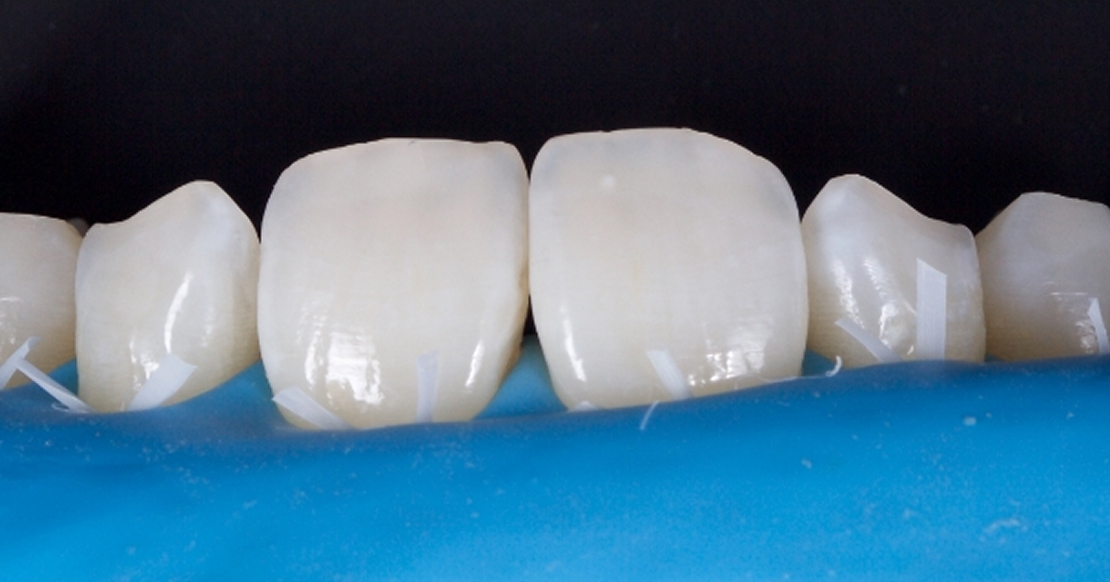
Editor’s note: Adhesion to tooth structure (dentin and enamel) is a routine procedure in general dental practice in which the grail is predictability and longevity. In this series of articles for Spear Digest, Resident Faculty member Dr. Jason Smithson will cover the past, present, and future of bonding systems and adhesive strategy.
- Part 1: The challenges of bonding to enamel and dentin, and the history of enamel bonding.
- Part 2: Current strategies for bonding to enamel: substrate preparation.
- Part 3: Current bonding strategy recommendations.
Bonding to enamel: the substrate
My previous article noted that enamel is largely composed of inorganic apatite, with a small organic component and minimal water content. Enamel is arranged as prisms (rods), which form its basic structural units extending from the cavo-surface to the enamel-dentin junction (EDJ). The prisms, which vary in orientation throughout the tooth, are surrounded by a sheath of organic material. Both the shape and the sheath influence the design of the preparation.
The enamel surface is covered by an aprismatic layer of amorphous, highly fluoridated remineralised enamel (fluorapatite), 10–30 microns deep.1 The aprismatic layer, which is generated from the fluoride in the biofilm during the remineralization phase of the Stephan curve,2 is disorganized, lacks rod structure, and is not cohesive with the underlying enamel prisms, which are formed of hydroxyapatite.

Because fluorapatite is a larger molecule than hydroxyapatite, it is less soluble in acid, so the aprismatic layer protects enamel from acid attack during future carious challenges. However, this also makes it more challenging to acid-etch enamel with phosphoric acid, resulting in reduced bond strengths; therefore, the aprismatic layer must be removed before bonding.
Prebonding preparation of enamel
The following steps are critical before any direct or indirect restorative procedure that involves enamel bonding.
First, place a rubber dam (which improves bond strengths3) and then particle-abrade the enamel surface to remove the aprismatic layer [related article]. Then, prepare the cavity margins to expose the ends of the enamel prisms, rather than their sides, so the central core of the prism is available for etching and bond strengths are improved.4 From a practical point of view, this involves:
- Flaring the axial component of the proximal box.
- Beveling the enamel at the floor of the gingival box only if the enamel is thicker than 1.5 mm and the box depth is < 4 mm.
- In real-world terms, this means a bevel should be placed only when the floor of the box is at or above the height of contour (usually about half the height of the clinical crown). In my experience, this is rare, and in the more common scenario where the gingival margin of the proximal box is at or close to the gingival margin, a bevel is unnecessary because the enamel in this area is decussated — the enamel prisms have an irregular orientation, and a butt joint results in exposure of the prism cores.
- A further consideration is that beveling the enamel at the gingival margin where the enamel is thin may result in removal of the enamel and iatrogenic conversion to a dentin margin, which will reduce bond predictability.
- Finishing the occlusal as a butt joint (no bevel required).
Beveling of the occlusal portion of a Class I and Class II cavity preparation has been proposed in the literature. In my opinion, this is unnecessary for several reasons:
- It destroys healthy tooth structure.
- Removing carious enamel following the natural progression path of the caries commonly exposes the face of the enamel prisms. (This assumes the margins of the cavity at the occlusal table are not wider than the cusp tips. Cavities that extend beyond the cusp tips should be considered for onlay-type restoration designs, because the cusp will likely be undermined with very little or any supporting dentin — a high risk for cusp fracture. This fact is widely documented in peer-reviewed published literature.)
- Increased preparation of the occluding surface results in loss of occlusal contacts and more challenging and time-consuming occlusal adjustment after placing the restoration.
- Thin sections of resin at the extreme margins of the bevels are susceptible to fracture as a result of occlusal forces, which can lead to stained and ditched margins. Thin composite sections that aren’t subject to occlusal load — on nonfunctional cusps, for example — may also fracture because they set a site up for stress concentration when the tooth is loaded (the stress riser concept).
After preparation, the enamel margins should be finished with a fine-carbide finishing bur at slow speed in an electric speed-reducing handpiece. This confers the following advantages:
- Smooth-flowing margins. When composite resin polymerizes, it shrinks and stresses are set up. Composite resin releases stress by “creeping” along the substrate (either dentin or enamel). Sites with sharp angles concentrate stress, which results in reduction in bond strengths.
- Removal or reduction of fractured enamel prisms at the margins. Removal of caries at the enamel cavo-surface with a coarse or medium diamond/carbide bur in a turbine is almost ubiquitous in the dental profession because it’s an effective and efficient approach. Unfortunately, this results in microfractures of the enamel at the margin. When composite is polymerized, the resulting polymerization stress results in tension at the margin, which pulls the fractured enamel prisms away from the main enamel body. This “enamel peel” results in white lines and sensitivity.
- Finishing with a carbide bur results in fewer fractured prisms at the margins.
After preparing the enamel, the operator can then progress to the bonding phase of the restoration. The next article in this series will discuss current bonding strategies and recommendations for clinical application and usage.
References
- Scholz, K. J., Federlin, M., Hiller, K. A., Ebensberger, H., Ferstl, G., & Buchalla, W. (2019). EDX-analysis of fluoride precipitation on human enamel. Scientific Reports, 9(1), 13442.
- Stephan, R. M., & Miller, B. F. (1943). A quantitative method for evaluating physical and chemical agents which modify production of acids in bacterial plaques on human teeth. Journal of Dental Research, 22(1), 45-51.
- Falacho, R. I., Melo, E. A., Marques, J. A., Ramos, J. C., Guerra, F., & Blatz, M. B. (2023). Clinical in‐situ evaluation of the effect of rubber dam isolation on bond strength to enamel. Journal of Esthetic and Restorative Dentistry, 35(1), 48-55.
- Munechika, T., Suzuki, K., Nishiyama, M., Ohashi, M., & Horie, K. (1984). A comparison of the tensile bond strengths of composite resins to longitudinal and transverse sections of enamel prisms in human teeth. Journal of Dental Research, 63(8), 1079-1082.
SPEAR campus Workshops
Learn Hands-on From Faculty Who Still Practice
A few days at Spear Campus can change how you diagnose, plan, and present cases, not through more lectures, but through hands-on training led by faculty who treat patients every week. Work through real cases in small groups and leave with techniques you can use on your next patient.
Featured Digest articles
Insights and advice from Spear Faculty and industry experts