- Article
- Practice Management
Dental Office Management Tips to Create a More Efficient Team
Spear Team
•
September 7, 2023
If you want to improve your dental practice, enlist a whole office approach. That means addressing the physical design of your office, your staff, and the tools and systems that aid in your operations. All three of these components work together to increase office efficiency. Here are some practical dental office management tips that will help you address your design, team, and tools to create a thriving practice.
Dental office management tips to address the total practice
Your process in your dental office determines your efficiency. Unfortunately, many office managers attempting to improve it focus only on one component. But dental practice excellence lies in the center of your physical space, your team, and your tools and systems. By addressing all three, you can create a more efficient office.
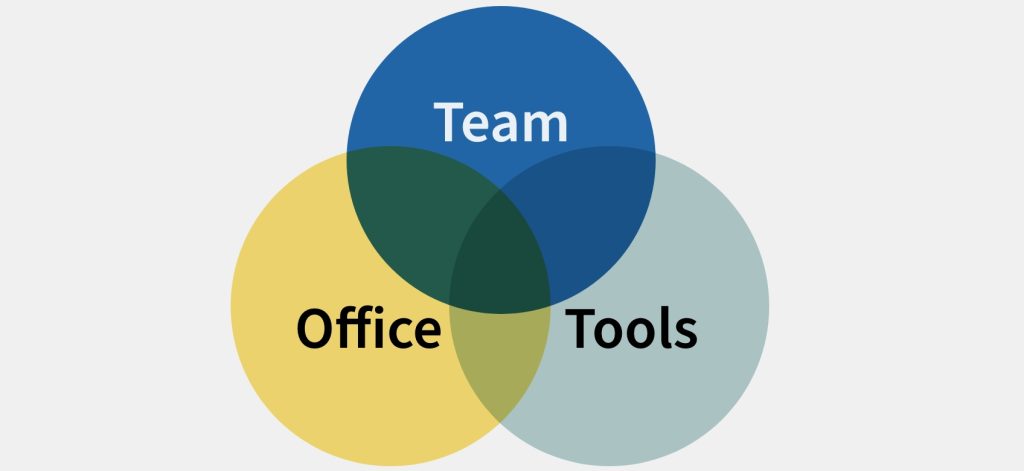
The layout of the Venn diagram, with excellence at its center, is intentional. Your team is supported by the design of your office and the tools you give them. These two items set the foundation that makes success possible. You can address these first to build an efficient environment.
Designing your office to maximize flow
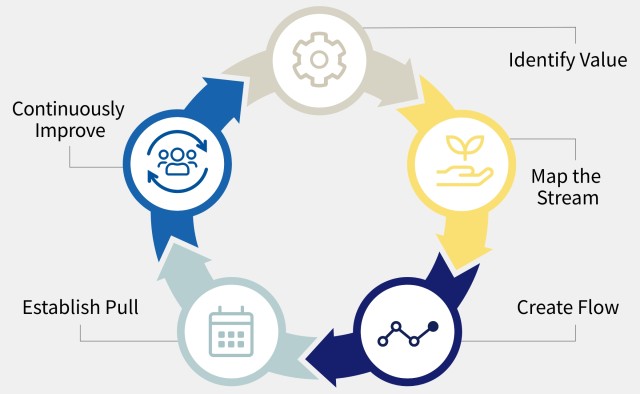
In the industrial sector, Lean management is used to enhance process efficiency. It’s something that centers on the concept of flow. Every step leads into the next with no pauses or wasted movements. This automotive industry strategy has been adopted in nearly every other field since the term was coined in 1991. That’s because its process design steps can be applied to any industry.
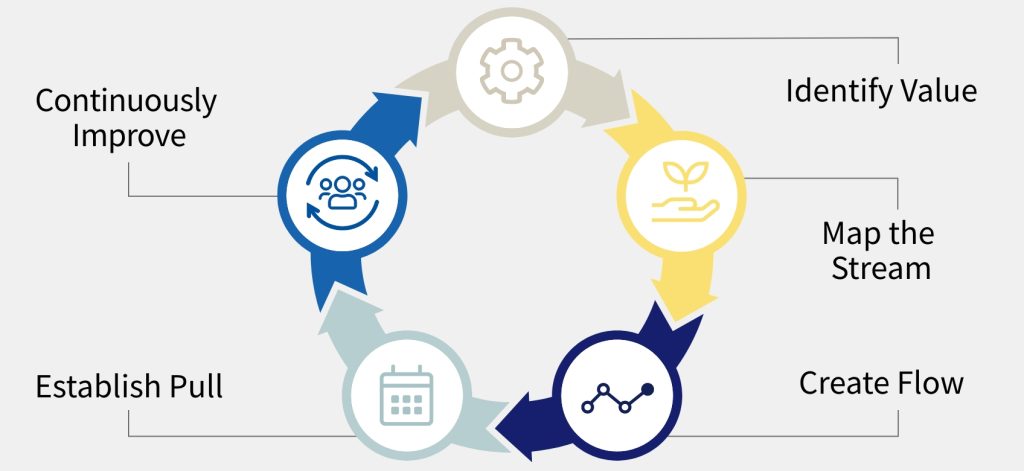
We can use the above steps to look at how dental office design affects efficiency in an office.
- Identify value: The dental office would identify the value for patients in terms of how efficiently they move between stations during a dental cleaning. The value here is the patient experience; they want a seamless transition from one stage to another without confusion or unnecessary delays. That seamless transition also helps staff to manage their workloads.
- Map the stream: In mapping the stream, you would essentially map out the steps an average patient takes as they move through the stations in your office. You’d visualize their entire journey from the second they enter the office until they complete their appointment, covering waiting areas, X-ray rooms, dental chairs, and any post appointment areas. During this you might also discover bottlenecks and areas of waste that can be improved for both the patient experience and staff well-being.
- Create and rewrite them to optimize the physical layout and design of your space. For example, if patients always proceed from the waiting room to X-ray, then to the dental chair, it wouldn’t make sense to have all these offices in different parts of the building. Placing them near each other would eliminate confusion and help patients easily navigate the office.
- Establish pull: In establishing pull, the dental office would implement a scheduling system that aligns patient appointments with the availability of stations. It’s not just about estimating a two-hour cleaning time and squeezing them in when you can. Instead, you calculate the time it takes to turn over a station after an appointment and make sure that your appointments align with that. That helps you avoid unnecessary wait times and optimizes the use of your resources.
- Continuously improve: Lean is represented as a cycle because it’s never ending. You should continue to pursue perfection with your office’s layout. Regularly evaluate patient feedback, observe the flow of patients, and identify any areas for enhancement.
Good patient flow in your dental practice sets the baseline for efficient operations. If you have a packed waiting room, and dozens of empty workstations, you need to identify the bottlenecks in your process so you can support patients and staff.
Support your practice with the right tools and systems
Tools and systems apply to both the tools that your staff uses during procedures, as well as the administrative systems that you use for managing your appointments, billing, operations, and all those other tasks that keep your office running. Outdated tools and systems make tasks more cumbersome and inefficient.
For example, let’s examine the sterilization of dental instruments. Older processes of sterilizing them relied on manual hand washing and the use of an autoclave. Doing this one instrument at a time was time-consuming and put hygienists and other staff at greater risk of sharps injuries. Switching to a dental cassette system that allows hygienists to sterilize multiple instruments simultaneously while keeping them organized would immediately improve efficiency and reduce the risk of cross-contamination.
Another example is practice management software. This software takes several necessary steps, including appointment scheduling, electronic patient records management, billing and insurance claims processing, inventory management, and reporting, and combines them in a centralized system. By connecting all these moving parts, you can observe their process and refine it.
When evaluating a tool to improve efficiency in your dental practice, ask yourself the following questions:
- Does the tool address a specific pain point or challenge in our current workflow?
- How will this streamline or automate tasks that are currently time-consuming or prone to errors?
- Will implementing this tool improve communication and collaboration among staff members?
- How easily can this tool be integrated into our existing systems and workflows?
- What is the learning curve associated with using this tool, and how will it impact staff training and onboarding?
- Will the tool scale with our practice as we grow or adapt to changing needs?
- Can the tool be customized or configured to align with our specific requirements and workflows?
The answers you get from above will give you a good idea of how the tool will fit into your current ecosystem, as well as how it will help your team; that’s what your tools and systems are all about. They are there to support the people who make your practice possible.
Empower your team and encourage development
With the right dental office design and tools in place, you’ve already done half the job when it comes to empowering your team. You’ve given them the items that they need to be successful, but you also could give them the knowledge and confidence.
Here are some ways to do that:
Schedule regular team meetings
Did you know that 74% of workers state that they are more effective when they feel like they’re heard by management? A lot of managers see that statistic and think that the best way to handle it is through open-door policies. They tell their workers that they can bring any issues to them, and then assume that there are none because no one uses the policy.
Unfortunately, open-door policies aren’t going to work for individuals who are introverted or less comfortable with confrontation. A better idea is to set up regular team meetings where these individuals can raise their concerns, thoughts, and feedback. Keep in mind that these team meetings should not be focused on what the team can do for the practice. They should center on how the practice can help the team.
Foster effective communication
Encourage open and transparent communication among team members. Utilize communication tools, such as messaging platforms or shared calendars, to enhance collaboration and coordination. Clear and concise communication leads to better workflow, fewer errors, and improved efficiency. It also makes employees more willing to speak up about issues or concerns that they’re having.
Encourage professional development
Eighty-six percent of professionals report that they would change jobs if a new opportunity provided them with more professional development options. In the dental industry, where staff turnover is high and retention is low, employee development can be the difference between retaining your workers and constantly replacing them. Providing individuals with the opportunity to grow in their roles through ongoing training and development is crucial. These can include in-office cross-training opportunities, online modules, on-campus classes, or other methods that allow them to gain certifications and credentials, helping them develop their careers.
Build genuine work-life balance
What is most important to workers in the healthcare sector right now is work-life balance. In fact, it’s the number one thing that these professionals state they want from their employers. While healthcare can be hectic and schedules unpredictable, it’s possible to manage it in a way that’s sensitive to your worker’s time. This is something that ties back into flow and specifically the “pull” segment. Your office should be setting appointments based on capacity and availability and not on revenue goals. Overscheduling your workers will make them burn out faster and giving them unpredictable ever-changing schedules will frustrate them. Prioritize flow in your schedules for staff and you can also boost retention and efficiency.
These dental office management tips are practical because they address the whole office. They don’t put the onus of efficiency on employees who might have little control over it. By supporting them with a well-designed dental office and the necessary tools and systems, you make it easier for your employees to drive the success of your practice.
SPEAR All access
One Membership, $555 More a Day
Practices on Spear All Access see a median daily production gain of $555, with a 9.9% median lift in hygiene production. That’s not from one course or one workshop. It comes from unlimited Spear and CDOCS workshops, the full online course library, role-based team training, practice analytics, and a dedicated Practice Growth Partner working with your team every month, all in one membership.
Featured Digest articles
Insights and advice from Spear Faculty and industry experts