- Article
- |
- Esthetics
- |
- Techniques / Materials
Steps in the Veneer Seating Process: Part II
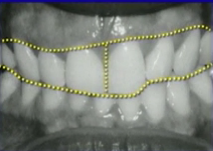
When you talk to dentists about the procedures they’re fearful of, seating porcelain veneers comes up frequently. (Click here to read Part I with Steps 1–3.)
4. Know the materials used
It’s absolutely essential to know which materials your technicians use and how they use them. For instance, with this particular patient, my lab technician did not acid-etch the veneers before sending them back to me, which required that I etch the surface. Different materials require different etching times. so you must know the specifics for each case.
In most instances, your lab will have already acid-etched the restorations, but you’ll need to clean them after your try-in. I typically clean using distilled water in an ultrasonic cleaner for five minutes, then silanate for 60 seconds to enhance the resin–ceramic bond.
5. Apply retraction cord
When it comes to veneer placement for anterior teeth, I use retraction cord, not a rubber dam. If the margins are supragingival, the cord is not necessary, but if the margins are equigingival or subgingival, I place an Ultradent 00 cord to avoid contamination during the bonding. I often wait until after the retraction cord is placed to perform the air-abrasion, because it’s easier with the cord in place.
6. Apply desensitizer and adhesive
I use a total-etch adhesive (Single Bond Plus from 3M), so I start by acidetching with 32% phosphoric acid for 15 seconds, followed by rinsing and lightly drying with clean air from an Adec air dryer. I then apply Gluma desensitizer (Kulzer) for its desensitizing and antibacterial properties. After lightly drying the Gluma, I paint on two layers of adhesive.
I don’t precure my adhesive when doing veneers; I only etch and apply adhesive to the number of teeth I’m planning on seating — generally the two centrals first, followed by the lateral and canine on one side, then the other.
7. Go back to the veneers
Now that the teeth are ready, it’s time to go back to the veneers that have been cleaned and silanated. Now I paint the Single Bond Plus adhesive on the inside of each veneer, dry it and apply the cement chosen.
8. Place veneers
I then bring the two central veneers to the mouth and place them. After I have placed them correctly and am holding them with pressure from the facial and incisal, I have the assistant “tack-cure” from the lingual of the incisal edge. I then clean the margins with a brush and explorer before final curing.
The only challenge with this part of the process is the potential for oxygen inhibition to prevent a complete cure of the margin. This risk can be eliminated by leaving a small excess of cement at the margin instead of cleaning it all, or by cleaning completely but painting glycerin over the margin before curing the cement. Then light-cure 30 seconds from the facial and lingual with a high -ntensity curing light.
Now that the two centrals are placed, I finish them completely before moving on to the adjacent teeth. The laterals and canine on one side are then completed following the same steps.
VIRTUAL SEMINARS
Get Live Training Without Leaving Your Practice
Traveling for CE means blocking out days you don’t have. Spear’s virtual seminars bring live, faculty-led training straight to your office, so you can learn from home or between patients and apply what you learned right away.

By: Frank Spear
Date: July 24, 2013
Featured Digest articles
Insights and advice from Spear Faculty and industry experts