Using Caries Detection Dyes
Determining when to stop caries excavation can be a challenge because the visual and tactile evaluation of a carious lesion is subjective.
Various products on the market help dentists determine when to stop tooth preparations to standardize the caries excavation process. One of the more commonly used products is caries detection dye.
Caries detection dyes were first introduced to dentistry in the 1970s. These early solutions were composed of red fuchsin in a propylene glycol solution. The theory behind their use was that they would stain degraded, carious dentin while leaving the sound dentin unstained.
Concerns about the carcinogenic properties of red fuchsin led to its replacement with other dyes. Most modern caries detection dyes utilize different colored dyes based on a propylene glycol solution. The science behind recent caries management developments, namely the emerging science related to oral biofilms and the use of silver diamine fluoride, can be explored by watching Spear’s course, Medical Management of Dental Caries: The Science Behind It and the Methods To Do It.
Mechanism of Action and Accuracy
Although caries detection dyes are used to identify dentin infected with cariogenic bacteria, these dyes don’t stain the bacteria in the lesion. Instead, the propylene glycol penetrates areas of dentin with loose collagen fibers. This causes the caries detection solution to stain degraded collagen rather than bacteria.
Since the caries detection dye stains only degraded collagen, not the bacteria that caused the carious lesion, these dyes are used assuming that removing the degraded collagen will remove the bacteria causing the carious lesion.
Various studies investigated the accuracy of caries detection dyes, and laboratory and clinical studies found that they have a high rate of false positives. This is attributed to solutions that non-selectively stain demineralized collagen.
Multiple studies showed high rates of false positives, which are commonly observed at the DEJ and in the circumpulpal dentin, which can lead to the excessive removal of healthy, non-carious tooth structures and unnecessary pulp exposure.
Other studies also highlighted concerns with esthetics and decreased bond strengths in areas stained by caries detection dyes.
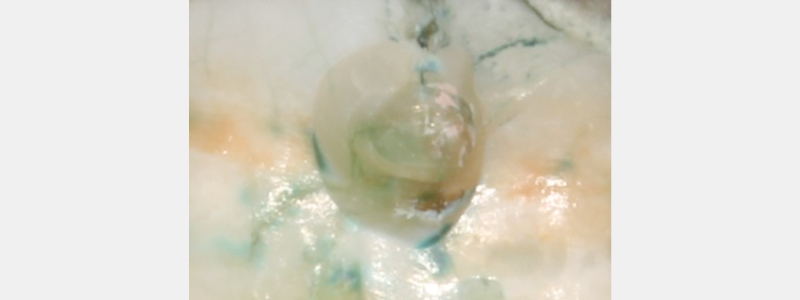
Although caries-indicating dyes are not highly specific, the intensity of the stain can be utilized to remove stained areas selectively. In general, areas with a darker, more intense stain tend to have more demineralization and carious bacteria. Areas with a lighter stain may not be affected and can be left in place.
As a result, some protocols for the conservative treatment of deep carious lesions advise removing the darkly stained dentin while leaving the lightly stained dentin in place and ensuring a peripheral seal of healthy tooth structure when using a caries detection dye during caries excavation.
Can These Be Effectively Used?
Although there are drawbacks to using caries detection dyes, they can be helpful when used judiciously. Dark, intensely stained areas can be removed confidently; however, lightly stained dentin areas do not need to be aggressively excavated.
Indiscriminately removing dentin stained by caries detection dyes will lead to over preparation and can increase the risk of an inadvertent pulpal exposure.
References
- Dorothy McComb, B. D. S. (2000). Caries-detector dyes—how accurate and useful are they. Journal of the Canadian Dental Association, 66(4), 195-198.
- Alleman, D. S., & Magen, P. (2012). A systematic approach to deep caries removal end points: the peripheral seal concept in adhesive dentistry. Quintessence International, 43(3).
- Boston, D. W., & Liao, J. (2004). Staining of non-carious human coronal dentin by caries dyes. OPERATIVE DENTISTRY-UNIVERSITY OF WASHINGTON-, 29, 280-286.
- Kidd, E. A., Joyston-Bechal, S., & Beighton, D. (1993). The use of a caries detector dye during cavity preparation: a microbiological assessment. British Dental Journal, 174(7), 245-248.
- Maltz, M., Arthur, R. A., & Fatturi-Parolo, C. (2019). Caries detection dyes. In Detection and Assessment of Dental Caries: A Clinical Guide (pp. 83-98). Cham: Springer International Publishing.
SPEAR ONLINE
Team Training to Empower Every Role
Spear Online encourages team alignment with role-specific CE video lessons and other resources that enable office managers, assistants and everyone in your practice to understand how they contribute to better patient care.

By: Andy Janiga
Date: March 8, 2021
Featured Digest articles
Insights and advice from Spear Faculty and industry experts