Should Dentists Recommend Wearing Dentures During Sleep?
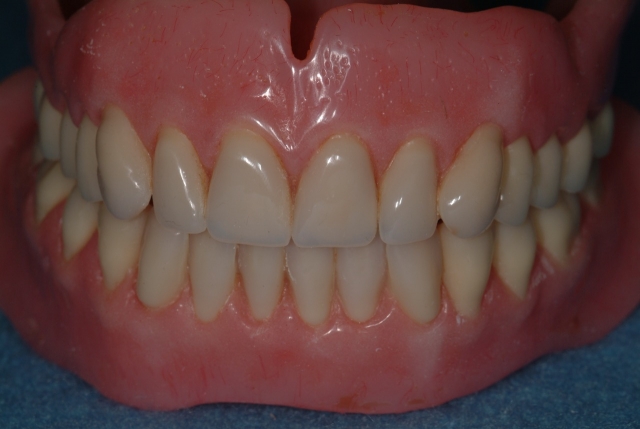
“Managing the edentulous patient” was recently introduced as a topic of a seminar and a workshop at Spear Education. In the courses, patients are discussed ranging from traditional dentures to implant overdentures and, finally, an implant-fixed prosthesis.
Because of the cost and surgical complexity of fixed prostheses, many of my patients choose options that are removable. For years, dentists have informed patients that the proper care of a denture includes its removal at night to allow tissue recovery and improve oral health. To complete the discussion of management of the edentulous patient, we must consider the impact that removing the denture during sleep has on a patient’s ability to breathe.
Prevalence of obstructive sleep apnea in patients 60 and older can range from 20% to 79%, depending on the community and criteria.1–3
Edentulism increases the patients’ risk for OSA by reducing the size and tone of the muscles of the pharyngeal walls. This loss of tone is magnified by the loss of vertical dimension, and subsequent reduction of lower face height, when the teeth are removed. It has been reported that patients with OSA who had their teeth extracted suffered an almost doubling of their apnea episodes.4 Solutions for these patients have included CPAP and, if implants were placed on the lower arch, mandibular advancement appliances.
An interesting study evaluated the impact of wearing or not wearing a denture during sleep on the level of apnea.3 Home sleep testing was accomplished on elderly edentulous patients with and without their dentures during sleep; 70% of the patients with apnea routinely removed their dentures at night.
Wearing their dentures improved the apnea in a majority of the subjects. A reduction in hypopnea, not apnea, explained the recorded change. Therefore, partial obstructions were improved but complete obstruction is only minimally improved.
In fact, in some patients, the airway was worsened with the addition of the denture. Of the seven subjects who had an AHI < 5, all normally removed their dentures. When asked to sleep with them, five showed an increase in AHI, none more than 5 points. Of the apnea group, four patients showed an increase in AHI of greater than 5 points by including the denture.
As our population continues to live longer, the number of patients facing the unenviable loss of their teeth will continue to grow. The rate of apnea in the elderly edentulous patient base is significant, and demands that we screen these patients when they enter our practices for care.
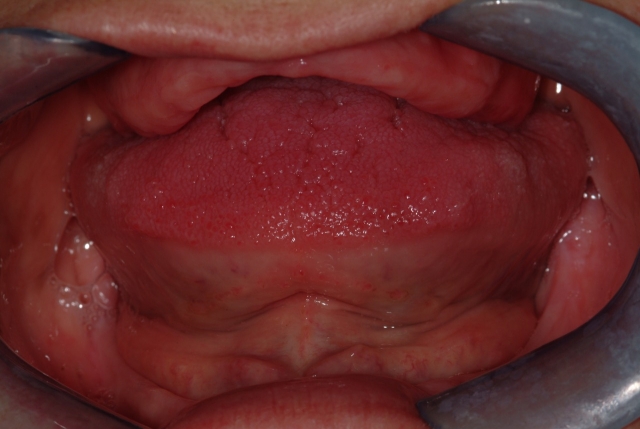
In addition, edentulating a patient can alter the oral structures so dramatically as to introduce apnea. Follow-up for immediate dentures should include apnea screening.
Finally, the removal of the final restorations to improve tissue health and reduce bone loss may, in fact, increase the likelihood or the severity of apnea. In the past seven years, I have changed my protocol for denture patients. I always recommend a screening with high-resolution pulse oximetry with and without the denture. If the denture improves the airway, I’ll recommend wearing the denture and following up on the apnea with a physician.
Interestingly, many patients who have been edentulous for a long period of time are reticent to wear their prosthesis at night because they’ve been told for years that they’ll lose bone and be at risk for a fungal infection. I tell them that both are true, but the odds of them being alive to experience those issues goes up dramatically when they improve their breathing.
References
- Ancoli-Israel S, Gehrman P, Kripke DF, et al. Long-term follow-up of sleep disordered breathing in older adults. Sleep Med 2001; 2:511–516.
- Ancoli-Israel S, Kripke DF, Klauber MR, Mason WJ, Fell R, Kaplan O. Sleep-disordered breathing in community-dwelling elderly. Sleep 1991; 14:486–495.
- Arisaka H, Sakuraba S, Tamaki K, Watanabe T, Takeda I, Yoshida K. Effects of wearing complete dentures during sleep on the apnea-hypopnea index. Int J Prosthodont 2009; 22:173–177
- Bucca C, Cicolin A, Brussino L, et al. Tooth loss and obstructive sleep apnoea. Respiratory Research, Vol. 7, article 8, 2006.
VIRTUAL SEMINARS
The Campus CE Experience
– Online, Anywhere
Spear Virtual Seminars give you versatility to refine your clinical skills following the same lessons that you would at the Spear Campus in Scottsdale — but from anywhere, as a safe online alternative to large-attendance campus events. Ask an advisor how your practice can take advantage of this new CE option.

By: Jeffrey Rouse
Date: September 24, 2017
Featured Digest articles
Insights and advice from Spear Faculty and industry experts