A Comparison of Orthodontic Retention Options
Several questions can arise regarding the best retainer to use after orthodontic treatment. As practitioners, we all have our favorite retention plans and devices for prescribing.
The literature has not been able to tell us the perfect retention plan, if one exists. As in most treatment situations, one size does not fit all. Here are some guidelines I use to decide on retention based on the patient’s pretreatment presentation. Each has some advantages and disadvantages for long-term, or what I call “lifetime,” retention.
Standard Hawley or wrap
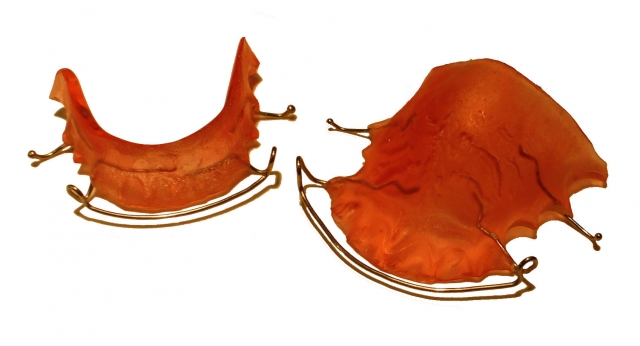
This retainer style is considered the tried-and-true form of retention. In some circles, it’s the old-style retainer. It is usually made with a combination of a labial bow wire adapted to the incisors and a variety of retention wire options.
A wrap adds a custom wire adapted circumferentially along the buccal segments. It can be made from either a traditional impression or a digital scan.
While there are disadvantages, as you’ll see below, the advantages are so significant that I use this style as my retainer of choice for long-term retention.
Application
Patients who have a normal-range pretreatment overbite.
Disadvantages
- It is a more costly retainer to have made, especially if it’s sent out to a lab.
- It will require adjustment to achieve full occlusion on the day of delivery, which can mean increased scheduling time.
- There is usually some palatal coverage, and a “gagger” may not tolerate much posterior palatal coverage.
- The acrylic is brittle and, if stepped or sat on, can break.
- If not removed properly, the wires can be bent out of adjustment.
Advantages
- It can be adjusted to full occlusion, which is significant. Whether you have just finished an orthodontic or a full restorative case, you want your patient to feel the harmony of their muscles and occlusion. If you have occlusal interference with a wire, acrylic, or aligner material, the patient can change their mandibular posture. The occlusal interference can introduce the potential to grind, similar to what happens with a “high spot” on a restoration. For quiet muscles, a fully seated occlusion with the retainer in place is a more ideal solution. For a pretreatment open bite, it is essential to have solid posterior occlusal contacts to avoid bite-opening after treatment.
- Several modifications can be made with this style of retainer. You can add a spring to support a difficult pretreatment rotation, or make a slight posttreatment adjustment. Pressure points can be easily added with a wire adjustment or by adding Triad gel.
- It stands the test of time. The hard acrylic material will not stretch out with time and can last for many years.
Anterior biteplate
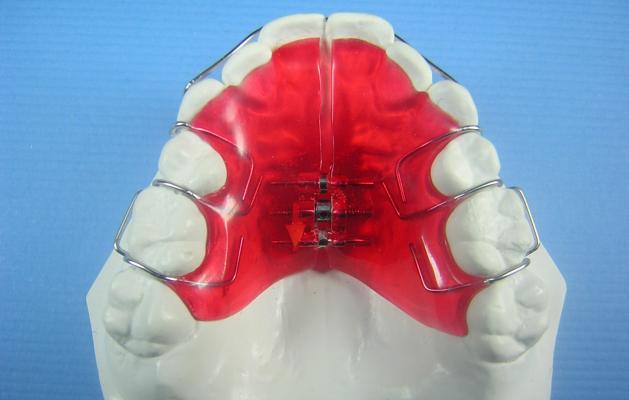
This style of retainer can be made of a clear thermoformed plastic material with Triad added for the anterior bite plate. The design of the appliance made in Spear’s Occlusion in Clinical Practice workshop, it can also be made with a modification of the Hawley-style retainer. For retention, the main function is to keep the posterior teeth out of occlusion and create occlusal contacts on the lower incisors to limit any incisor eruption.
Applications
Use this design when your patient has a pretreatment presentation with a significantly deep overbite with overerupted lower incisors. This retainer design also benefits the patient who clenches, has some muscle symptoms, or has very strong masseter muscle development. It is a design I use for retention with patients who have a forward-rotating skeletal pattern.
Disadvantages
- The design of this retainer makes it bulky and difficult to speak with when in place.
- Delivery appointments will need to include time to adjust for equal incisor contacts.
- This retainer design cannot be worn full-time because of the open posterior occlusion. If it’s worn full-time, there is potential for uneven posterior eruption changes over time.
- A patient with a pretreatment open bite or vertical growth pattern should never wear this design. Their occlusion is more susceptible to posterior eruption changes and can work against your finished treatment benefits.
Advantage
- This biteplate design can be very beneficial for your patient with a pretreatment deep bite, as described above.
Posterior occlusal coverage
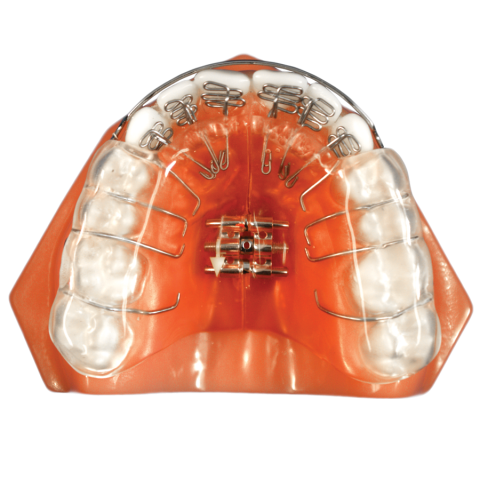
Applications
This type of retention appliance is used specifically for patients with an anterior open bite or vertical growth pattern. It can be added to the upper or lower retainer.
Disadvantages
- It can be a bulky appliance to wear, so compliance can be an issue.
- Similar to a splint, the posterior occlusion needs to be adjusted at delivery, which increases your scheduling appointment time.
Advantages
- In the unique situation of an open bite, this retention can provide added stability, particularly when a vertical growth pattern is present.
- In an adolescent, some latent growth potential can be present and this design can offer some control of vertical changes.
Plastic full-coverage
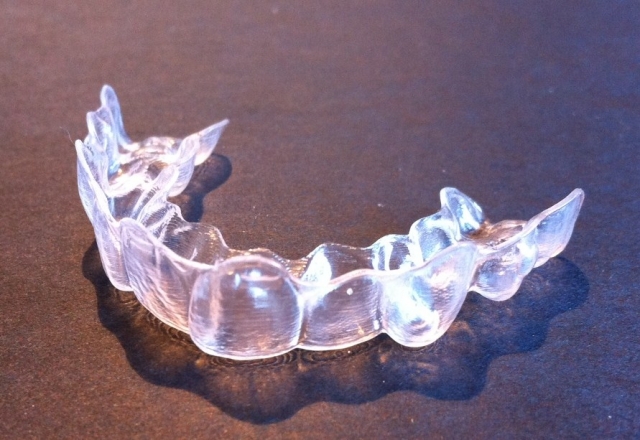
This type of retainer is usually made by heat-treating a plastic material and vacuum-forming it over a cast. A version made from a scan, which can offer a more detailed fit, is also available.
Applications
This retainer is often used as a final postorthodontic retainer. It is known by several names, including clear retainer, Essix, Trutain, aligner-like, and Vivera. It serves as an excellent temporary option between the completion of orthodontic treatment and the start of restorative treatment. I use it at night for patients who have a missing tooth.
Disadvantages
- The retainer has occlusal coverage, so patients won’t feel their own occlusion when it’s worn.
- Because of the nature of the plastic material, it can “stretch out” over time.
- The patient should be advised that a replacement retainer might be needed in the future.
- Some patients can wear through the material, and some patients think they are grinding because of the retainer.
Advantages
- This retainer style can be made in-house or at a lab, usually with a quick turnaround time.
- It has very high patient acceptance because it is clear.
- It can be delivered in minutes, saving significant chair time.
- It can be very cost-effective when made in-office.
- It can be adjusted for pressure points by adding blockout material and scraping the plaster on the cast.
- Some patients can use bleaching material while wearing this style of retainer.
- For patients who are missing teeth, it can snap into an undercut and hold the adjacent teeth better than an acrylic retainer with pontics.
Splints
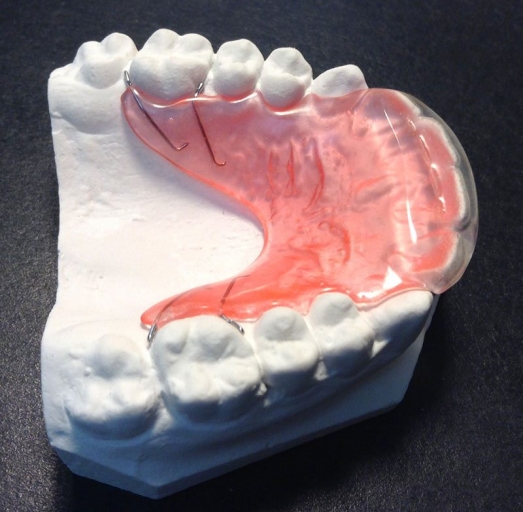
Full-coverage splints can make excellent retainers and offer all the benefits for which splints are designed. As long as the patient wears them, they can sometimes be the best long-term solution to maintaining the ideal jaw position, muscle health, and alignment.
In an ideal world, retention would not be needed, but as we know, time changes our bodies, and that includes our teeth. Long-term studies now show that the face changes in every decade of life. With parafunction, erosion, and wear adding to the speed of aging transition, we are fortunate to have several options that best serve our patients.
SPEAR campus
Hands-On Learning in Spear Workshops
With enhanced safety and sterilization measures in place, the Spear Campus is now reopened for hands-on clinical CE workshops. As you consider a trip to Scottsdale, please visit our campus page for more details, including information on instructors, CE curricula and dates that will work for your schedule.

By: Donna Stenberg
Date: November 9, 2017
Featured Digest articles
Insights and advice from Spear Faculty and industry experts