Is Group Function Really Bad?
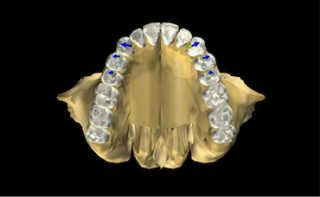
Most of us have been taught that ideal occlusion means canine guidance, or mutually protected occlusion. In fact, that is the preferred occlusal scheme in many instances. It requires the least amount of muscle activity for the mandible to move into excursions when the teeth are touching. It separates the back teeth so they are out of harm’s way during parafunction.
Most of us were also taught that group function is bad! It causes too much muscle activity and destroys teeth.
So what if we just can’t get the canines to touch when the teeth are closed? There are some choices — orthodontics, change the shape of the teeth, and even orthognathic surgery can be a possibility.
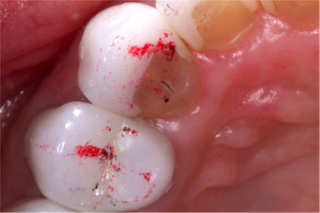
Practically, though, unless there is a compelling reason to do the other treatments, the easiest thing is to “share the load” with group function. This simply means that when the jaw moves from side to side, the guiding teeth may be premolars. The goal is to transition the guidance so that when the jaw moves side to side, even if the guidance begins on premolars, it transitions to the canines.
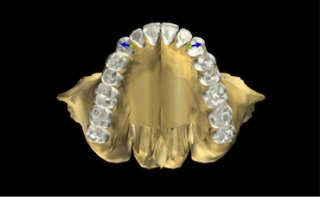
The clinical slide shows this exact instance. Even after braces, the canines didn’t touch. The solution was to start the guidance on the first premolar and transition it to the canine — group function!
SPEAR ONLINE
Team Training to Empower Every Role
Spear Online encourages team alignment with role-specific CE video lessons and other resources that enable office managers, assistants and everyone in your practice to understand how they contribute to better patient care.

By: Steve Ratcliff
Date: March 14, 2013
Featured Digest articles
Insights and advice from Spear Faculty and industry experts