The Four Possible Causes for Lack of Tooth Display

When treating patients that have less tooth display than normal, there can definitely be some gray areas when it comes to treatment. At times, you will come across a patient where it’s difficult to ascertain how long the teeth should be to achieve the desired esthetics. In patients with this type of situation, there can be a lot of guesswork involved, because the matter is considered to be just as subjective as determining which shade of white delivers the most esthetic outcome. In patients who have little to no tooth display when the lip is at rest, it’s helpful to know what the possible causes are to treat your patient efficiently and effectively.

Long upper lip
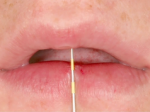
Simply put, there is too much space between the base of the patient’s nose and the bottom of their upper lip. The key is to evaluate the length of the upper lip and compare it to the norm. The average upper lip length for females is between 20 and 22 mm; the average upper lip length for males is 22 to 24 mm.
Decreased lip mobility
Sometimes it is the ability of the upper lip to move that can affect tooth display. The average mobility from rest position to a full smile is 6–8mm in most patients. One thing you need to pay attention to during this evaluation is making sure to get a spontaneous smile and not a forced one; research shows there is a significant difference in these mobility measurements. A great way to see a patient’s natural animation is to watch their mouth while you’re having a conversation with them.

Retroclined teeth
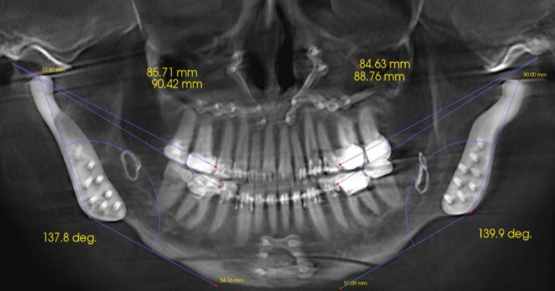
By looking at the patient’s lateral profile, you can determine how much support the upper lip has. You can also see if the maxillary anteriors are retroclined by viewing a lateral ceph. By uprighting the retroclined teeth, more tension will consistently be applied to the upper lip, thereby increasing the amount of anterior tooth display.

Diminished tooth size
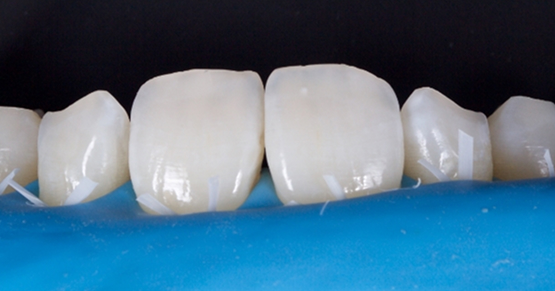
Patients who have small teeth, either naturally or due to wear, can have minimal tooth display. The difficulty in treating this has to do with the variability of tooth sizes, especially those with excessive wear or recession. We always want to start by determining where the incisal edge position should be. Next, we want to determine the position of the gingival margin.
Although the gingival margin position is influenced by a number of factors (e.g., gingival symmetry, the impact on gingival display), it is the location of the gingival margin that directly affects the actual tooth proportion. With this in mind, it is useful to know that although there is a “range” of tooth proportions that can be considered esthetic, the average tooth proportion is around 81%.
FOUNDATIONS MEMBERSHIP
New Dentist?
This Program Is Just for You!
Spear’s Foundations membership is specifically for dentists in their first 0–5 years of practice. For less than you charge for one crown, get a full year of training that applies to your daily work, including guidance from trusted faculty and support from a community of peers — all for only $599 a year.

By: Greggory Kinzer
Date: January 7, 2019
Featured Digest articles
Insights and advice from Spear Faculty and industry experts