- Article
- Treatment Planning
Ankylosed Tooth: Treating Adults and Children
Greggory Kinzer
•
October 6, 2016
Editor’s Note: Read Part I covering etiologies and considerations for an ankylosed tooth. This article is Part II and has been expanded to include pediatric treatment considerations.
How do you treat an ankylosed tooth?
Treatment depends on the patient’s age, stage of growth, esthetic concerns, tooth location, and the rate of replacement resorption. In many cases, an ankylosed tooth can be retained and restored for years, whereas in other situations, extraction and site development for future restoration may be required.
Several factors must be evaluated before selecting the appropriate treatment approach for an ankylosed tooth:
- Whether the ankylosed tooth is deciduous or permanent
- The time and age of the onset of ankylosis
- The time and age at diagnosis
- Patient gender
- The location of the affected tooth
- The patient’s smile line
These factors form the foundation of every treatment decision.
The root of an ankylosed tooth typically undergoes continual replacement resorption, in which the root structure is gradually resorbed and replaced by bone.
The American Association of Endodontists notes that ankylosis is commonly associated with replacement resorption following traumatic dental injuries and may eventually lead to loss of the affected tooth.
If ankylosis occurs before growth and development are complete, significant hard- and soft-tissue defects may develop over time.
If the tooth becomes ankylosed after growth is complete, there may be little or no impact on the surrounding hard and soft tissues.
Determining when ankylosis occurred is therefore one of the most important steps in treatment planning.
Case example: adult patient, tooth #9
(pre-growth ankylosis)
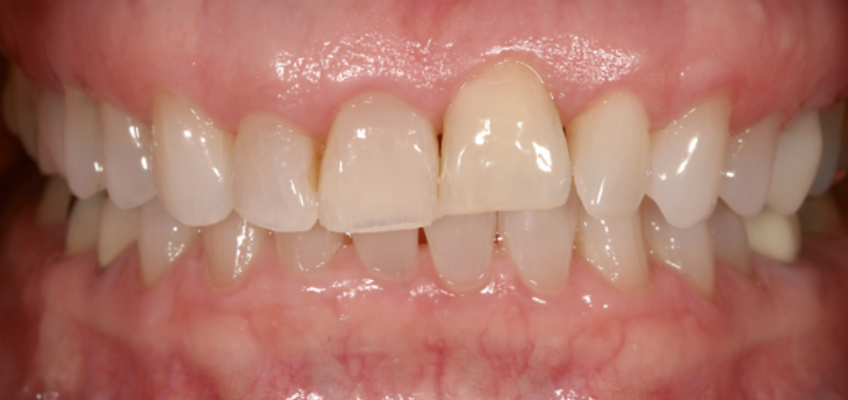
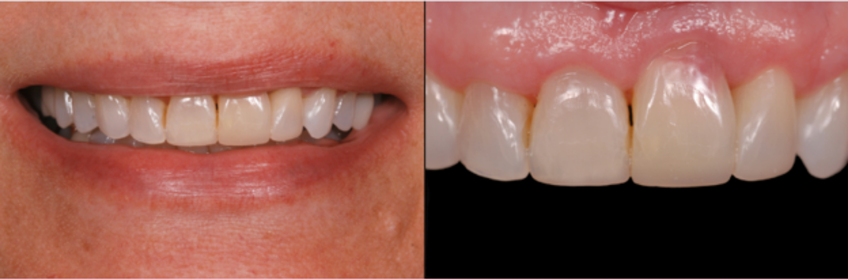
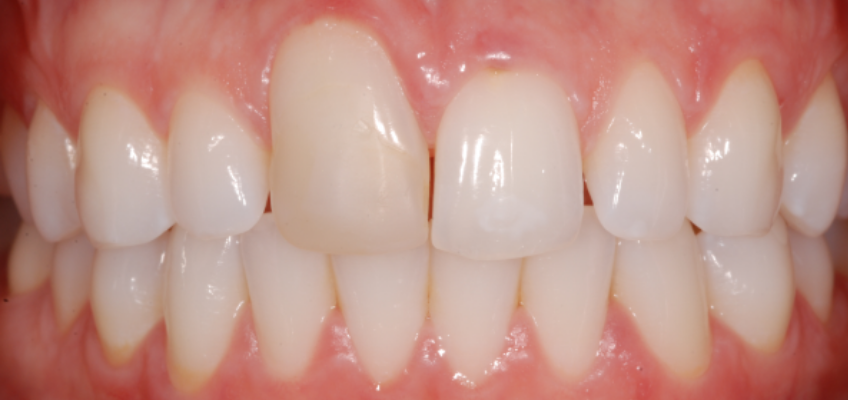
A patient in her late 50s presented with tooth #9 ankylosed. Based on the positions of the gingival margin and incisal edge relative to adjacent teeth in the arch, it was apparent that the tooth became ankylosed before growth was complete.
Case example: adult patient, tooth #9
(post-growth ankylosis)
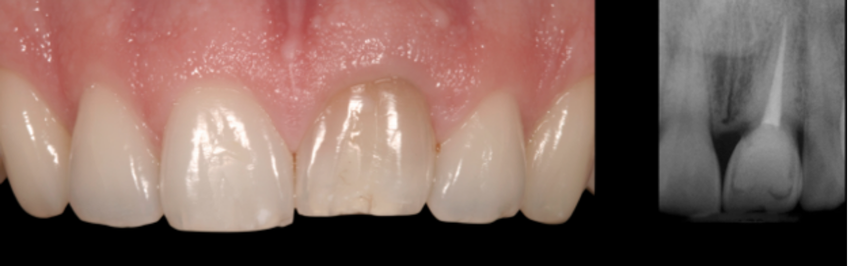
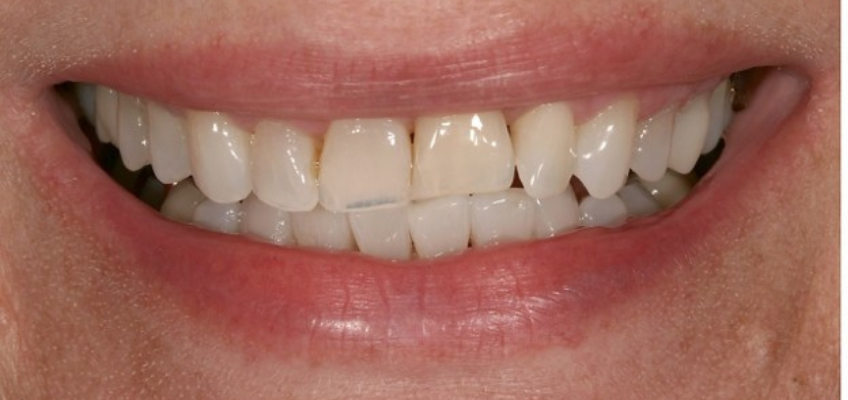
A second patient in his mid-30s also had tooth #9 ankylosed. Still, in this case, the gingival margin was level with the adjacent central incisor, indicating that ankylosis occurred after growth was completed.
Treatment planning for adults with an ankylosed tooth
An ankylosed tooth does not need to be extracted simply because it is ankylosed. In many respects, an ankylosed tooth is not dissimilar from an osseointegrated implant. The decision of whether to keep and restore the ankylosed tooth or remove it depends on the esthetic impact of any hard- and soft-tissue defects and the rate of resorption.
If the treatment chosen is to retain the ankylosed tooth, several options exist:
- Keep the tooth and restore it in its current position
- Subluxate the tooth and orthodontically reposition it into the desired location
- Move the ankylosed tooth into the correct position using a segmental osteotomy containing the ankylosed tooth
Three diagnostic questions to guide treatment selection
Before settling on a treatment approach, three questions should be answered:
- How fast is resorption occurring? The rate of resorption determines urgency. If resorption is slow, a conservative approach can extend the tooth’s functional life by years.
- Where is the smile line? A low smile line reduces the visible esthetic impact of gingival margin discrepancy, which may make retention and restoration a viable near-term solution.
- Where is the patient in relationship to skeletal growth? For patients who have not yet completed growth, the defect may continue to increase. For patients who have finished growing, the defect trajectory is more predictable.
Retaining and restoring in current position
If the patient has a low smile line, or if the gingival margin position remains clinically acceptable and resorption is progressing slowly, keeping and restoring the ankylosed tooth in its current position is a straightforward way to improve esthetics. The unknown with this approach is how long the tooth will last before resorption advances to the point that extraction becomes structurally necessary.
In one adult case, despite a significant gingival margin discrepancy on tooth #9, the impact on overall esthetics was low due to the patient’s low smile line. Given that resorption was occurring slowly, the treatment plan was to restore the incisal edges of teeth #8, #9, and #10 with composite. Those composite restorations remained in place for approximately 10 years before resorption advanced to the point that extraction of #9 was required.
When extraction is recommended
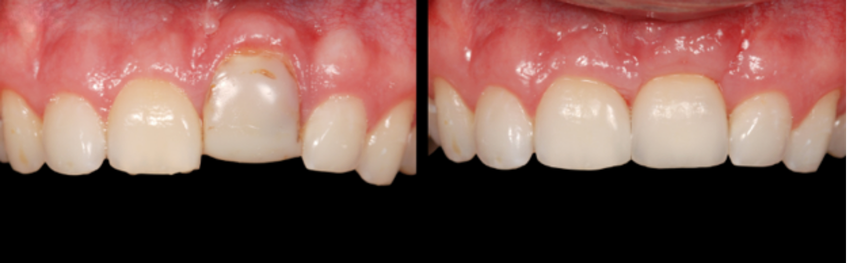
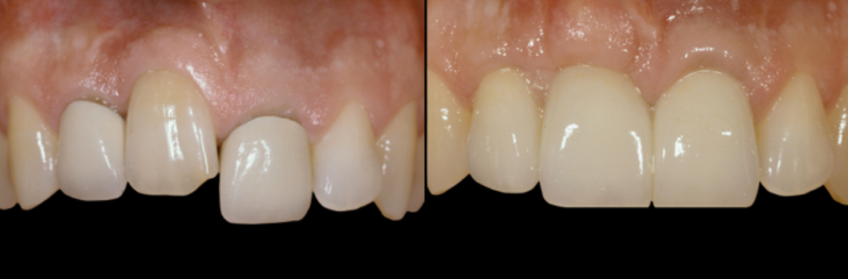
If the ankylosed tooth is an esthetic concern and resorption is advancing quickly, extraction is recommended. Depending on whether the final restoration is a single-tooth implant or a tooth-supported fixed partial denture (FPD), the site will typically require augmentation with either hard or soft tissue.
Treating children and adolescents with an ankylosed permanent tooth
When ankylosis is diagnosed in a child or adolescent, evaluating the same six factors becomes even more critical before deciding on treatment. The patient’s growth stage introduces additional constraints that do not apply to fully developed adult patients.
Case example: adolescent patient, tooth #8
(avulsion and reimplantation)
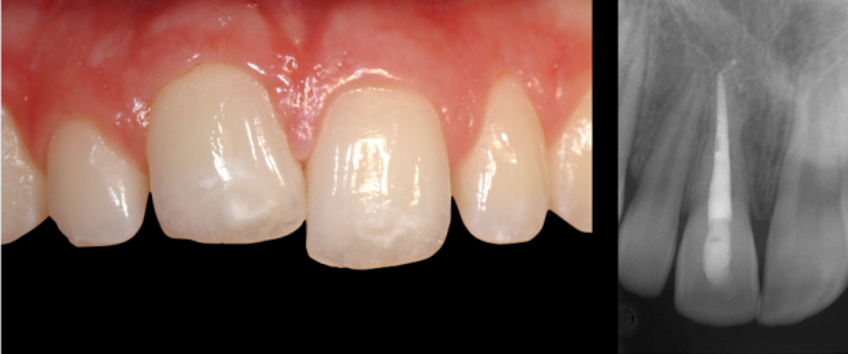
A female patient presented at the age of 15 with tooth #8 ankylosed. The tooth had been avulsed when she was 11 years old and reimplanted after being out of the mouth for approximately one hour.
According to the International Association of Dental Traumatology (IADT), delayed replantation of avulsed permanent teeth significantly increases the risk of ankylosis and replacement resorption, particularly when the periodontal ligament is no longer viable.
The incisal edge and gingival margin were more apically positioned compared with the adjacent teeth, indicating that ankylosis had developed following reimplantation.
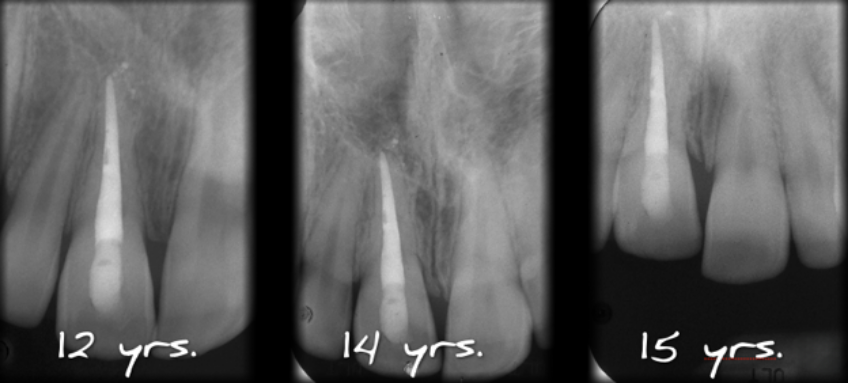
Key diagnostic details for this case
- The tooth most likely became ankylosed between ages 11 and 12
- The patient was 15 at the time of presentation
- Radiographic review showed resorption progressing very slowly
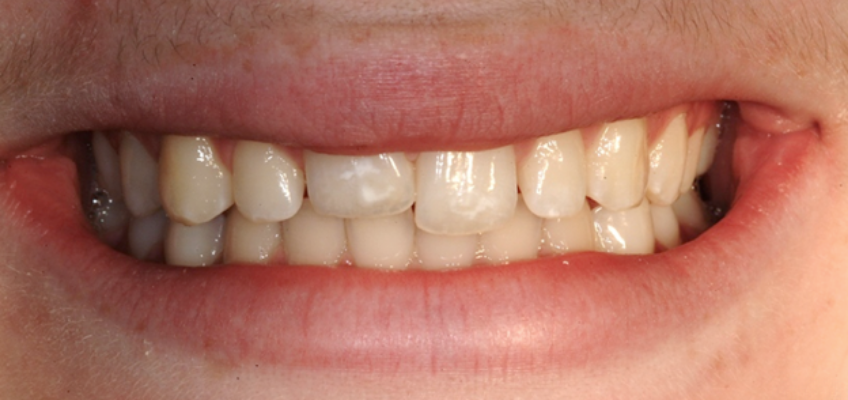
- The patient had a low smile line and did not show the free gingival margin (FGM)
- The patient was near the end of her growth phase, given that females generally complete skeletal growth at approximately age 17
Treatment options and clinical considerations
The following treatment options were evaluated:
- Extract the tooth and prepare for implant placement
- Subluxate the tooth and orthodontically reposition it
- Use a segmental osteotomy to reposition the tooth into the desired location
- Leave the tooth in its current position and restore the esthetics
- Each option carries distinct tradeoffs in this patient profile:
Each option carries distinct tradeoffs in this patient profile:
Extraction and implant placement: If the tooth were extracted, the patient would need hard tissue augmentation and would have to wait until age 17 or later before implant placement. An interim tooth replacement would be required throughout this period. At a formative stage of adolescence, managing appointments, schedules, and provisional restorations presents a significant practical and emotional burden for the patient and family.
Subluxation with orthodontic repositioning: This approach has limited success depending on the extent of ankylosis. It tends to work better when ankylosis is partial or localized to a specific area of the root surface (spot ankylosis) rather than generalized.
Segmental osteotomy: This surgical approach can be successful depending on the technique, but carries significant risk if necrosis of the segment were to occur.
Retain and restore: Given that resorption was progressing slowly, the patient was near the end of growth, and the low smile line obscured the gingival margin discrepancy, this option was the most appropriate for this patient at this time.
Treatment decision and outcome
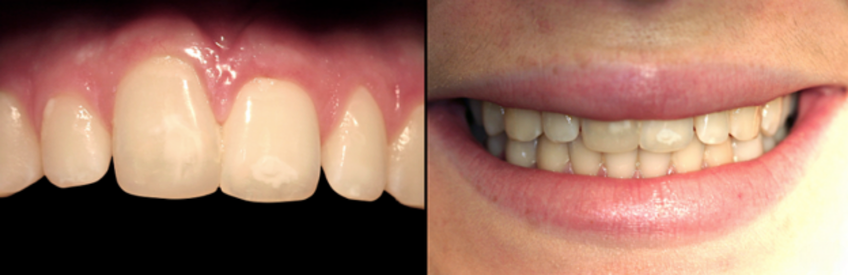
The decision was made to leave the ankylosed tooth in place and restore the incisal edge length with composite. The patient and her family understood that the composite was an interim restoration and that extraction and implant placement would eventually be required. The timing of that transition would depend on the rate of resorption progression.
The tooth remained functional for another 10 years before requiring extraction, consistent with outcomes seen in similar adult cases treated with the same conservative approach.
What should dentists remember about treating an ankylosed tooth?
An ankylosed tooth does not always require immediate extraction. Successful treatment depends on understanding when ankylosis occurred, evaluating the patient’s growth stage, assessing the rate of replacement resorption, and determining the esthetic impact of any hard- and soft-tissue defects. In many cases, a conservative approach can preserve function and esthetics for years before more definitive treatment becomes necessary.
By using a structured diagnostic process, dentists can make more predictable decisions about whether to retain, restore, reposition, or replace an ankylosed tooth while preserving future treatment options.
For clinicians who want to deepen their understanding of complex treatment planning and interdisciplinary care, Spear Membership provides access to evidence-based education, clinical resources, and a community of dentists focused on achieving more predictable outcomes for patients facing challenging conditions such as an ankylosed tooth.
Frequently Asked Questions
FOUNDATIONS MEMBERSHIP
Build Clinical Confidence In Your First Five Years
The first five years of practice come with decisions that dental school never fully prepared you for. Spear Foundations Membership gives you a full year of practical training, guidance from trusted faculty, and a community of peers working through the same challenges, for less than you’d charge for one crown.
Featured Digest articles
Insights and advice from Spear Faculty and industry experts