Rubber Dam in Dental Procedures, Part 3: Preparing Your Armamentarium
In previous articles, we discussed the origins of the rubber dam, current objections to its use by dental professionals, and the advantages of its use in routine operative dentistry. This article will outline the armamentarium required for rubber dam use in dental practice, which is essential for achieving precise isolation and improving procedural outcomes.
Armamentarium for using rubber dam in dental procedures
Rubber dam placement in dental procedures necessitates a specialized set of tools designed to ensure effective isolation and patient comfort. The main equipment required for rubber dam dental placement can be summarized as:
- Rubber dam sheets
- Rubber dam napkins
- Hole punch
- Rubber dam forceps
- Rubber dam frame
- Rubber dam clamps
- Lubricant
- Wedges and wedgets (Duggal et al.)
- Floss
- Teflon tape
- Ora-seal
The armamentarium can be chosen and set up in many ways, depending on the operator’s education and preference.
Material choices in rubber dam sheets
Dental dam is classically supplied as a 150 mm (6-inch) square sheet of latex (or latex-free, usually nitrile) in various thicknesses and colors. The thickness is typically between 0.14 mm and 0.38 mm and is usually classified as thin, medium, or heavy.
Latex offers better adaptation of the dam to the tooth, improved seals, and is easier to place; however, the risk of latex allergy should be considered. I recommend latex-free products within a dental practice setting.
Natural latex comes from the tree Hevea brasiliensis, which grows in the tropics. The latex is then modified with chemicals to create the rubber dam sheet. Allergic reactions may be either immediate (IgE-mediated) or delayed (T-cell-mediated); the severity and symptoms of the reaction vary from person to person.
| Immediate (Type I) Reaction | Delayed (Type IV) Reaction |
| This type of reaction occurs very soon after latex exposure and is caused by the proteins in the latex: Symptoms manifest within 30 minutes of exposure and typically resolve within 24 hours. It has the potential to cause anaphylaxis, a life-threatening medical emergency in the dental office, characterized by symptoms such as itching, urticaria, angioedema (swelling around the eyes and oral cavity), and breathing difficulties. | This results from the chemicals or powder added to the latex during manufacturing. Symptoms typically appear 48–72 hours following allergen exposure and may persist for a week. They include itching and allergic contact dermatitis, characterized by redness, swelling, weeping, and blistering. Anaphylaxis does not occur in this type of reaction. |
It should be noted that rubber dam placement tends to cause more severe reactions than, for example, examining a limb with latex gloves because greater amounts of the allergens can be absorbed via mucous membranes. Risk increases with existing allergic diseases (e.g., asthma, eczema, hay fever, or food allergy) or an immediate family history of latex allergy. In summary, a latex rubber dam should be avoided.
Nitrile rubber dam is manufactured from synthetic polyisoprene polymer, which can be made in thinner sections, has greater tear resistance (although it has lower memory), and, most importantly, reduces the risk of allergic reaction (Andre et al., 2022).
I prefer heavy-gauge rubber dam, which has superior adaptation and is less likely to tear during placement and throughout operative procedures. Operators should be aware that some lower-quality (and less expensive) rubber dams may have significant inconsistencies in thickness within the same batch.
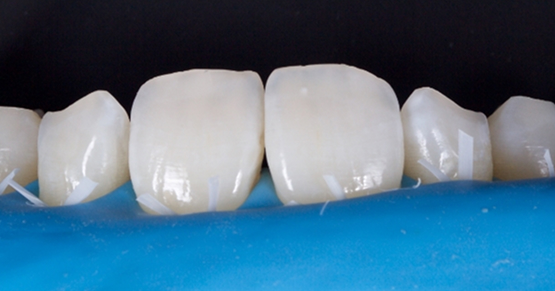
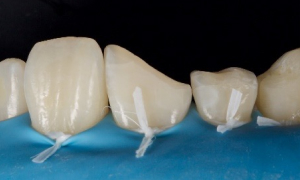
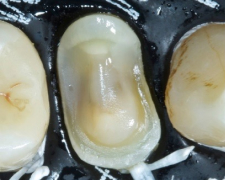
Color choice is left to the operator’s discretion; numerous colors are available, with blue (Fig. 1) and green being the most common, in addition to black, gray, beige, and pink. Black can be useful when photographing cases because it provides a neutral yet high-contrast background (Fig. 2).
The function of rubber dam napkins
Rubber dam napkins (for example, Ora Shield, Coltene) are prefabricated, nonwoven rayon fabric slips that go between the rubber dam and the patient’s skin. Their function is to protect the skin from saliva, water, and perspiration. In addition, they reduce postoperative skin soreness caused by the rubber dam abrading the skin.
Rubber dam punch design options
A rubber dam punch is used to place the appropriately sized hole in the dam. There are many designs, although the Ainsworth (Fig. 3) is perhaps the most common. It allows the operator to choose between five different hole sizes.
- 0.076 inch: used for the anchor tooth (the tooth which receives the clamp)
- 0.064 inch: used for molars
- 0.052 inch: used for premolars and canines
- 0.041 inch: used for upper incisors
- 0.029 inch: used for lower incisors

Care should be taken to ensure the punch is sharp, so the holes are punched cleanly without tags, which can cause the rubber dam to tear during placement. During sterilization, the assistant should remove all waste dams from the punch holes. Residual waste dam will result in sterilization issues and can make subsequent hole-punching more challenging, potentially causing ragged holes and tearing of the dam.
When isolating multiple teeth, the hole positions should follow the curve of the dental arch. A template can be used to ensure the correct positioning of the hole punch (Fig. 4); these work well when the teeth are aligned. However, they are less successful when there is significant spacing or crowding of the teeth.
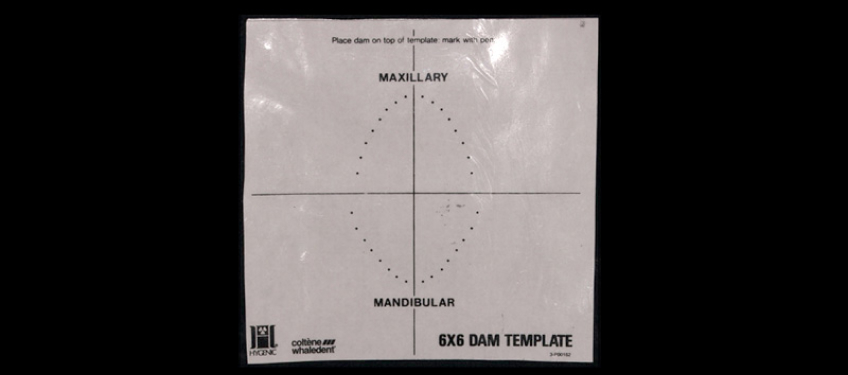
If spacing or crowding is present, the dam can be placed over a model of the teeth and tooth positions marked with a Sharpie marker.
If floss ties are planned for the case, care should be taken to make the holes farther apart than usual (around 1–2 mm). This allows enough volume of the dam to invert into the sulcus on adjacent teeth. Failure to allow for this additional space usually results in the gingival papilla popping out of the dam, causing saliva, crevicular fluid, and blood leakage.
How lubricant makes rubber dam placement easier
Before placing the rubber dam clamp, applying a lubricant to the mouth side of the dam is good practice. The lubricant enables the rubber dam to slide over the clamp more easily into the interproximal area during placement. Placement can be more expedient if the operator flosses the teeth before the dam placement (pre-flossing).
Several options have been proposed, including shaving cream, glycerine, and KY Jelly. I favor the latter, which is available in various fruit flavors that make the experience of rubber dam placement more pleasant for the patient.
The function of the rubber dam frame
The frame keeps the sheet of rubber dam tight, ensuring the operator and assistant can work without the dam obstructing vision or becoming entangled in rotary and hand instruments. A taut rubber dam also improves suction efficiency and reduces suction noise during the procedure.
There are many dam frames on the market; all have small pins at the periphery that secure the dam to the frame and are sized as “child” (smaller) or “adult” (larger) (Fig. 5). The frames can be made of stainless steel, polypropylene, or another polymer plastic (Fig. 6). The plastic frames can be helpful when radiography is anticipated during the procedure (e.g., endodontics) because they’re not radio-opaque and reduce the risk of superimposition of the frame onto the radiograph. However, the plastic frames are less robust and more challenging because the pins are blunter.
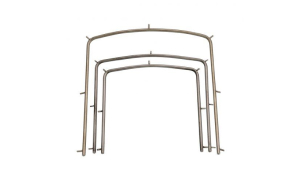

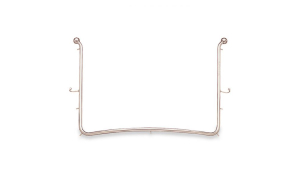
I prefer the metal Young’s pattern frame (Fig. 7) because it is durable and easy to use, in addition to having a ball finish to the free ends, which reduces the risk of iatrogenic damage to the patient’s face during placement and removal.
Selecting rubber dam forceps
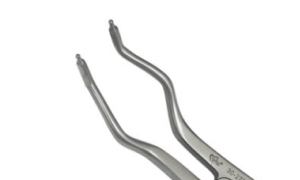
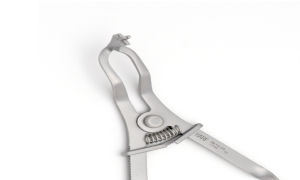
The forceps are used to open the dam clamp and position it accurately on the anchoring tooth (Fig. 8). There are numerous designs: Brewer (Fig. 9), Palmer (Fig. 10), and Lightweight (Fig. 11).
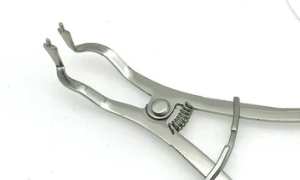
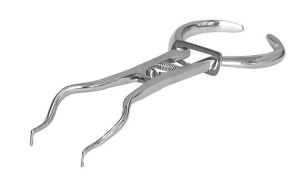
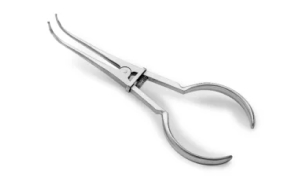
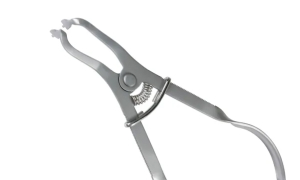
The main difference is in the shape of the tines at the tip: These are usually either ball-ended (Fig. 12) or non-ball-ended (Fig. 13). I prefer the latter because they make the placement of the clamp simpler since the forceps disengage more easily.
Optimizing rubber dam use in dental practice
Properly selecting and using a rubber dam in the dental armamentarium significantly enhances the efficiency and safety of dental procedures. Each element plays a crucial role in ensuring successful isolation and patient comfort from the choice of rubber dam sheets, whether latex or latex-free, to the precise use of punches, forceps, and frames.
To optimize the use of rubber dams in dental practice, it is essential to consider the material properties, potential allergic reactions, and procedural nuances. My next article will delve into rubber dam clamp options, floss ties, and the use of Teflon tape.
References
- André, R., Tehrany, Y. A., Bugey, A., Edder, P., & Piletta, P. (2022). Hand dermatitis aggravated by contact allergy to methylisothiazolinone in protective nitrile gloves. Contact Dermatitis, 87(4), 383.
- Scheller-Sheridan, C. (2013). Basic Guide to Dental Instruments. John Wiley & Sons.
- Duggal, M., Cameron, A., & Toumba, J. (2012). Paediatric dentistry at a glance.
SPEAR NAVIGATOR
Transform how your practice runs by engaging the team through
coaching and training
A guided path to excellence through structured coaching and self-guided resources that will align your team, streamline processes and drive growth. Transform your practice by implementing Spear’s proven playbooks for developing and retaining a high-performing dental team.

By: Jason Smithson
Date: August 21, 2024
Featured Digest articles
Insights and advice from Spear Faculty and industry experts