- Article
- Occlusion / Wear
5 Keys for Early Palatal Expansion
Donna Stenberg
•
July 16, 2018
- Article
- |
- Occlusion / Wear
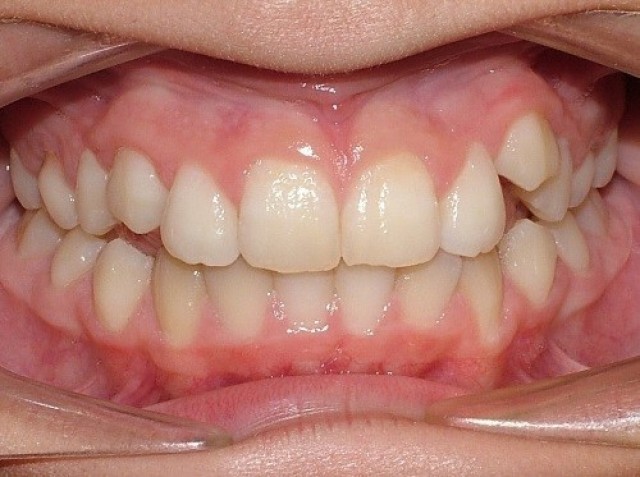
The timing of orthodontic treatment, including dentofacial orthopedics, has variable opinions expressed in the specialty. The literature supports early treatment for many, but not all, conditions. Early intervention with rapid palatal expansion has support based on anatomical and dental development. Five key reasons for early expansion are discussed in this article, which gives additional support for early application of this beneficial procedure.
The Suture Becomes More Complex With Maturity
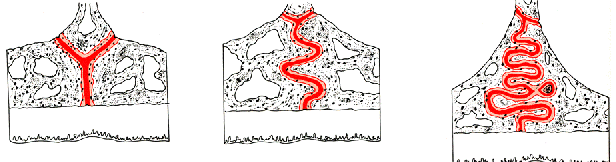
Key #1: Anatomy studies of the mid-palatal suture document that the suture becomes more complex with maturity. The suture system of younger patients is very responsive to the orthopedic intervention of the expander. This benefits the maxillary complex because less pressure is needed to achieve the desired skeletal expansion. When less pressure is used, we reduce the risks for negative consequences to the buccal bone. As a patient matures, there is a greater risk of teeth tipping with expansion and less stable orthodontic expansion rather than orthopedic expansion.
Primary Teeth Serve As Anchors for the Expansion Appliance
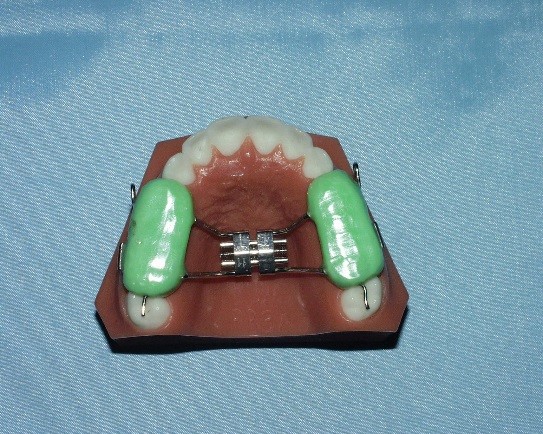
Key #2: An expander during the early mixed dentition allows the primary teeth to anchor the expansion appliance. This has significant benefits for permanent dentition that eliminate potential adverse effects, including dehiscence of the buccal bone, gingival recession, and root resorption. Expansion appliances use the strength of the roots and surrounding bone of the teeth to which they are attached. Consequently, those teeth and supporting bone carry the lateral pressure of the expansion as the suture opens. When primary teeth support the expander, the succedaneous bicuspids and canines do not bear any expansion pressure. The newly erupting teeth only benefit from the additional space development the expander has created. The acrylic bonded expander is easily constructed to adapt exclusively to the primary dentition, and has the added benefit of spreading the attachment over several teeth on each side. A banded hyrax appliance can be attached to the second primary molars and canines, or the permanent first and primary first molar. Studies have reported that using a Haas expansion appliance attached to the second primary molars and primary canines is successful and stable.
The Neuromuscular System in Younger Patients Is Faster
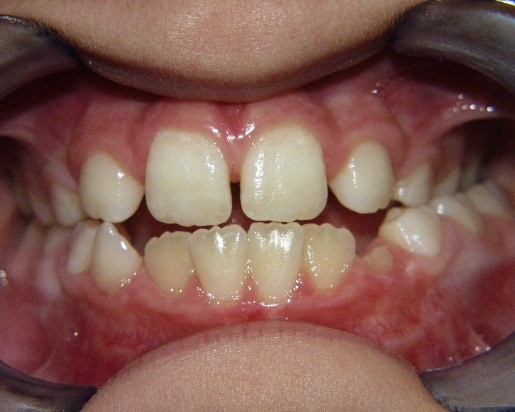
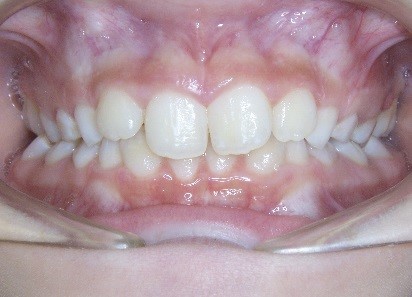
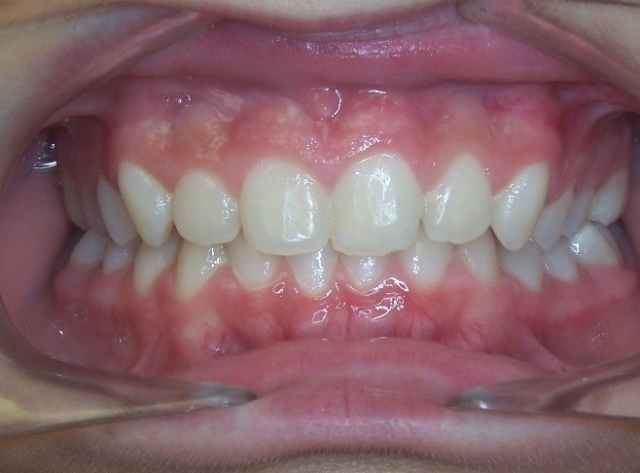
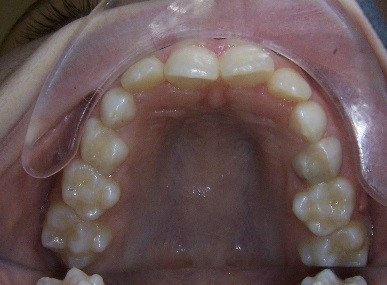
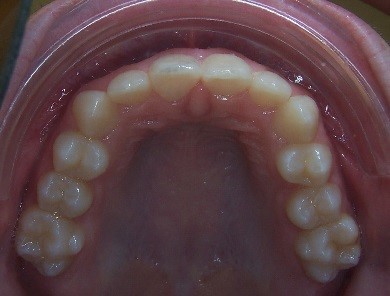
Key #3: In most cases, the reason for expansion is the maxillary constriction or crossbite. The expansion appliance is placed into the palatal vault area as deeply as possible without impinging on palatal tissues. Consequently, the appliance will temporarily interfere with speech and swallowing. Adapting the neuromuscular system in younger patients is faster and will adapt more readily than older adolescent patients.
Long-Term Stability and Sound Periodontal Support
Key #4: When teeth erupt into a prepared site with adequate bone and soft tissue support, it is ideal for long-term stability and sound periodontal support. A similar protocol is followed when preparing a site with a graft for receiving an implant or grafting in an alveolar cleft site to receive the erupting canine. To prepare the space for expansion, follow the same principles for site preparation. In a crowded developing dentition, the plan to develop eruption space will decrease the risk of ectopic eruption with a compromised gingival attachment
Airway and Sleep Improvements
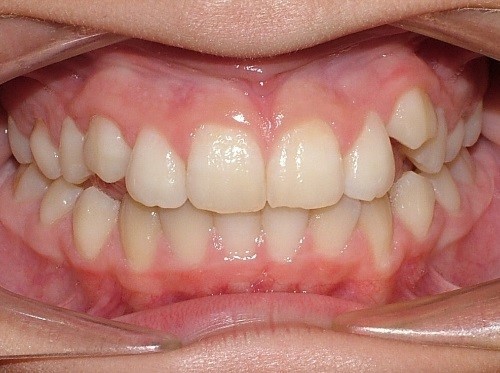
Key #5: The effects of a constricted maxilla go well beyond the dentition. We are finding more evidence that maxillary constriction can be a factor in airway restriction in children. The effects of a rapid maxillary expander can include an increase in nasal airway and improved respiratory function. As airway evaluation becomes more of a part of our dental exams, the benefit of early expansion can include improvements in airway and sleep.
References
- Mutinelli, S., Manfredi, M., Guiducci, A., Denotti, G., & Cozzani, M. (2015). Anchorage onto deciduous teeth: effectiveness of early rapid maxillary expansion in increasing dental arch dimension and improving anterior crowding. Progress in Orthodontics, 16(1), 22.
- Cistulli, P. A., Palmisano, R. G., & Poole, M. D. (1998). Treatment of obstructive sleep apnea syndrome by rapid maxillary expansion. Sleep, 21(8), 831-835.
- McNamara Jr, J. A., Lione, R., Franchi, L., Angelieri, F., Cevidanes, L. H., Darendeliler, M. A., & Cozza, P. (2015). The role of rapid maxillary expansion in the promotion of oral and general health. Progress in Orthodontics, 16(1), 33.
- Almuzian, M., Ju, X., Almukhtar, A., Ayoub, A., Al-Muzian, L., & McDonald, J. P. (2018). Does rapid maxillary expansion affect nasopharyngeal airway? A prospective Cone Beam Computerised Tomography (CBCT) based study. The Surgeon, 16(1), 1-11.
SPEAR Membership
Try Spear Free For 7 Days
See what a Spear Membership can do for you and your team before you decide. A free 7-day trial gives you full access to Spear Online’s clinical CE courses and practice team training, so you can find the membership level that fits your practice.
Featured Digest articles
Insights and advice from Spear Faculty and industry experts