Foundational Knowledge of Airway Starts With Knowing Why We Sleep
Why do we sleep?
It’s a very interesting question that Dr. Matthew Walker explores in his recent book, Why We Sleep. Dr. Walker highlights the buzz that would be created if scientists discovered something that made you live longer and be more creative and more attractive. It keeps you thin and reduces food cravings. It protects you from cancer, dementia, colds, and flu. It lowers your risk of heart disease, strokes, and diabetes. You will feel happier, less depressed, and less anxious. You wouldn’t be able to buy it fast enough no matter the cost … and yet those are just a few of the advantages of a complete night’s sleep.
What constitutes a complete night’s sleep? Research has shown that adults require seven to eight hours of sleep a night to function optimally; children require significantly more, depending on their age. One of two people in America are sleep-deprived. One of three routinely get less than six hours of sleep.
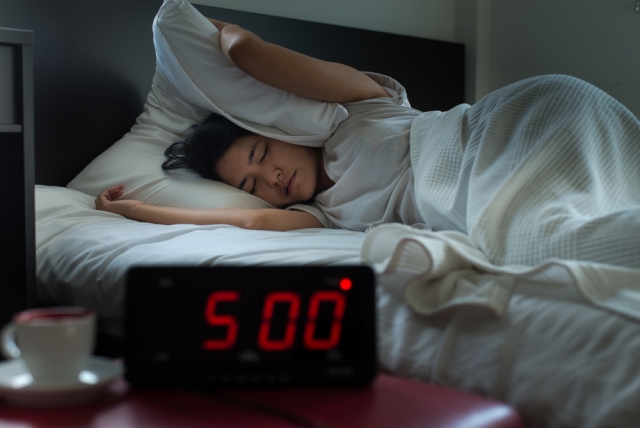
The average sleep in 1942 was 7.9 hours per night. Today, that number is 6.3 hours. The percentage of adults who can survive on six hours or less sleep without impairment is zero.
A person going 10 days with six hours of sleep is impaired like a person who has 24 hours of sleep deprivation. You don’t get used to the new level of sleep and level out or recover; you’ll always continue to perform impaired. People simply don’t know how impaired they are if they’re impaired. It’s called “baseline resetting” — over months, they reset to a new “normal.”
It is also a myth that you need less sleep as you age. We simply accept the deterioration of sleep because it happens slowly. Rarely do we connect the loss of sleep quality and quantity with the deterioration of our health or have physicians address the issue.
If you are the person who wakes up at 4 a.m. and reduces your sleep by two hours or 25%, there will be a 60–90% loss of REM sleep. REM is a wave-like brain signal where the thalamus allows signals of emotion, motivation, and problem-solving to be processed. Reduced REM can cause issues with anxiety, depression, and pain. There is no major psychiatric condition where sleep is normal.
The body craves REM sleep and will attempt to resolve the deficit. People working at an REM deficit may experience an REM sleep rebound when they finally do get a good night’s sleep: The body tries to replenish the deficit, and the dreams may be extremely intense. Alcoholics can have significant deficits of REM sleep because of the impact the alcohol has on sleep. When the alcohol is removed, delirium tremors in REM sleep rebound while awake.
Finally, one hour in bed reading on an iPad (as opposed to a book) and soft light delay melatonin release by three hours, resulting in being less refreshed the next day and a loss of REM sleep.
Instead of waking up in the middle of the night, what if you simply go to bed two hours later? In that case, you’ll rob yourself of a significant amount of non-REM sleep. In NREM sleep, we release hormones, recover physically from the day, and move memories from short-term to long-term storage. In children, deep sleep refines brain development in the areas of cognition, critical thinking, and reasoning. Increases in deep sleep always precede brain maturation.
Deep sleep also assists in weight management. People getting only five to six hours of sleep will require 200 to 300 extra calories per day. The serotonin centers in the brain will create a desire for high-carb, processed, sugary foods. Unlike popular belief, serving sizes, processed foods, and a sedentary lifestyle alone can’t explain the level of obesity today — but the loss of two hours of sleep on average might.
The Catch-22 is that if you diet without sleep, 70% of the weight loss is from lean muscle mass, not fat. The body apparently assumes that if you’re not sleeping, you must be foraging for food. In response, it increases fat stores.
Those trying to exercise when getting less than six hours of sleep will find a 10–30% reduction in time to physical exhaustion. Their aerobic output is reduced, limb extension force and vertical jump height reduced, lactic acid increases faster in the muscles, blood oxygenation is reduced, the ability to sweat is reduced, and the risk of injury is increased. Postperformance sleep, meanwhile, increases the recovery from inflammation and increases muscle repair.
So, why do we sleep? Because it’s the key to physical and mental well-being … and yet, we place so little emphasis on it.
People brag about being able to go long periods without sleep as if it were a badge of honor. Instead, we should value that time and work to help our patient heal.
Dr. Walker’s book touches only superficially on the disruption to normal sleep that airway dysfunction can create. The parallels between his data on sleep loss and impacts of airway prosthodontics are staggering.
SPEAR campus
Hands-On Learning in Spear Workshops
With enhanced safety and sterilization measures in place, the Spear Campus is now reopened for hands-on clinical CE workshops. As you consider a trip to Scottsdale, please visit our campus page for more details, including information on instructors, CE curricula and dates that will work for your schedule.

By: Jeffrey Rouse
Date: July 15, 2018
Featured Digest articles
Insights and advice from Spear Faculty and industry experts